In Game of Thrones, the battle between love and power was never just about kingdoms or the Iron Throne. It was personal. Daenerys Targaryen began as a compassionate liberator who wanted to protect the powerless, but her lust for control slowly changed the way she treated people around her.
The whole series seemed to revolve around one psychological truth: the stronger the hunger for power became, the harder it was for genuine love to survive. In real life too, people struggle to balance ambition, influence, and emotional connection. A common example can be seen in men who spend years chasing money, success, and stability for the sake of the people they love.

They work relentlessly to build a better future, hoping to protect their family, earn respect, or fulfill lifelong dreams. But somewhere along that journey, the pursuit of power, status, or wealth can slowly create emotional distance from the very relationships that once gave them purpose. It is this complicated human conflict that Swiss psychiatrist and psychoanalyst Carl Gustav Jung tried to capture through one of his most powerful reflections on love, dominance, and human nature.
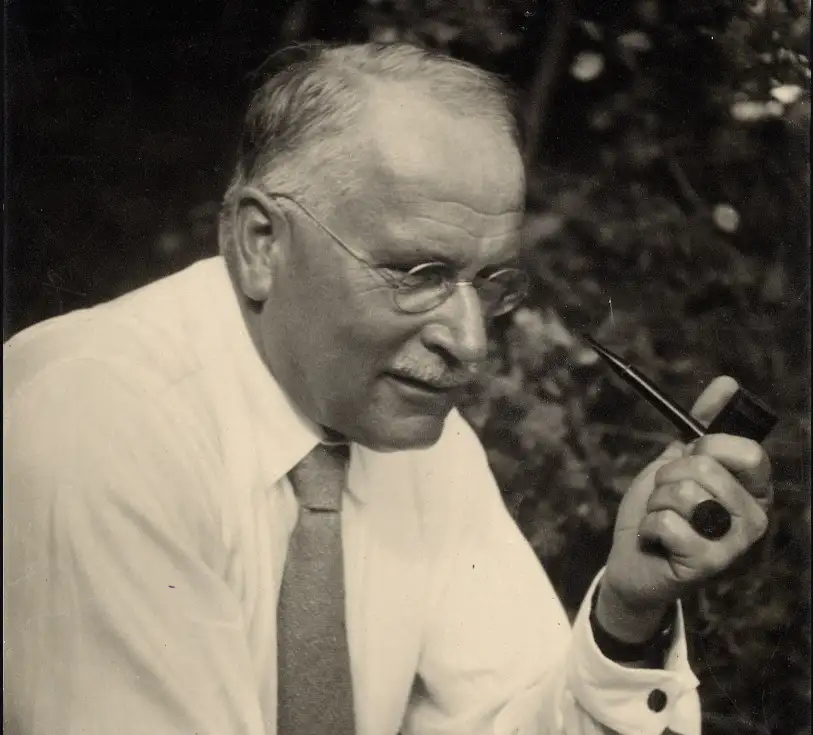
Quote of the Day by Carl Gustav Jung: “Where love rules, there is no will to power, and where power predominates, love is lacking. The one is the shadow of the other”
Quoted by Goodreads, this quote by Swiss psychiatrist Carl Gustav Jung, one of the most influential thinkers in modern psychology, is an enlightening lesson on love and power. Decades after it was written, the quote still resonates because it touches on a universal human truth: the tension between connection and control.
What the quote is actually suggesting
Jung’s quote explores how love and power often pull human behavior in opposite directions. When someone truly loves, they usually seek understanding, care, empathy, and mutual respect. But when power becomes the priority, people may start focusing more on control, authority, status, or dominance.
The quote does not mean that leadership or ambition are automatically bad. Instead, Jung suggests that when the desire for power becomes too strong, genuine emotional connection tends to weaken. A relationship ruled by fear, manipulation, or control often loses the warmth that makes love meaningful.
This idea can be seen in everyday life. Parents who try to control every aspect of a child’s life may unintentionally damage trust. Partners who constantly seek dominance in a relationship may lose emotional intimacy. Even in workplaces, leaders who focus only on authority often struggle to earn real respect or loyalty.
Jung’s words also reflect an inner struggle within people themselves. Sometimes individuals choose power to protect themselves from vulnerability, rejection, or emotional pain. Love requires openness, while power often creates emotional distance.
About Carl Gustav Jung: The thinker behind the idea
Carl Gustav Jung was a Swiss psychiatrist and psychoanalyst who founded analytical psychology. Born in 1875 near Lake Constance in Switzerland, Jung grew up in a religious household, an environment that later shaped his deep interest in spirituality, symbols, and the human mind.
He trained as a psychiatrist and worked at the Burghölzli hospital in Zürich, where he became interested in the emerging field of psychoanalysis after studying the work of Sigmund Freud. Jung and Freud initially shared a close intellectual partnership, and Freud even viewed him as a possible successor.
READ ALSO: Quote of the day by Frank Sinatra: 'Alcohol may be man's worst enemy, but the bible says...'
However, their relationship eventually broke down due to major differences in their ideas and personalities. The split in 1913 became a turning point in Jung’s life. During a long period of self-reflection and psychological exploration, he developed some of his most influential concepts, including the collective unconscious, archetypes, and individuation.
These ideas helped shape analytical psychology and established Jung as one of the most important psychological thinkers of the 20th century.
Jung’s philosophy behind the quote
Jung believed that much of human behavior is influenced by forces hidden deep within the unconscious mind. He often explored contradictions inside human nature: logic versus emotion, fear versus desire, and love versus control.
His philosophy focused heavily on self-awareness and emotional integration. Jung believed people become healthier and wiser when they honestly confront the hidden parts of themselves instead of denying them.
This quote reflects that broader worldview. Jung understood that the desire for power often grows from insecurity, fear, or unresolved inner conflict. Love, on the other hand, requires emotional maturity and the ability to value another person without needing to dominate them.
His work repeatedly emphasized balance. For Jung, psychological growth was not about becoming perfect but about understanding the complex and sometimes conflicting forces inside the human mind.
Why this idea still matters today
Jung’s words remain highly relevant in modern life because society today is infected by competition, influence, and status. Social media, workplace culture, politics, and even personal relationships often reward control and dominance more than empathy or understanding.
Many people struggle to balance ambition with emotional connection. Some become so focused on success, authority, or recognition that relationships begin to suffer. Others experience relationships where control is mistaken for love.
The quote also speaks to mental health and self-growth. It encourages people to examine their motivations honestly. Are actions driven by care and understanding or by fear and the need to control outcomes?