Get all your news in one place.
100's of premium titles.
One app.
Start reading
The Economic Times
The Economic Times
Shreya Biswas

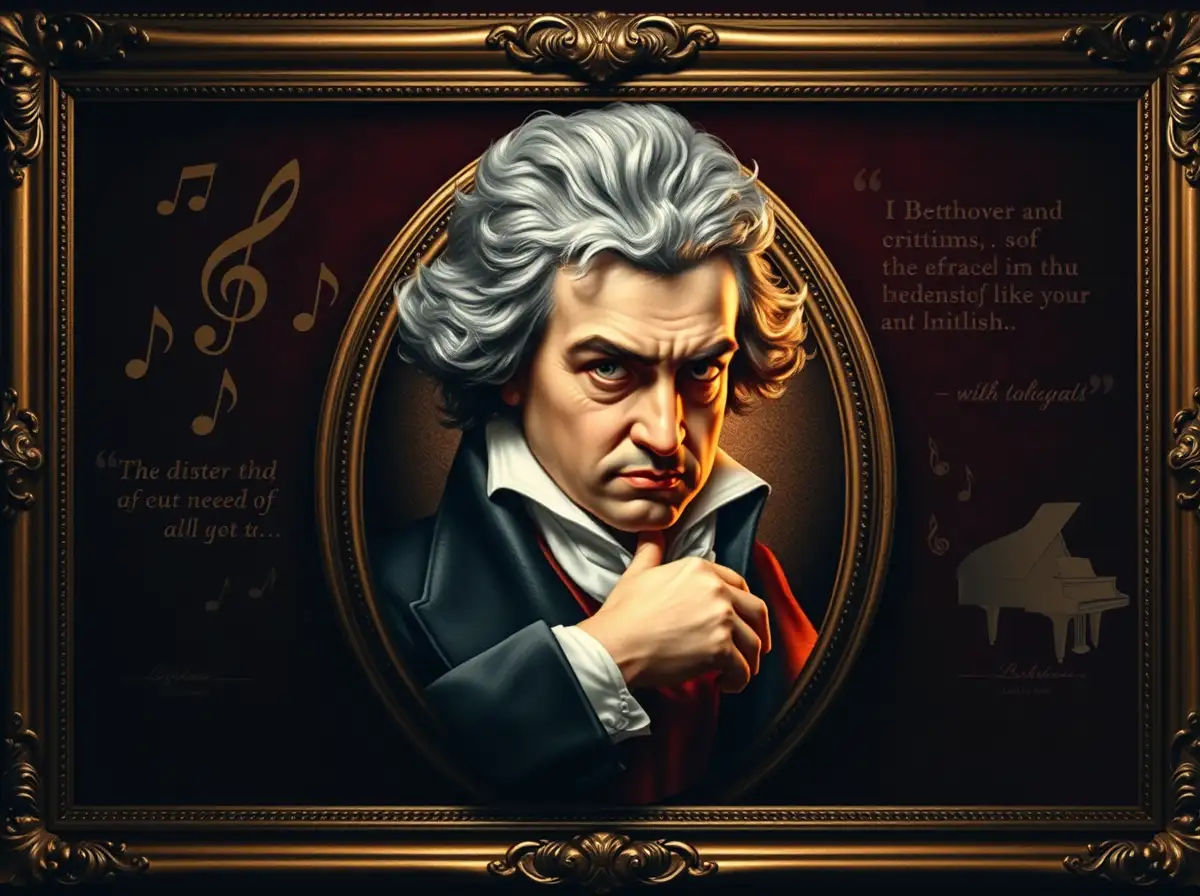
Quote of the day by Beethoven: 'A true artist is expected to be all that is noble-minded, and this is not...' - Für Elise and Symphony No. 5 composer reveals harsh reality artists' life, creativity, fame and why creators face so much scrutiny and criticism

Quote of the day by Beethoven : Artists have long occupied a unique place in society. Their work often inspires, challenges, and moves people, leading audiences to expect not only creative excellence but also personal virtue. Throughout history, many artists have been admired as cultural role models, with their character scrutinized as closely as their work. At the same time, creative individuals frequently face intense criticism, with their choices, personalities, and imperfections becoming subjects of public judgment. Today's quote from Ludwig van Beethoven reflects this tension between society’s expectations of artists and the reality of living under constant criticism.

Quote of the Day Today: Ludwig van Beethoven on Artists and Critics

Ludwig van Beethoven said, “ A true artist is expected to be all that is noble-minded, and this is not altogether a mistake; on the other hand, however, in what a mean way are critics allowed to pounce upon us, ” as per BrainyQuote.

Meaning of Ludwig van Beethoven’s Quote Explained

In this quote, Beethoven acknowledges that society naturally expects artists to embody noble qualities such as integrity, wisdom, and moral character. He suggests that these expectations are not entirely unreasonable because artists often influence culture and shape the way people think and feel.

However, Beethoven also points out the unfairness that can accompany such expectations. While artists are held to high standards, critics are often given wide freedom to judge, attack, or dismiss them. The quote highlights the imbalance between the responsibility placed on creators and the harsh scrutiny they sometimes face.

The message is about recognizing the humanity of artists. Creative individuals may strive for excellence, but they remain imperfect people who can be vulnerable to criticism. Beethoven’s words remind us that admiration should not turn into unrealistic expectations, and criticism should not become cruelty.

READ ALSO: Quote of the day by Sandra Bullock: 'As connected as we are with technology, it's also removed us from having to...' - inspiring life lessons on dark side of technology, and relationships in the digital age by The Proposal, Ocean's 8 and The Lost City actress

Why Beethoven’s Message Still Matters Today

In today's world of social media, instant opinions, and public commentary, artists, writers, musicians, and public figures often face constant evaluation. Praise and criticism can spread rapidly, sometimes focusing more on personal flaws than creative achievements.

Beethoven’s observation remains relevant because it encourages balance. It reminds audiences to appreciate artistic contributions while recognizing that creators are human beings deserving of fairness and respect.

Quote of the Day June 8: Life Lessons From Beethoven’s Quote

  • High expectations often come with public visibility.
  • Creativity does not make a person immune to criticism.
  • Constructive criticism is different from personal attacks.
  • Artists should be valued for their work without being treated as flawless.
  • Respect and empathy should guide how we judge others.
READ ALSO: Life advice of the day by Albert Schweitzer: 'Success is not the key to happiness. Happiness is the key to success. If you love what...' - inspiring quote and lessons on purpose-driven living and finding joy in the path of achievement by Nobel Prize-winning philosopher

Who Was Ludwig van Beethoven

Ludwig van Beethoven was one of history's most influential composers. Beyond his music, his personal life—especially his search for love and companionship, has long fascinated historians and music lovers.

Beethoven and His Search for Love

During the early 1800s, Beethoven began thinking seriously about marriage. In a letter written in 1801, he mentioned "a dear sweet girl who loves me and whom I love." Historians believe he was referring to Countess Giulietta Guicciardi, one of his piano students, as per a Britannica report. Beethoven later dedicated his famous 'Moonlight Sonata' to her. However, Giulietta married Count Gallenberg in 1803.

READ ALSO: Quote of the day by Mel Gibson: 'After about 20 years of marriage, I'm finally starting to scratch the surface of what women want...' - relationship lessons on understanding women, communication and love by Oscar-winning actor and director of Braveheart

Beethoven's Relationship With Josephine

Beethoven also appears to have proposed to Josephine, Giulietta's cousin. After Josephine's husband died in 1804, the two shared an understanding that lasted for several years. However, Beethoven's indecisiveness and pressure from Josephine's family eventually brought the relationship to an end.

Another Unfulfilled Romance

A later possible marriage prospect was Therese Malfatti, the daughter of one of Beethoven's doctors. Like his earlier relationships, this connection did not lead to marriage, and Beethoven remained a lifelong bachelor.

The Mystery of the "Immortal Beloved"

One of the most intriguing discoveries made after Beethoven's death was a set of letters addressed to an unnamed "Immortal Beloved." The letters, filled with affection and emotion, were never clearly linked to a specific person. Many scholars believe the most likely recipient was Antonie Brentano, a Viennese woman connected to Beethoven's social circle, as per the Britannica report.

READ ALSO: Quote of the day by Celine Dion: 'There's no such thing as aging, but maturing and...' - inspiring life lessons on aging, maturity, self-acceptance and how growing old is a path to gain more knowledge by Grammy-winning singer of Titanic's theme song, My Heart Will Go On

Famous Quotes by Beethoven

Here are a few more quotes by Ludwig van Beethoven.

  • "Music is a higher revelation than all wisdom and philosophy," as per BrainyQuote.
  • "What you are, you are by accident of birth; what I am, I am by myself. There are and will be a thousand princes; there is only one Beethoven," as per BrainyQuote.
  • "Don't only practice your art, but force your way into its secrets; art deserves that, for it and knowledge can raise man to the Divine," as per BrainyQuote.
Sign up to read this article
Read news from 100's of titles, curated specifically for you.
Already a member? Sign in here
Related Stories
Top stories on inkl right now
One subscription that gives you access to news from hundreds of sites
Already a member? Sign in here
Our Picks
Fourteen days free
Download the app
One app. One membership.
100+ trusted global sources.