“ People don't always tell you what they are thinking. They just see to it that you don't advance in life. ”
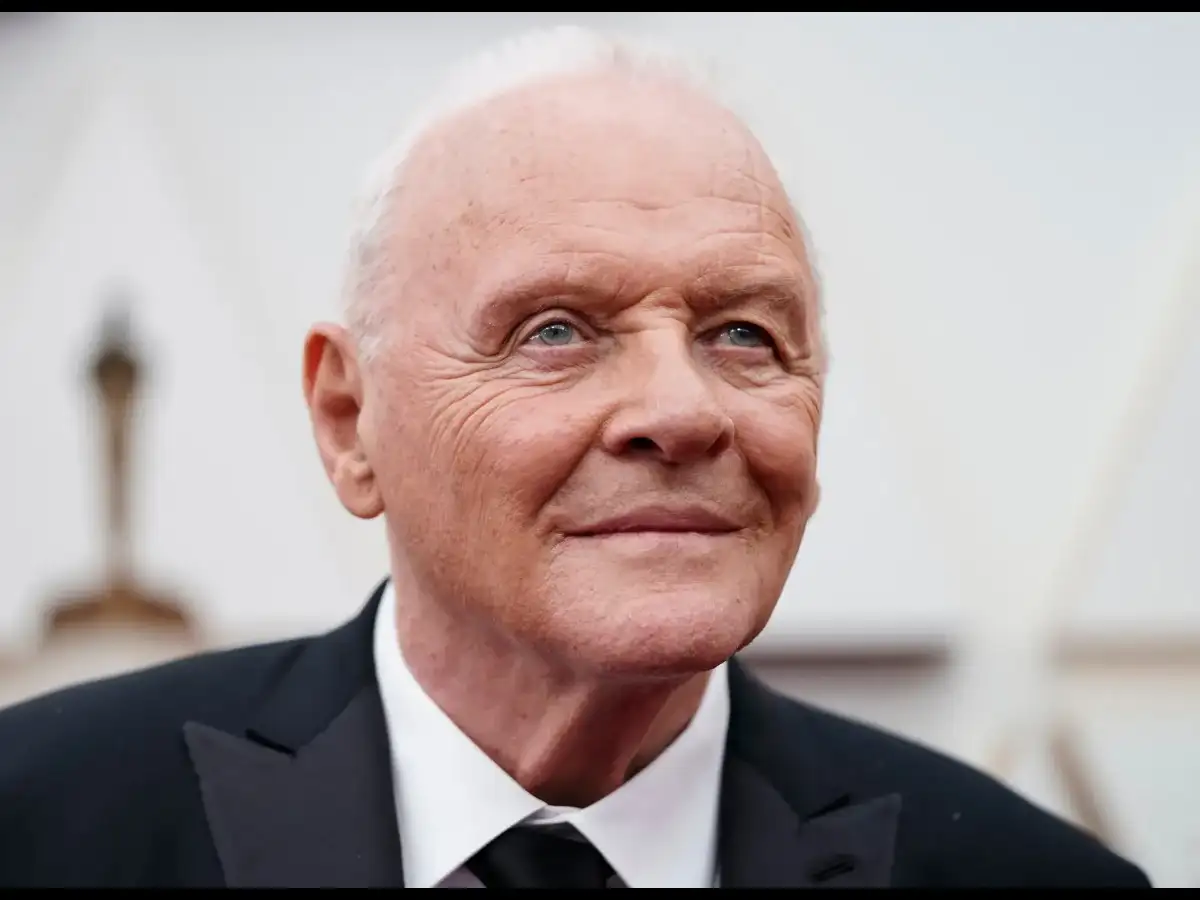
- Anthony Hopkins

Anthony Hopkins' words cut deeper than they first appear. On the surface, it sounds like ordinary advice about office politics or family tension. But look closer, and it describes something almost invisible — the quiet architecture of sabotage that operates entirely in silence.
Most people imagine betrayal as loud. A slammed door, a harsh word, an obvious act of cruelty. But Hopkins is pointing at something else: the subtle, unspoken resistance some people offer when they feel threatened by your growth. They don't announce their discomfort. They don't confront you. Instead, they simply arrange circumstances — consciously or not — so that your path forward becomes a little harder, a little slower, a little more exhausting than it needs to be.
This happens everywhere. In workplaces, a colleague may smile at you in meetings while quietly withholding information you need to succeed. In families, a relative may offer backhanded encouragement while undermining your confidence in private conversations with others. In friendships, someone may seem supportive on the surface while feeling secretly unsettled by your success, and that discomfort shows up not in words, but in absence — the missed introduction, the withheld opportunity, the silence when your name comes up.
The unsettling part of Hopkins' observation is that this behavior rarely comes from malice in the cartoonish sense. It often comes from fear. People who feel stagnant in their own lives can experience another person's advancement as a kind of quiet accusation. Your growth becomes a mirror reflecting their own unmet ambitions. Rather than examine that discomfort honestly, it's easier for some to unconsciously — or deliberately — become a small obstacle in someone else's story.
This is why the quote resonates so strongly. It names something many people have felt but struggled to articulate: the sense that you are being blocked without ever being told why. No conversation happens. No conflict is declared. And yet you notice a persistent, invisible resistance whenever you try to move upward.
Understanding this dynamic offers a kind of clarity, if not comfort. If people rarely announce their true feelings, then your responsibility isn't to wait for their honesty — it's to observe patterns instead of promises. Actions, especially quiet ones, tell you more than words ever will. When someone's behavior consistently limits your opportunities while their words remain pleasant, that contradiction itself is the message.
The wisdom in Hopkins' statement, then, is not cynicism — it's discernment. It teaches you to stop expecting transparency from people who benefit from ambiguity, and to instead pay attention to outcomes. Advancement in life often requires recognizing not just who supports you, but who quietly doesn't — and choosing, deliberately, not to depend on their permission to grow.
All about Sir Anthony Hopkins
Sir Anthony Hopkins, born Philip Anthony Hopkins on December 31, 1937, in Port Talbot, Wales, is one of the most celebrated actors of his generation, with a career spanning more than six decades across stage, film, and television. Influenced by fellow Welshman Richard Burton, he trained at the Royal Welsh College of Music and Drama and later joined the National Theatre in 1965 at the invitation of Laurence Olivier. He rose to global stardom with his chilling portrayal of Dr. Hannibal Lecter in "The Silence of the Lambs" (1991), a role that earned him the Academy Award for Best Actor and remains one of the most iconic performances in cinema history. Over the years, Hopkins has taken on an extraordinary range of characters, from historical figures like Richard Nixon and Alfred Hitchcock to mythological and fantasy roles such as Odin in the "Thor" franchise and Robert Ford in "Westworld." His performance in "The Father" (2021) won him a second Academy Award, making him the oldest actor ever to win in that category. He has also received three BAFTAs, two Emmys, and the Cecil B. DeMille Award, and in 1993 he was knighted by Queen Elizabeth II for his services to the arts.