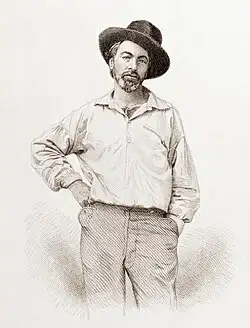
Some words do more than express an idea. They capture an entire way of seeing life. Walt Whitman’s famous quote about contradiction and identity remains one of the most powerful reflections on human nature ever written. It challenges the idea that people must always be simple, consistent, and easily understood.
Walt Whitman suggests that every person is made up of countless experiences, emotions, dreams, beliefs, and changes. To him, having different sides is not a weakness or a flaw. It is proof of being fully human.

Quote of the Day by Walt Whitman
“Do I contradict myself? Very well, then, I contradict myself, I am large, I contain multitudes.”
― Walt Whitman
This quote of the day reminds us that growth often comes from accepting the complexity within ourselves.
What Did Walt Whitman Mean by “I Contain Multitudes”?
When Whitman wrote, “I am large, I contain multitudes,” he was expressing the idea that a human being cannot be reduced to a single identity. We are not only one emotion, one belief, or one version of ourselves.
A person can be confident and uncertain, joyful and thoughtful, independent and connected to others. These qualities may appear contradictory, but they can exist together.
Whitman believed that life itself is constantly changing. The person we are today is shaped by everything we have experienced, from childhood memories to personal struggles and moments of discovery.
Instead of fighting these contradictions, Whitman encouraged people to recognize them as part of their own story.
The Beauty of Contradictions in Human Life
Many people feel pressure to appear consistent at all times. Society often expects individuals to have clear opinions, fixed personalities, and predictable choices. Whitman’s words challenge that idea.
His message is that changing your mind, discovering new perspectives, and growing as a person are natural parts of existence.
A person who has experienced failure may become more patient. Someone who has faced hardship may develop compassion. Someone who once feared change may eventually embrace it.
These transformations create the many layers that make each person unique.
Whitman’s poetry often celebrated ordinary people, nature, freedom, and the connection between the individual and the world. His writing explored the idea that every human life carries enormous depth.
The Life and Legacy of Walt Whitman
Walt Whitman was one of America’s most influential poets and is often considered a defining voice of American literature. Born on May 31, 1819, in West Hills, New York, Whitman had limited formal education but developed a lifelong passion for reading, writing, and observing society.
Before becoming famous as a poet, Whitman worked as a printer, teacher, journalist, and editor. His experiences shaped his understanding of everyday people and inspired his unique style of writing.
His most famous work, Leaves of Grass, was first published in 1855. The collection transformed American poetry with its free verse style and its celebration of individuality, nature, democracy, and human experience.
Unlike many poets of his time, Whitman abandoned traditional rhyme and meter. His long, flowing lines and powerful rhythms created a completely new poetic voice.
Although his work was controversial at first, it eventually earned worldwide recognition. Writers across generations were influenced by his fearless approach to poetry and self-expression.
A Poet Who Celebrated the Whole Human Experience
Whitman’s life was filled with observations of humanity. During the American Civil War, he worked in Washington, D.C., visiting wounded soldiers in hospitals and offering comfort. Those experiences deeply affected him and inspired some of his most emotional writings.
His poems explored love, death, nature, identity, and the connection between all people. He believed that every individual carried a universe within themselves.
That belief is captured perfectly in his famous line, “I contain multitudes.”
The phrase has remained relevant because it reflects a truth people continue to experience. Human beings are complicated. We carry memories, hopes, fears, contradictions, and dreams all at once.
The Meaning of Whitman’s Quote Today
In modern life, Whitman’s words feel more relevant than ever. People are constantly evolving through new experiences, relationships, challenges, and discoveries. The quote reminds us that being complex is not something to hide. Our different sides are what create our individuality. A person does not have to fit into one category or one definition. We can change, learn, and become new versions of ourselves throughout life.
Walt Whitman’s message is simple but profound: embrace every part of who you are. Your contradictions are not signs of confusion. They are evidence of a life being lived.