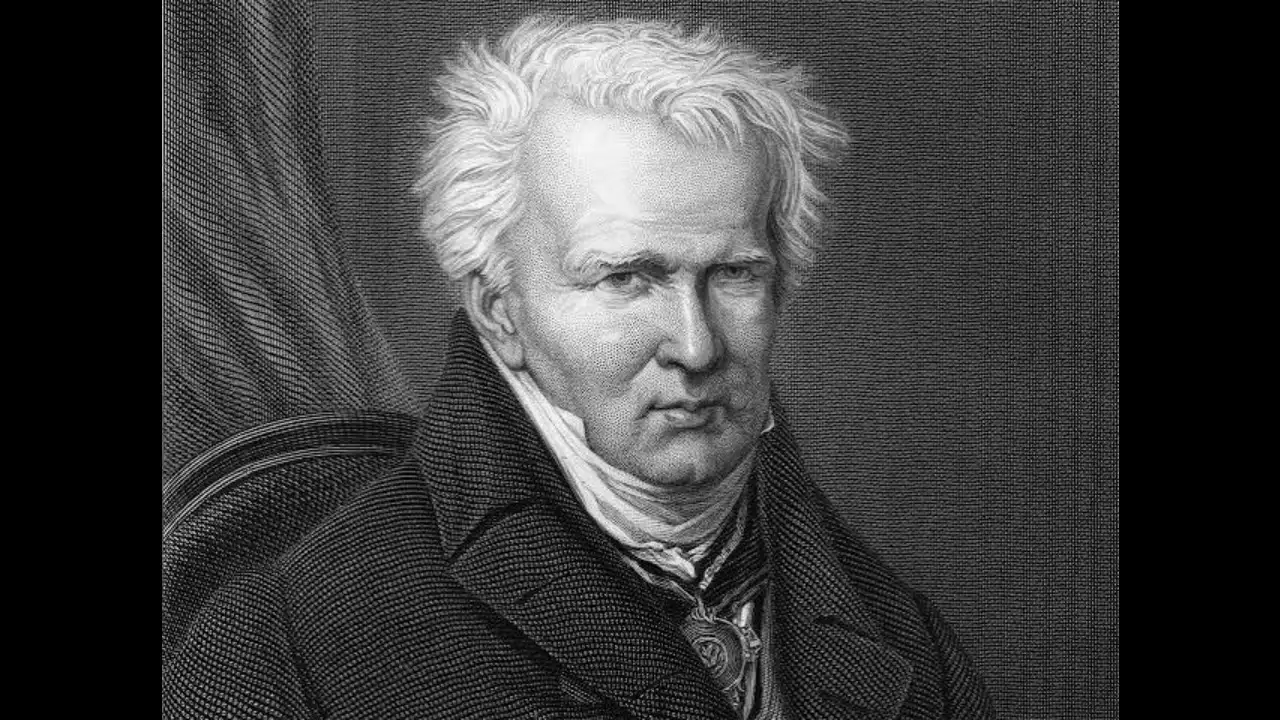
Quote of the day by Alexander von Humboldt: A scientific idea can begin with a simple act: looking at several things together instead of treating each one as separate. Alexander von Humboldt’s quote about establishing the “unity and harmony” of nature reflects that way of thinking. He was arguing that facts become more meaningful when their relationships are understood. A mountain, its climate, its vegetation and the people living nearby may appear like separate subjects, but their connections can reveal a larger picture.
That idea also works beyond science. A disagreement at work may not be only about one conversation. Family pressure, uncertainty, tiredness or an earlier misunderstanding may also shape the situation. A person who seems distant may be dealing with something that others cannot see. Looking at the wider circumstances does not excuse every action, but it can make a situation easier to understand.
Quote of the day by Alexander von Humboldt: Inspiring lessons on perspective, balance, curiosity, connection and understanding the bigger picture
Today's Quote of the day by Alexander von Humboldt: “The most important result of a rational inquiry into nature is, therefore, to establish the unity and harmony of this stupendous mass of force and matter.”
— Alexander von Humboldt, Cosmos
Humboldt reached his conclusion through years of observation. He measured temperatures, altitude and atmospheric conditions while recording plants, animals, geology and geography. His work eventually led him toward a view of nature as an interconnected system rather than a collection of unrelated objects. In Cosmos , he wrote that the important result of rational inquiry was to establish the “unity and harmony” of nature’s forces and matter.
What does Alexander von Humboldt’s quote mean?
Humboldt’s point was not that everything in nature is identical or perfectly peaceful. His phrase “unity in diversity” described something more precise: different parts of the natural world can remain distinct while still influencing one another. Science, in his view, should study individual details without losing sight of the larger relationships connecting them.