Get all your news in one place.
100's of premium titles.
One app.
Start reading
The Economic Times
The Economic Times
Mukesh Thapliyal

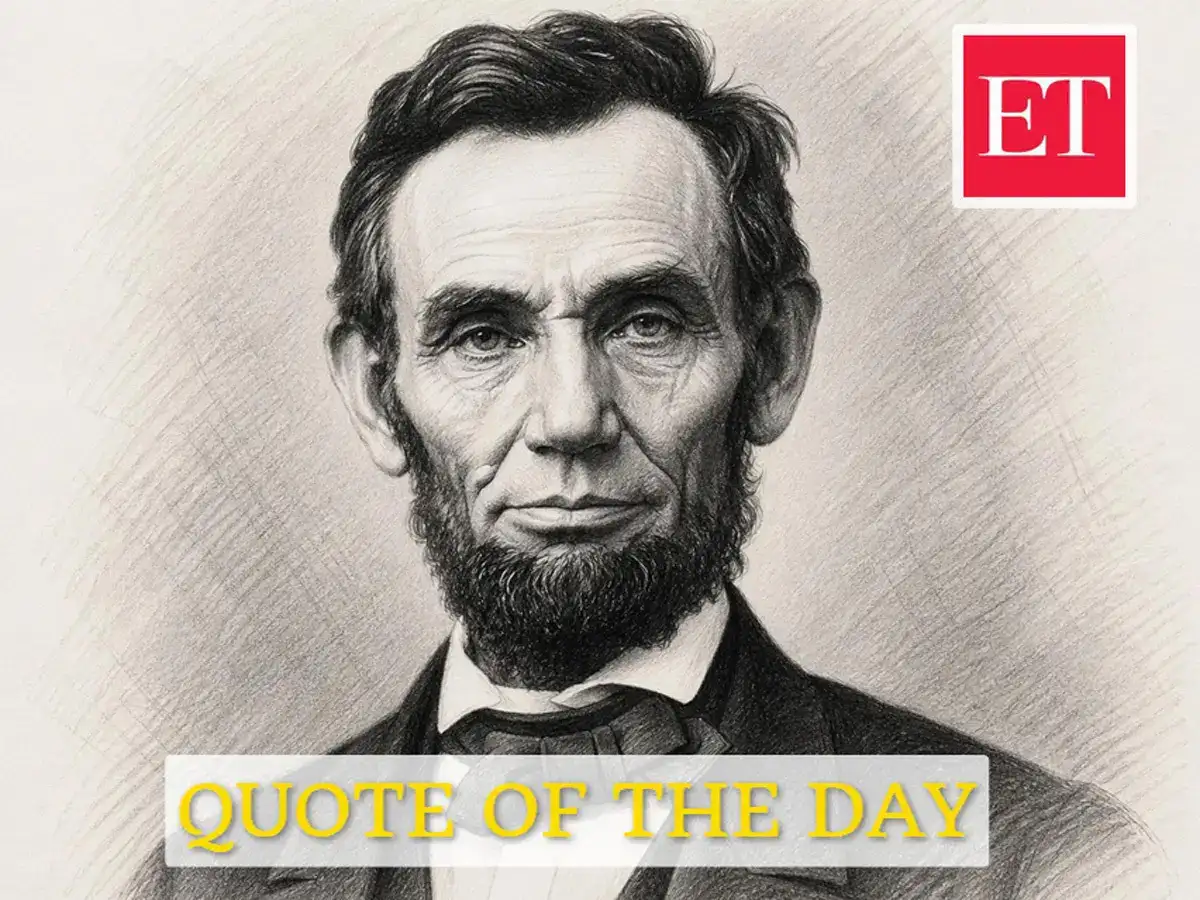
Quote of the day by Abraham Lincoln: 'My concern is not whether God is on our side; my greatest concern is to be on...' - A timeless lesson in humility and moral responsibility, reminding us that the real question is not whether circumstances favor us, but whether our choices and actions align with what is right

Quote of the day by Abraham Lincoln: Abraham Lincoln remains one of the most influential figures in American history, remembered for his leadership during the Civil War, his opposition to slavery and his powerful vision of a nation that could survive its deepest divisions. Born into a poor frontier family, Lincoln had little formal education but developed a lifelong passion for reading, learning and public service. Lincoln was born on February 12, 1809, in a log cabin near Hodgenville, Kentucky. His family later moved to Indiana and then Illinois, where he worked a variety of jobs before entering politics. He taught himself law, became an attorney and eventually built a political career in Illinois. His rise to national prominence came through his opposition to the expansion of slavery into US territories. In 1858, Lincoln gained national attention during a series of debates with Illinois Senator Stephen A. Douglas. Although Lincoln lost the Senate election, the debates helped establish him as a leading voice of the newly formed Republican Party.

In 1860, Lincoln won the Republican presidential nomination and went on to win the presidency. His election intensified tensions between Northern and Southern states, with several Southern states eventually seceding from the Union. The Civil War began in April 1861, placing Lincoln at the center of the country's greatest political and military crisis. His primary goal was initially to preserve the Union, but the war increasingly became a struggle over slavery as well. On January 1, 1863, Lincoln issued the 'Emancipation Proclamation'. It declared enslaved people in the Confederate states to be free, transforming the war's purpose and making emancipation a central Union objective.

Quote of the day

Quote of the day - " My concern is not whether God is on our side; my greatest concern is to be on God's side, for God is always right ," is widely attributed to the 16th president of the United States Abraham Lincoln.

Meaning of the quote

Abraham Lincoln’s quote delivers a powerful lesson about humility, faith and personal responsibility. Instead of asking whether God supports our plans, Lincoln shifts the focus to a more important question: Are our actions aligned with what is right? The message suggests that people should not assume they are automatically on the right side simply because they believe their goals are justified. True moral strength requires self-reflection and the willingness to examine our choices, motives and behavior. For Lincoln, faith was not simply about seeking divine approval. It was also about accepting that human judgment can be imperfect. The quote encourages people to put principles above pride and to choose integrity over personal advantage. Its broader lesson remains relevant beyond religion. In difficult situations, it can be easy to look for validation that we are right. Lincoln’s words remind us to focus instead on doing what is right, even when that choice is difficult or goes against our interests.

Lincoln was also celebrated for speeches that expressed complex ideas in remarkably direct language. His 'Gettysburg Address', delivered on November 19, 1863, became one of the most famous speeches in American history. In just a few minutes, Lincoln connected the Civil War to the principles of equality and self-government. His words emphasized the idea that the United States could emerge from the conflict as a stronger democracy.

His second inaugural address, delivered in March 1865, offered another striking example of his leadership. Rather than celebrating an approaching Union victory, Lincoln called for reconciliation and a lasting peace. Lincoln's presidency ended suddenly. On April 14, 1865, actor John Wilkes Booth shot Lincoln at Ford's Theatre in Washington, DC. Lincoln died the following morning, April 15, at age 56.

More than 160 years later, Lincoln's legacy remains deeply connected to America's struggle over freedom, equality and national unity. His life also demonstrates how determination and self-education can transform an individual born into modest circumstances into a figure of extraordinary historical importance.

Sign up to read this article
Read news from 100's of titles, curated specifically for you.
Already a member? Sign in here
Related Stories
Top stories on inkl right now
One subscription that gives you access to news from hundreds of sites
Already a member? Sign in here
Our Picks
Fourteen days free
Download the app
One app. One membership.
100+ trusted global sources.