Get all your news in one place.
100’s of premium titles.
One app.
Start reading
Golf Monthly
Golf Monthly
Sport
Sam De'Ath

PXG Lightning Fairway Wood Review: Long And Consistently So

PXG Lightning fairway wood.

Whenever PXG drops new metalwoods, they always manage to command attention, strangely without really changing too much visually. The brand's reputation for producing really reliable fairway woods flies under the radar in my opinion, but PXG will be hoping the all-new Lightning fairway wood will change that.

As a golfer who prioritizes a powerful, solid feel, I was eager to get the standard Lightning model ($379) out on the course and see if it could deliver on its promise of ‘electrifying power and distance’ and become recognized as one of the best fairway woods on the market.

The Lightning family gives players two distinct head shapes, which immediately created a conflict for me. The standard Lightning head is confidence-inspiring when down behind the ball at address, presenting a square and shallow face with a focus on perimeter weighting for maximum forgiveness. It’s designed to look easy to hit, and in my opinion, it certainly achieves that.

(Image credit: Future)

However, if you’re a more confident ball striker who likes to work the ball or wants to see a more penetrating ball flight, then you’ll want to turn your head to the Lightning Tour fairway wood.

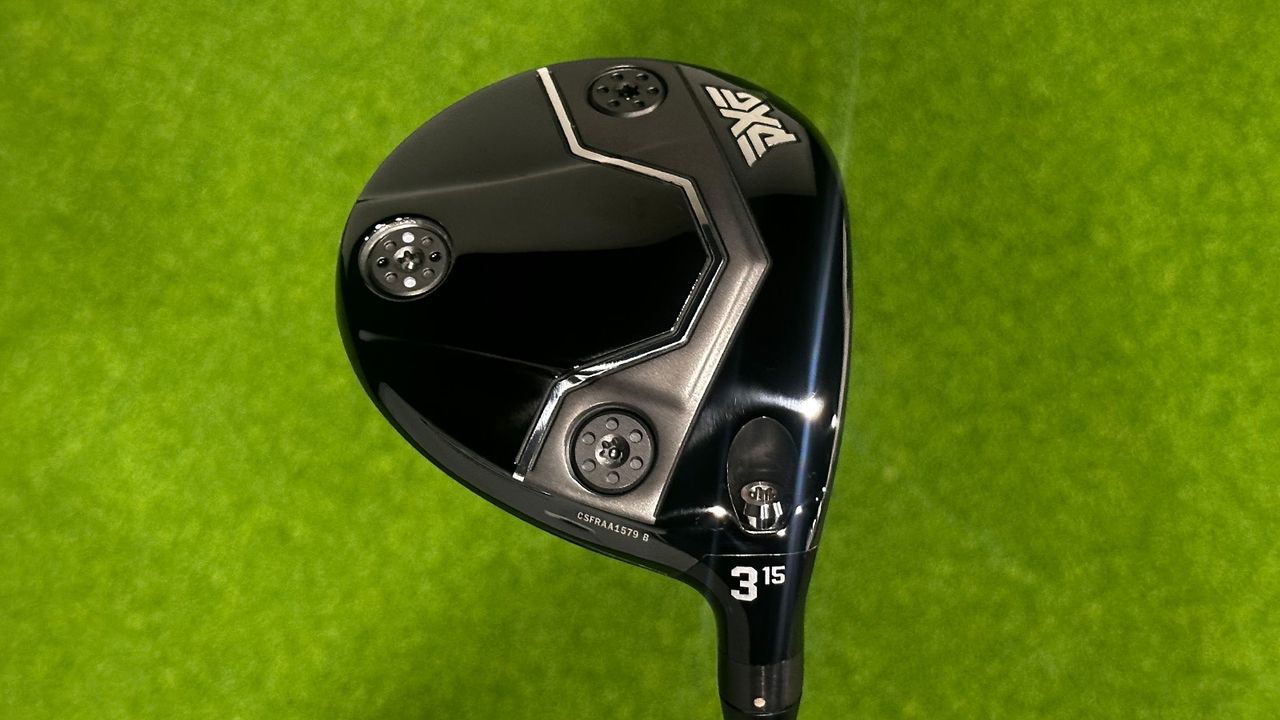
Ultimately, I had to put the looks aside and focus on what the standard Lightning was built to do, which is deliver consistency. The high-strength carbon fiber crown gives the whole package a premium, modern, yet stealthy look that PXG is famous for, allowing mass to be pushed low and back for stability. The lower CG placement on this head also delivers an ease of launch from the fairway - a trait typically found in the more forgiving fairway wood options from each manufacturer.

The PXG Lightning fairway wood at address (Image credit: Future)

The feedback from the proprietary face material, which is engineered to be thinner and 4% more flexible than the previous Black Ops model, offers a powerful sensation through the hit, and the acoustics match it. It’s on the louder side of the spectrum, but if you want a fairway wood that sounds fast off the face, then the Lightning certainly delivers.

The face of the PXG Lightning fairway wood (Image credit: Future)

On a solid strike, I saw ball speeds hovering around the 157mph mark, which was a marginal gain of 1mph over the 0311 Black Ops fairway wood. The spined sole design, which PXG claims is crucial for maximum energy transfer, seemed to be working on those shots hit well, but even off-center hits retain that incredible solidity, which is a massive confidence booster when trying to reach par-5s with trouble that lingers short of the green.

Data collected on the PXG Lightning fairway woods using a Foresight GC3 launch monitor (Image credit: Future)

The technology packed into this head is all geared towards consistency, with the biggest standout feature being the new Progressive Face Geometry. This is a clever idea where the engineers have adjusted the bulge and roll curvature based on the loft.

My lightning 3-wood (15°) has more corrective curvature to keep mishits on line, while higher-lofted options have less. This helps deliver an incredibly tight dispersion pattern, which was something I noticed, particularly from front-to-back dispersion, where in 13 measured shots using a Foresight Sports GC3 launch monitor, I saw less than two yards difference!

Sam De'Ath testing the PXG Lightning using a Foresight Sports GC3 Launch Monitor (Image credit: Future)

PXG has carried on the Precision Weighting System that has been used in previous models, with the standard Lightning offering three ports (back, toe, and heel), giving exceptional directional bias adjustability. If you’re struggling with a left-to-right miss, you could switch the heavier weight into the heel to help promote face rotation, as well as use the hosel to change loft and ever so slightly, face direction.

The PXG Lightning fairway wood has interchangeable weight ports to alter CG placement and ball flight (Image credit: Future)

While cosmetically, I don’t see a whole lot of change between the Lightning and the previous 0311 model, the performance was where the Lightning shone. Faster ball speed equated to more distance, and the playable nature and forgiveness from mishits, I think, will see this club become extremely popular, particularly with mid-handicapper golfers.

Sign up to read this article
Read news from 100’s of titles, curated specifically for you.
Already a member? Sign in here
Related Stories
Top stories on inkl right now
One subscription that gives you access to news from hundreds of sites
Already a member? Sign in here
Our Picks
Fourteen days free
Download the app
One app. One membership.
100+ trusted global sources.