Get all your news in one place.
100's of premium titles.
One app.
Start reading
The Economic Times
The Economic Times

Push 3-language formula for class 6 to next academic year, Supreme Court tells CBSE

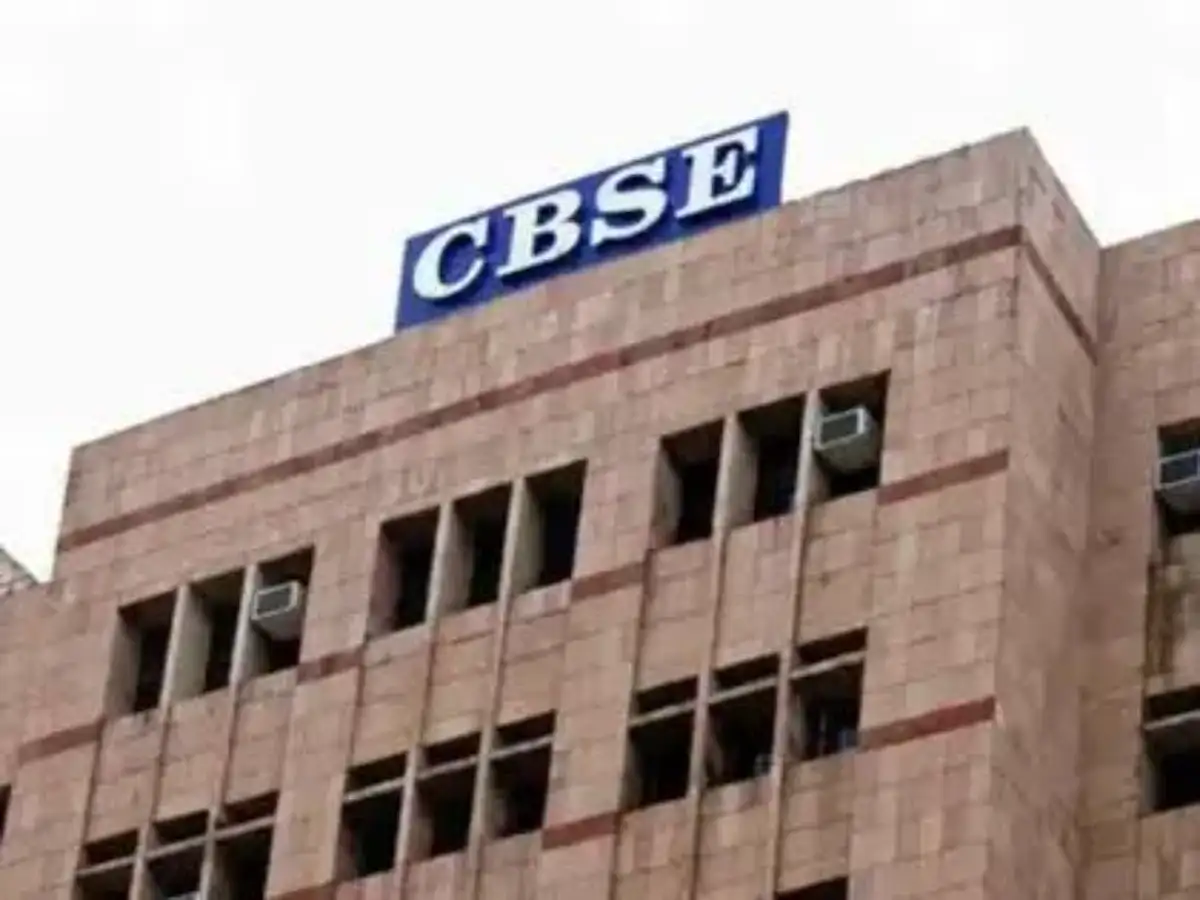
The Supreme Court on Thursday suggested that the Central Board of Secondary Education (CBSE) consider implementing its policy mandating the study of three languages, including two native Indian languages—for Class 6 students from the next academic session starting in 2027.

A bench comprising Chief Justice Surya Kant and Justices Joymalya Bagchi and V. Mohana heard the matter. Justice Bagchi remarked at the outset that "just to comfort the children, the CBSE should consider deferring the implementation of the three-language policy from the next academic year." He added that "if the students, who are in Class 6 at present, want to study three languages from this year, they can also be allowed."

Representing the CBSE, Additional Solicitor General Aishwarya Bhati stated that the board would consider the suggestion and present a fresh note on the issue. The bench clarified that its suggestions were made without prejudice to the rights and contentions of the parties, and that the core legal issues would be decided later.

Also read: India's climate priorities gain voice at UN Human Rights Council

The Centre and the CBSE had previously informed the court that they were working on earlier judicial suggestions regarding the rollout for Class 6 students. The top court had agreed to examine a plea challenging the policy on May 27, issuing notices to the Centre, the CBSE, and the NCERT.

Background of the CBSE circular

The initiative is part of the CBSE's alignment of its scheme of studies with the National Education Policy 2020 (NEP) and the National Curriculum Framework for School Education 2023 (NCF-SE). Under a circular issued on May 15, the study of three languages, with at least two being native Indian languages, was made compulsory for Class 9 students beginning July 1.

The CBSE circular outlined the following framework:

  • Language Mandate: “Every student in Class 9 would study three languages. Out of the three languages, at least two would be Bhartiya Bhashas. Examples of Bhartiya Bhashas: Hindi, Sanskrit, Tamil, Telugu, Kannada, Malayalam, Marathi, Bengali, Punjabi, Gujarati, Odia, Assamese, etc. Examples of non-native languages: English, French, German, Arabic, Spanish, etc.”
  • Foreign Languages: Students opting for a foreign language may do so only as a third language after studying two native Indian languages, or as an additional fourth language.
  • Timeline: “With effect from July 1, 2026, for Class 9, the study of three languages (R1, R2, R3) shall be compulsory, with at least two languages being native Indian languages.”

The board made two Indian languages mandatory for Class 6, providing some relaxation for students in Classes 7, 8, and 9 who were already studying two non-native languages.

Also this: Govt should roll-back population control rules, incentives: EAC-PM Working Paper

To manage resources and student workload, the CBSE stated that until dedicated R3 textbooks become available, Class 9 students will use the Class 6 R3 textbooks (2026–27 edition) for their chosen language. Furthermore, the board confirmed that "to keep the focus on learning and reduce any undue pressure on students, no board examination shall be conducted for R3 at the Class 10 level." Schools were previously asked to update their R3 language offerings for Classes 6 to 9 on the OASIS portal by June 30.

Sign up to read this article
Read news from 100's of titles, curated specifically for you.
Already a member? Sign in here
Related Stories
Top stories on inkl right now
Our Picks
Fourteen days free
Download the app
One app. One membership.
100+ trusted global sources.