
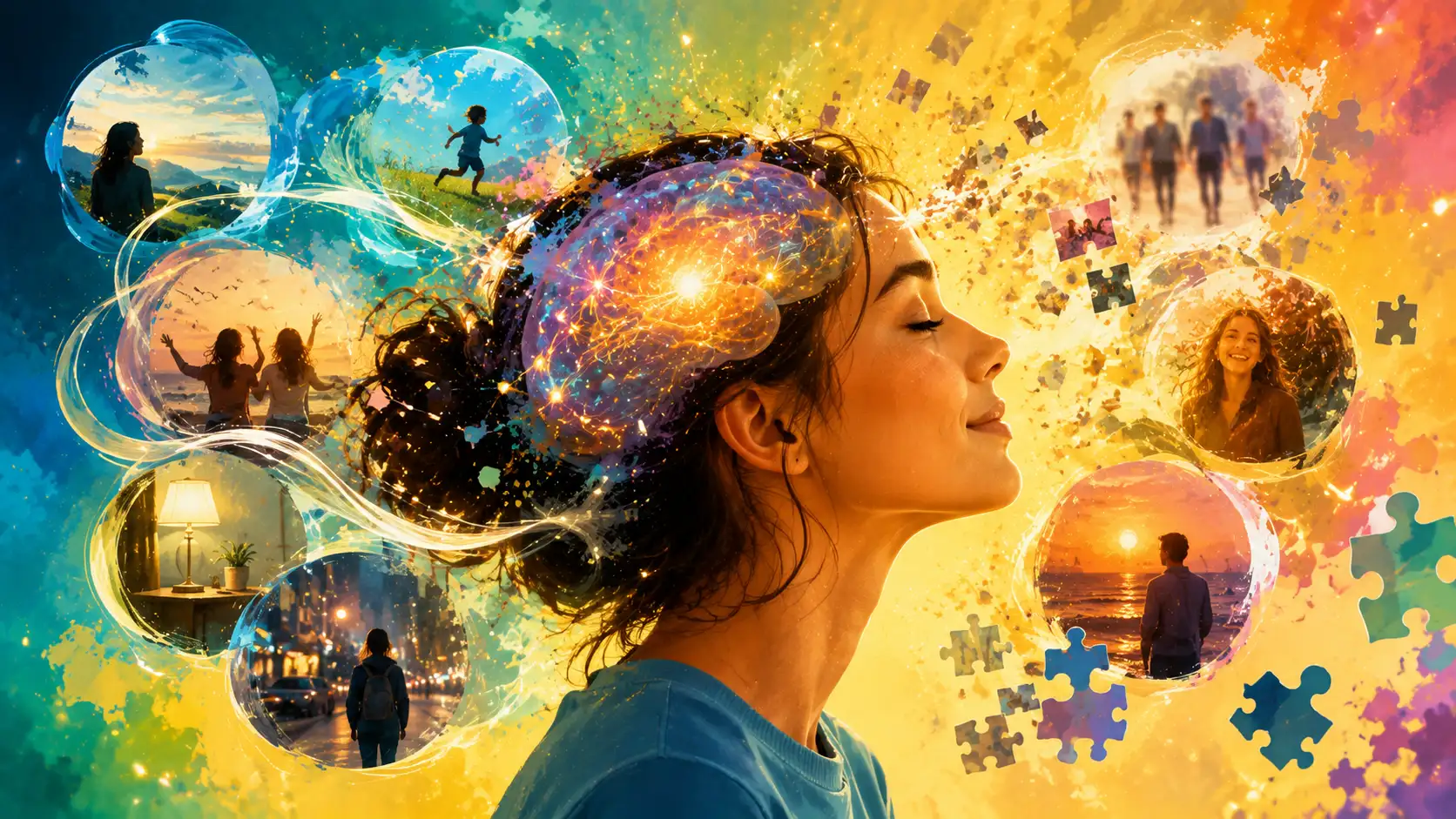
Most people think of memory as a video recording stored somewhere inside the brain. We often believe that when we remember a birthday party, a graduation or a family vacation, we are simply replaying an accurate record of what happened. Psychology says the process is much more complex. Decades of research suggest that memory is not a fixed recording but a dynamic reconstruction. Every time you recall an experience, the memory briefly becomes flexible before it is stored again. During this process, known as memory reconsolidation, new information, current emotions and later experiences can subtly influence what is remembered. This does not mean all memories are unreliable. Instead, psychologists explain that memory is remarkably useful precisely because it can adapt and update over time. Several well-established theories help explain why our recollections sometimes change without us even realizing it.














