Get all your news in one place.
100's of premium titles.
One app.
Start reading
The Economic Times
The Economic Times
Aastha Raj

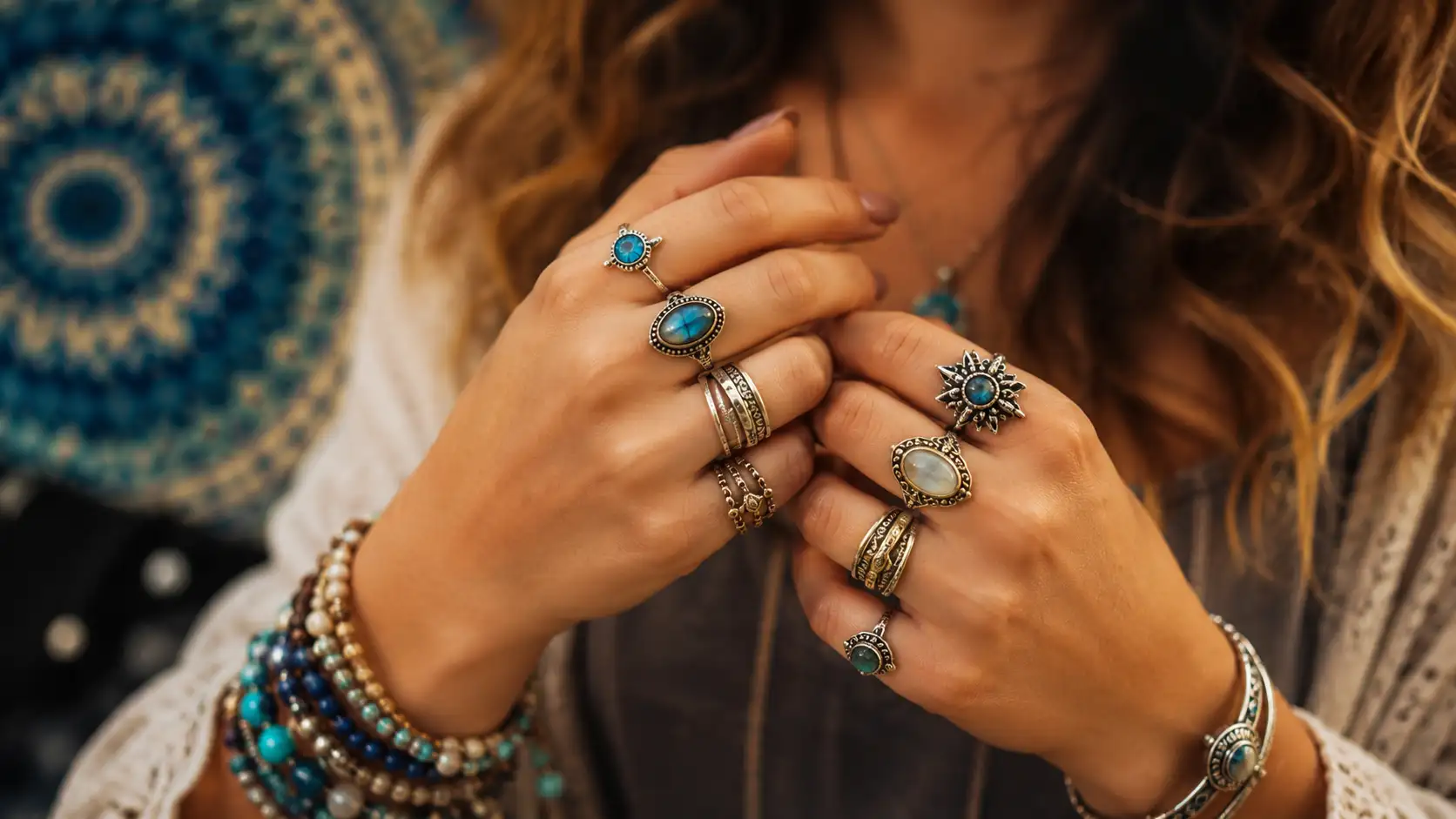
Psychology says people who wear lots of rings aren't necessarily trying to stand out, they may be expressing identity and personal meaning

Some people wear a single ring every day. Others wear several. They stack rings across multiple fingers, mix metals, collect gemstone designs, or wear rings that carry sentimental value. For them, rings become part of their everyday appearance. At first glance, it may seem like they're simply following fashion trends or trying to attract attention.

Psychology suggests there may be more to it. Clothing and accessories often serve as tools for self-expression. They can communicate identity, preserve memories, reinforce values, and even strengthen a person's sense of self.

That doesn't mean everyone who wears many rings has the same motivation. Some simply enjoy jewelry or appreciate craftsmanship. Still, several well-established psychological theories help explain why rings can become emotionally meaningful.

READ ALSO: Psychology says people who don't like talking to customer care aren't necessarily antisocial, they may be trying to reduce stress and uncertainty

Jewelry can become part of personal identity

One of the strongest explanations comes from Extended Self Theory, developed by consumer psychologist Russell Belk. The theory suggests people often view certain possessions as extensions of who they are.

Instead of being "just objects," meaningful belongings become connected with identity. For example, someone may wear a ring inherited from a grandparent alongside rings collected during important life milestones. Each piece represents part of their personal story. Removing them may feel like leaving part of their identity behind.

Rings often carry symbolic meaning

Another explanation comes from Symbolic Self-Completion Theory, developed by psychologists Robert Wicklund and Peter Gollwitzer. The theory suggests people use meaningful symbols to reinforce aspects of their identity.

A ring may symbolize creativity, commitment, independence, spirituality, family heritage, or personal achievement. Imagine an artist who wears handcrafted silver rings because they reflect creativity and individuality. The jewelry becomes a visible reminder of values rather than merely decoration.

Personal objects strengthen emotional attachment

Research on Attachment to Possessions suggests people often form emotional bonds with meaningful objects. Unlike ordinary accessories, sentimental rings frequently become connected with important relationships or memories.

For example, someone may continue wearing a ring received from a close friend years earlier, even after fashion trends change. The emotional connection matters more than appearance.

READ ALSO: Psychology says people who insist on homemade desserts every Fourth of July are not just serving sweets, they are serving emotional traditions with sugar

Self-expression helps communicate personality

Psychologists studying Self-Expression have found that people naturally use appearance to communicate aspects of their personality. Clothing, hairstyles, tattoos, and jewelry all contribute to this process. Someone who wears bold statement rings may enjoy artistic expression. Another person may choose minimalist bands that reflect simplicity. Neither style reveals a complete personality, but both allow individuals to communicate something about themselves before speaking.

Rings can trigger meaningful memories

Another useful explanation comes from Autobiographical Memory. Objects connected with important life events often help people recall personal experiences. A graduation ring may remind someone of years of hard work. A family heirloom may bring back memories of loved ones. A travel souvenir ring may recall a favorite vacation. Every glance at the ring becomes a small reminder of meaningful moments.

Familiar accessories create psychological comfort

Researchers also describe the Mere Exposure Effect, introduced by psychologist Robert Zajonc. The theory suggests people often develop stronger preferences for things they encounter repeatedly. Someone who wears the same rings every day may become accustomed to their presence.

Over time, putting them on each morning becomes part of a familiar routine. Without them, the person may feel that something is missing, even if nobody else notices.

Wearing many rings isn't always about attracting attention

A common misconception is that people who wear several rings simply want others to notice them. Psychology doesn't support such a broad conclusion. Many people choose rings because they carry emotional significance, represent important values, preserve memories, or simply make them feel more like themselves. The jewelry often has personal meaning that others cannot see.

Psychology suggests that people who wear lots of rings aren't necessarily trying to stand out. For some people, every ring tells a story, and wearing them each day is one way of carrying those stories wherever they go.

FAQs

Why do some people wear lots of rings?

Psychologists say rings can serve as symbols of identity, memories, relationships, personal values, or creative self-expression.

Does wearing many rings mean someone wants attention?

Not necessarily. Many people wear rings because of sentimental value or personal meaning rather than a desire to stand out.

Sign up to read this article
Read news from 100's of titles, curated specifically for you.
Already a member? Sign in here
Related Stories
Top stories on inkl right now
One subscription that gives you access to news from hundreds of sites
Already a member? Sign in here
Our Picks
Fourteen days free
Download the app
One app. One membership.
100+ trusted global sources.