
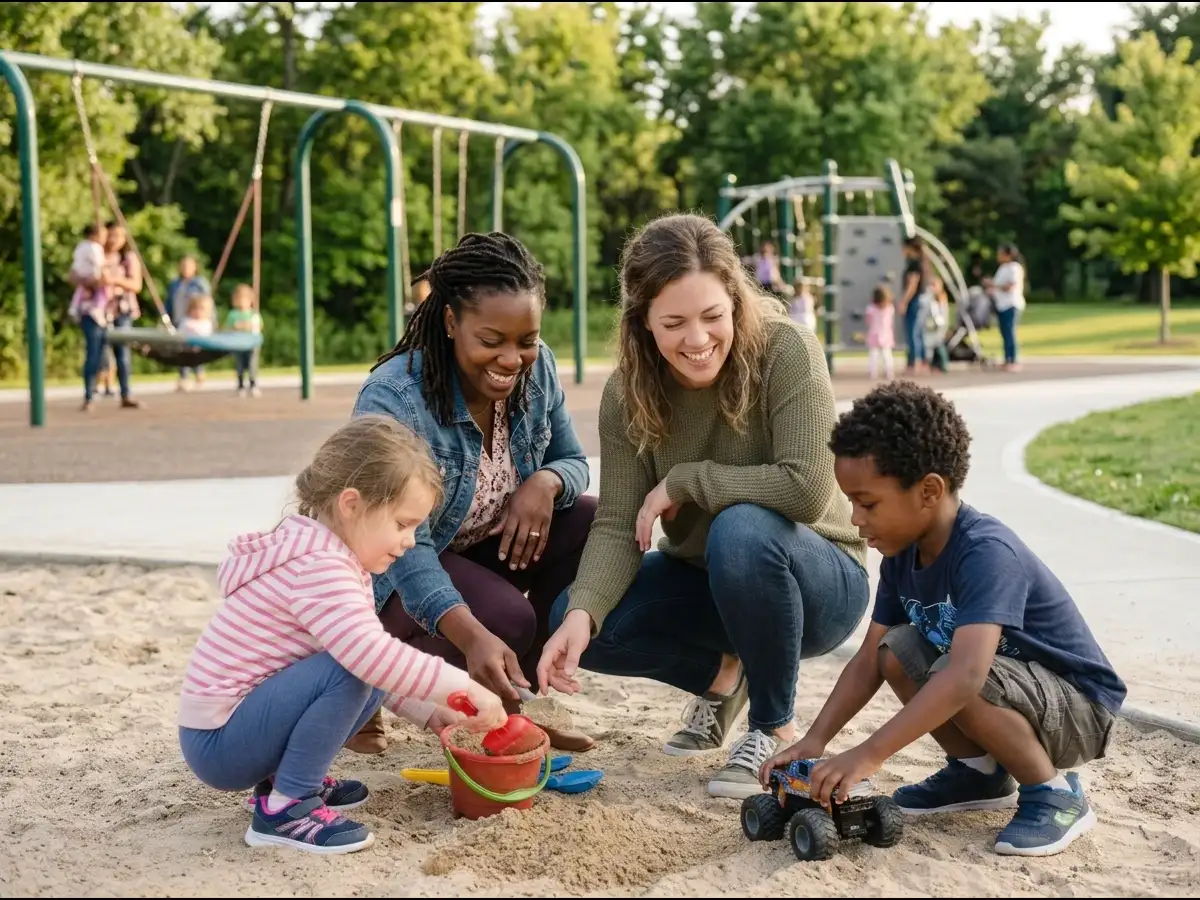
Psychology says people who take their kids for play dates aren't only giving their children time with other children. A playdate can become a place where children learn how to share, communicate, negotiate and respond to disagreement. Parents also play a role because they often select the children, decide the time and set the rules. Changes in neighborhoods, safety concerns and structured schedules have also changed how children meet and play. Instead of simply going outside and finding other children, many children now depend on parents to arrange these meetings. Psychology and social research therefore connect playdates with child development, school readiness, peer relationships and community networks.














