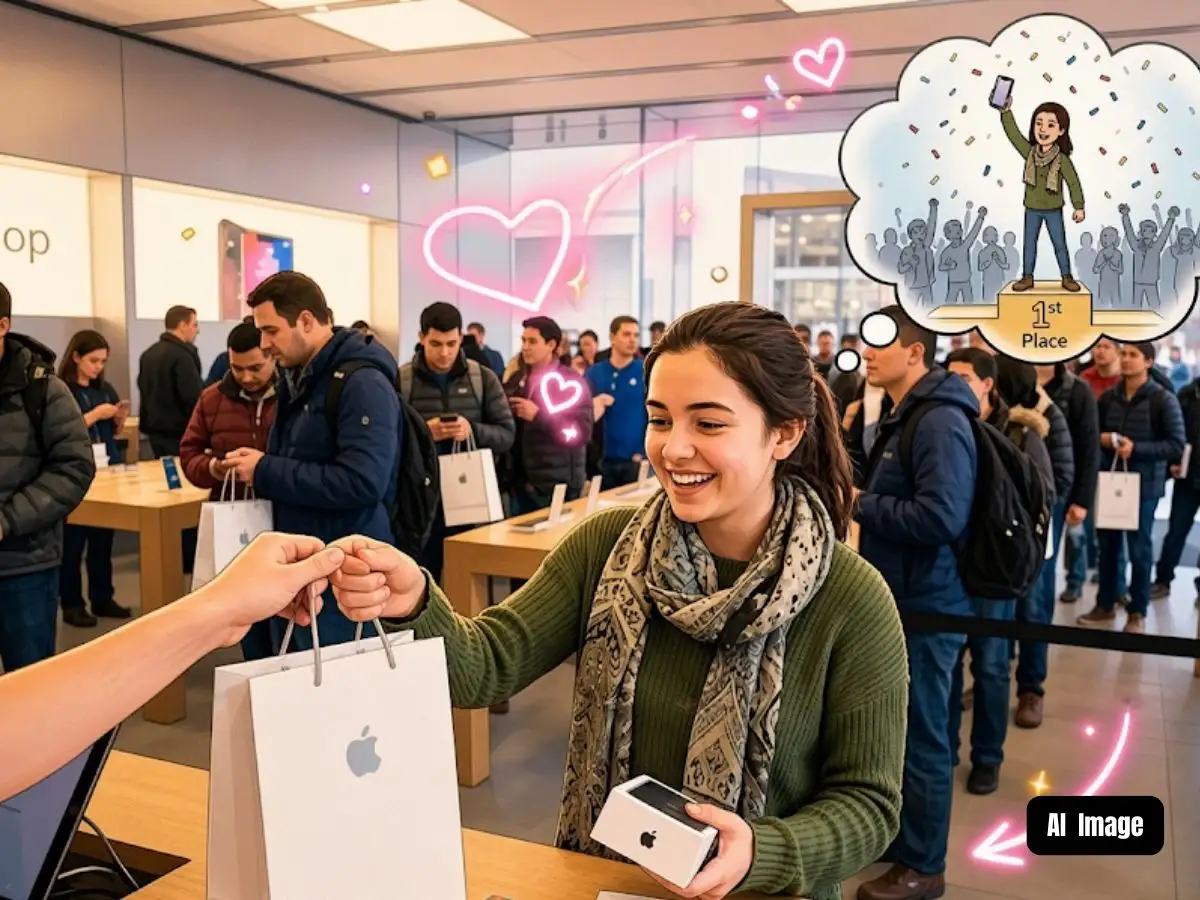
iPhone buying psychology: The doors of Apple stores across the world opened this morning for iPhone 18 Pro and iPhone Pro Max sales. Somewhere outside a glass storefront, a man who has been awake since 3am is being handed a Apple iPhone in a paper bag by a staffer in a coloured T-shirt, and a small crowd is clapping for him. He might be an Apple loyalist. He might also be a reseller's runner, a lonely retiree, a teenager filming vertical video, or a man who simply likes the feeling of being applauded. But the pscychology researchs on this is surprisingly blunt: for a large share of the people in that line, the handset is close to incidental.
Long queues outside Apple stores have become a familiar sight whenever a new iPhone goes on sale. But if people can order the same phone online, why do some still arrive hours before a store opens and wait in line? The answer may have less to do with simply wanting a new smartphone and more to do with what psychologists and consumer researchers call competition, social influence, scarcity and the experience of waiting.
On Friday, September 18, the iPhone 18 Pro and iPhone 18 Pro Max went on sale in India, with long queues reported outside Apple stores in Delhi, Noida, Gurugram, Mumbai and Bengaluru. Videos and reports showed customers arriving well before stores opened, with some saying they wanted to be among the first to get the new phone.
The interesting part is that the queue itself may be influencing how people feel about the purchase.
Psychology behind iPhone 18 long queues: It may be about being first, not just owning an iPhone
It might be about being first, not just about having an iPhone. A 2023 study published in the Journal of Retailing and Consumer Services examined why consumers queue for newly released products.
Researchers termed this competitive consumption. In their study, they found that competitive arousal can affect a person’s intention to queue for a new product. This feeling was driven by the confluence of factors including the perceived uniqueness and popularity of the product, perceived scarcity, a person’s need for uniqueness and the self-enhancement value associated with the purchase. Put simply, the appeal could be more than just having the newest device. For some consumers, there is also a psychological payoff in getting it first before others do.