
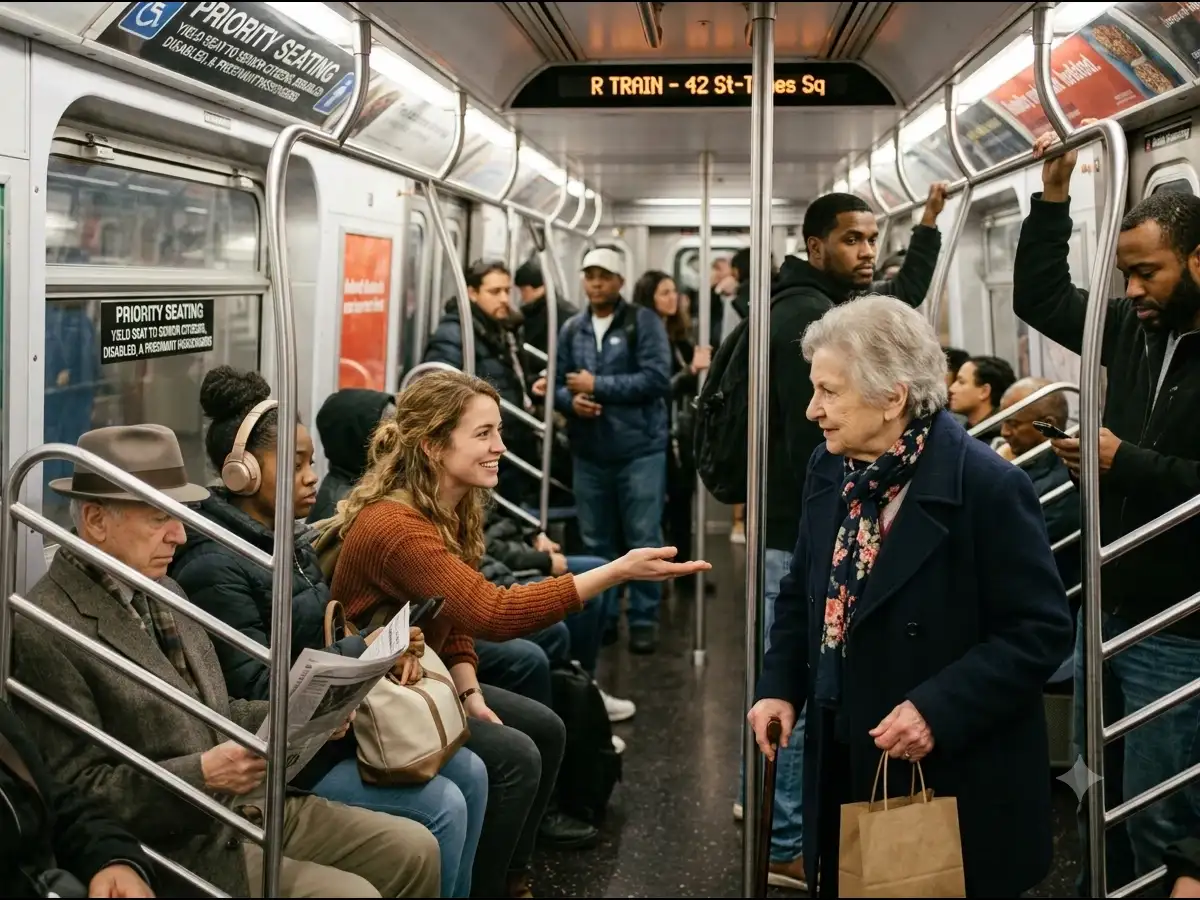
Psychology says people who offer unreserved seats to any senior citizen or anyone who may need it more than them aren't simply following a rule or displaying basic politeness. The behavior can reflect how a person notices the people around them and responds to another person's physical or emotional needs. On public transport, an unreserved seat can be useful to anyone. A passenger may have been sitting for several stops when an older person enters the bus or train. Someone who notices the situation and decides to stand may be placing another person's needs ahead of their own comfort.
This behavior is linked with active empathy, prosocial behavior, emotional intelligence and social responsibility. It can also show that a person has learned social values that encourage people to help senior citizens and others who may be vulnerable.














