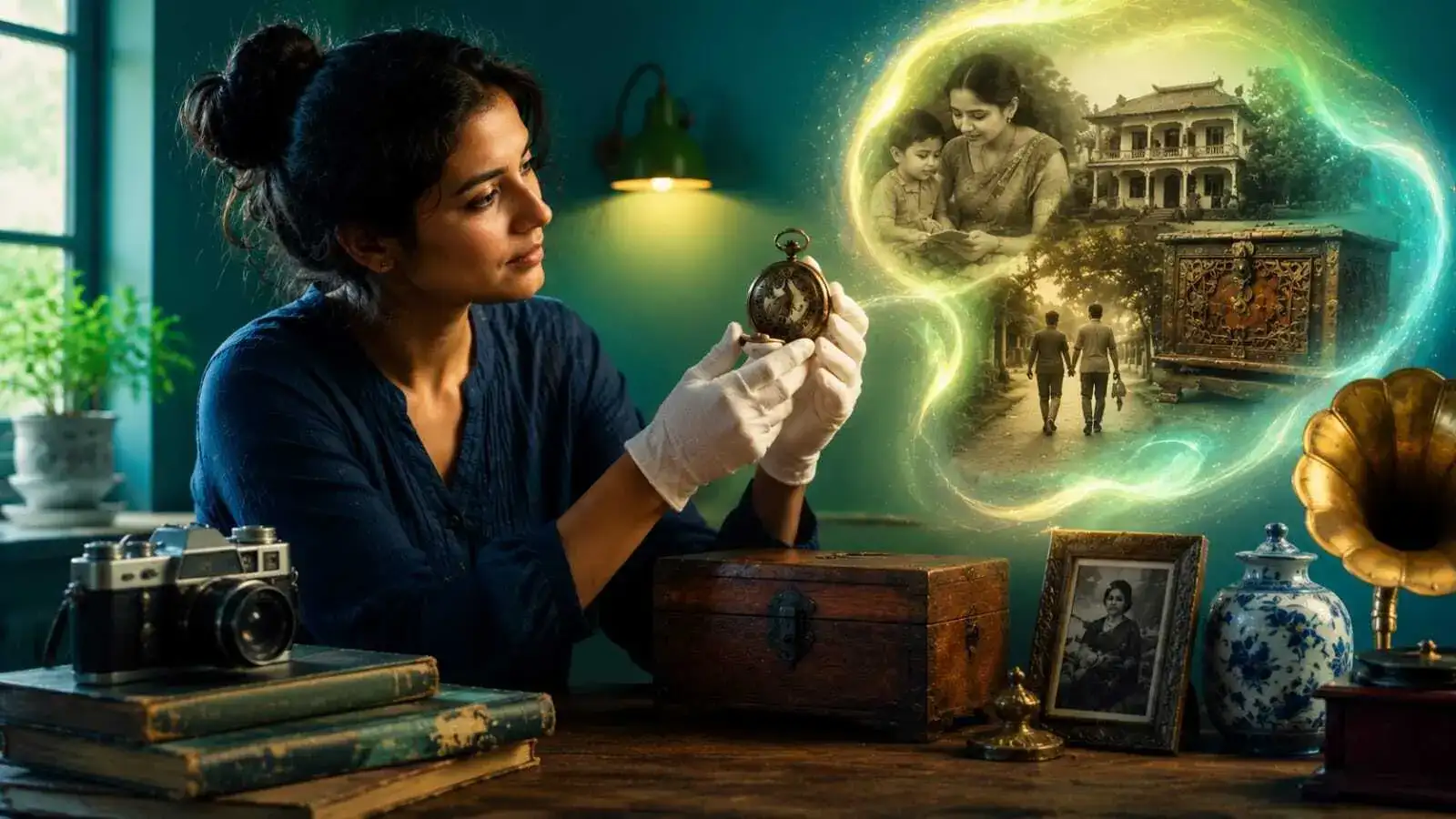
Most people have met someone who becomes excited about an old clock, a vintage camera, a handwritten letter or a piece of furniture that is older than their grandparents. To outsiders, it can seem confusing. Why would someone spend hours searching flea markets, estate sales or antique stores for objects that many people have forgotten? Psychology suggests that antique collectors are not simply interested in old things. They are often fascinated by stories, emotional meaning and the feeling of preserving something that time almost erased.
In today's world, where trends disappear within weeks and technology becomes outdated within years, antique collecting offers something rare: permanence. For many people, these objects are not possessions. They are emotional anchors.

Psychology says nostalgia may be driving the habit
One of the biggest explanations is nostalgia. For years, psychologists believed nostalgia was simply a longing for the past. Today, researchers see it differently. Nostalgia is now understood as an emotional resource that helps people feel connected, optimistic and grounded.
People who collect antiques often enjoy the emotions attached to history. An old radio may remind them of grandparents. A vintage watch may represent another generation's craftsmanship. A handwritten postcard may make them feel connected to a person they never met.
Researchers from the American Psychological Association have frequently highlighted how nostalgia can improve mood, strengthen social bonds and provide emotional comfort.
They may see stories where others see objects
Psychologists also point toward Narrative Identity Theory. This theory suggests humans build their identities through stories. People naturally search for meaning in everyday life. Antique collectors often imagine where an item came from, who owned it and what it witnessed throughout history. The object becomes part of a larger narrative.
Modern examples are everywhere. Social media platforms are filled with creators restoring old furniture, repairing typewriters and preserving forgotten photographs. Millions of viewers watch these videos because humans are naturally drawn to stories. The antique itself becomes a storyteller.
Psychology says collecting creates a sense of stability
The modern world changes quickly. Technology evolves constantly. Trends appear and disappear overnight. This can create uncertainty. Psychologists often discuss something called uncertainty reduction. Humans naturally seek things that feel stable and predictable.
Antiques represent continuity. An object that has survived 50, 100 or even 200 years can feel reassuring. It reminds people that some things endure despite changing times. For many collectors, that feeling creates emotional comfort.
The brain enjoys the thrill of discovering hidden treasures
There is also a reward component involved. Psychologists refer to this as reward anticipation. The brain releases dopamine not only when people obtain something valuable, but also during the search itself. This explains why antique collectors often enjoy the hunt as much as the purchase.
Walking through flea markets, estate sales and old bookstores creates excitement because the outcome is uncertain. The brain loves positive surprises. Modern examples are easy to find. People spend hours searching online marketplaces for rare finds. Others travel specifically to antique fairs and vintage markets. The search itself becomes part of the experience.
Collecting may also strengthen a person's identity
Another explanation comes from Self-Concept Theory. Humans often use possessions to express who they are. People wear certain clothes, decorate their homes and pursue hobbies that reflect their values.
Antique collecting can become part of personal identity. It may communicate appreciation for history, craftsmanship, sustainability or storytelling. Researchers from Harvard Medical School have frequently discussed how meaningful hobbies can contribute to emotional well-being and a sense of purpose. For many collectors, antiques are not random purchases. They are extensions of their personality.
Younger generations are embracing antiques in surprising ways
Antique collecting is no longer associated only with older generations. Younger adults are increasingly participating too. Platforms such as TikTok and Instagram have made vintage aesthetics popular again.
Many younger people are buying antique furniture instead of mass-produced products. Part of this shift is practical. Part of it is emotional. Many people are searching for authenticity in a world filled with digital experiences.
An antique object feels real. It carries imperfections. It carries history. It carries human touch. In many ways, it feels more personal than something that arrived overnight from a warehouse.
Psychology says the antiques are not the story, but the connection is
Psychology teaches us that everyday habits often reveal deeper emotional needs. Collecting antiques is rarely about being obsessed with old things. It is often about connection. Connection to history. Connection to family memories. Connection to identity. Connection to meaning.
In a world that constantly pushes people toward the next big thing, some individuals quietly choose to preserve what already exists.
Because sometimes an old object is more than an object. It is proof that stories can survive. And perhaps that is why antique collectors find so much joy in their hobby. They are not living in the past. They are making sure pieces of it are never forgotten.
FAQs
Why do some people enjoy collecting antiques?
Many collectors enjoy the stories, history and emotional meaning attached to old objects.
Is collecting antiques connected to nostalgia?
Often, yes. Nostalgia can create feelings of comfort, belonging and connection.