Get all your news in one place.
100's of premium titles.
One app.
Start reading
The Economic Times
The Economic Times
Gandharv Walia

Psychology says people who ask others to move a little bit and let them sit even if there is not much space in metro, train, bus or other public transport aren't being inconsiderate: What this behavior may reveal?

Psychology says people who ask others to move a bit and let them sit even if there is not much space in public transport aren't always acting without concern for others. Public transport is a shared environment where people constantly adjust to limited space. Every day, passengers make decisions about where to stand, sit, and interact with strangers. A polite request for a small amount of seating space may seem simple, but psychology suggests it can reflect communication skills, social confidence, and an understanding of cooperation. Experts believe the meaning of such behavior depends on the way the request is made and the surrounding situation.

Understanding this common public transport behavior

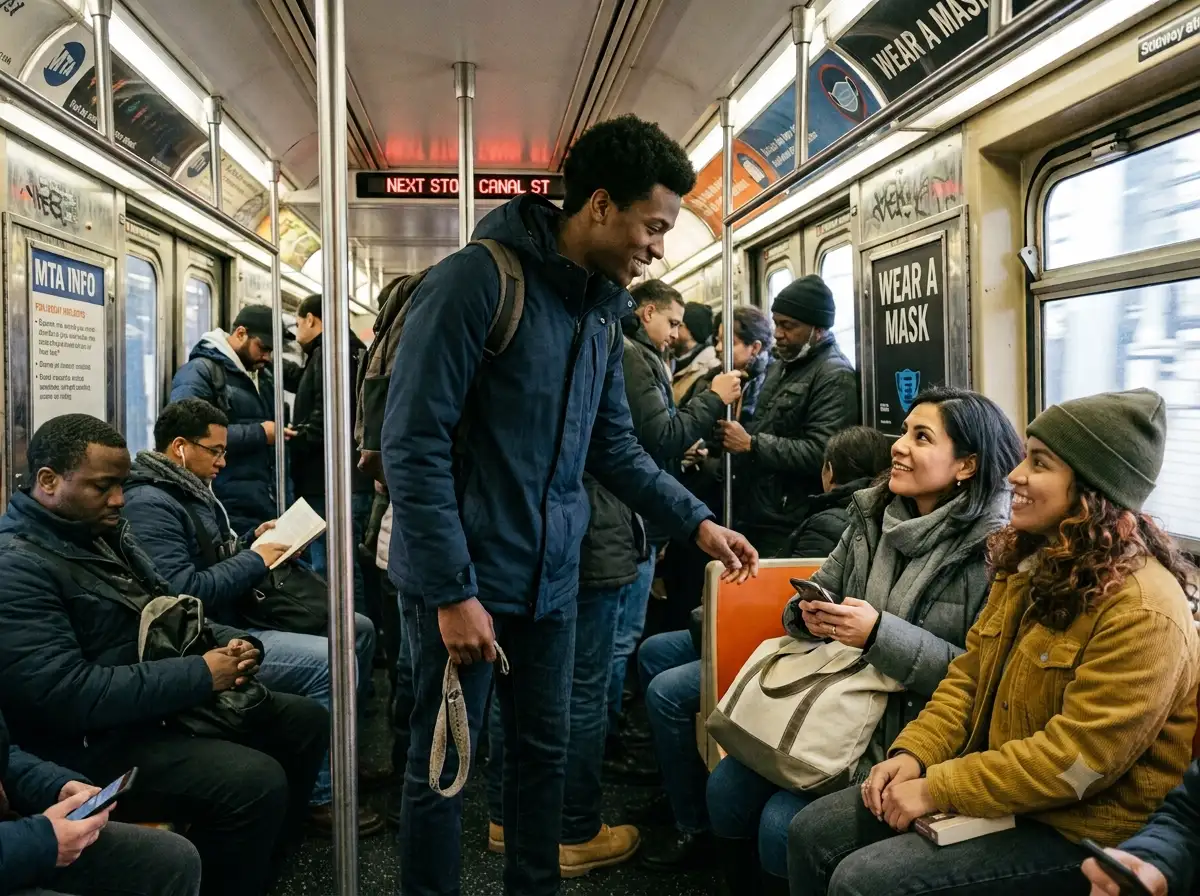
Millions of people travel daily by metro, train, bus, and other public transport. During busy hours, seats become limited. Some passengers notice a small gap on a bench and politely ask others to move a little so they can also sit.

Many people wonder what this behavior says about a person's personality. Psychology does not judge such actions by appearance alone. Instead, it looks at intention, communication style, respect for others, and the social setting. When the request is polite, respectful, and reasonable, psychologists say it often reflects healthy social interaction rather than rude behavior.

Psychology says people who ask others to move a little bit and let them sit even if there is not much space aren't necessarily selfish

Many people immediately assume that someone asking for space is being demanding. Psychology suggests this is not always true. A polite request may simply show that a person believes shared resources should be used fairly. Public seating is meant for multiple passengers whenever possible.

If someone asks respectfully and accepts the answer without creating conflict, the behavior usually reflects social confidence instead of entitlement. The key difference is how the request is made.

What psychology says?

Psychology explains that human beings naturally communicate to meet everyday needs. Instead of remaining uncomfortable or making assumptions, some people choose direct communication. Researchers studying social behavior have found that respectful requests often improve cooperation between strangers. Clear communication reduces confusion and helps people understand each other's needs.

Psychology also notes that many people avoid making requests because they fear rejection. Therefore, someone who politely asks for a little space may simply feel comfortable communicating.

What does this mean?

This behavior may indicate several psychological characteristics, including:

  • Confidence in communicating with strangers.
  • Understanding that public spaces belong to everyone.
  • Willingness to solve small problems through conversation.
  • Comfort with social interaction.
  • Respect for shared resources.

It does not automatically mean the person lacks manners or personal boundaries. Instead, psychology suggests that context matters more than the action itself.

Why is it done?

There are several practical reasons why people ask others to move slightly.

These include:

  • They have been standing for a long time.
  • The journey is expected to be long.
  • They notice enough space for another passenger.
  • They want to reduce physical discomfort.
  • They believe everyone should have equal access to available seating.

Most of these reasons are practical rather than emotional. In many cases, people simply see an opportunity to make better use of limited space.

READ ALSO: Psychology says people who don't share problems or tensions with their parents aren't emotionally distant: What this behavior may actually mean?

Which psychology theory explains this behavior?

One theory connected to this behavior is Social Exchange Theory. This theory suggests that people often make decisions by considering the possible benefits and costs of social interactions. When someone politely asks another passenger to move slightly, they expect that both people may benefit. One person gets a place to sit. The other person gives up only a small amount of space. This creates a simple exchange that benefits both sides.

Another useful concept is Social Norm Theory. Social norms are unwritten rules that guide behavior in society. Sharing seats, making room for others, and responding politely to requests are examples of social norms in many cultures.

This psychology study says

Several studies on communication and prosocial behavior suggest that polite requests often receive positive responses because they encourage cooperation. Research on helping behavior has also shown that people are more willing to assist strangers when requests are respectful and reasonable.

Psychologists explain that tone of voice, body language, facial expression, and politeness influence how such requests are received. The behavior itself is only one part of the interaction. The manner in which it happens is equally important.

The principle behind it

One important psychological principle behind this behavior is cooperation. People live and travel in shared environments. Public transport depends on passengers working together. Small acts such as moving a little, adjusting a bag, or allowing another person to sit help everyone use limited space more effectively.

Another principle is reciprocity. People often help others because they expect similar kindness when they face the same situation in the future. These small actions strengthen everyday social relationships.

Why communication matters in crowded places?

Crowded public transport requires constant communication. Passengers silently communicate through eye contact, gestures, and body movement. Sometimes verbal communication becomes necessary.

A simple sentence like, "Could you please move a little?" allows both people to understand each other's needs. Clear communication often prevents misunderstandings that could arise from assumptions or frustration. Psychologists believe respectful communication is one of the easiest ways to solve everyday social challenges.

READ ALSO: Psychology says people who like to end their day with a sweet aren't always seeking sugar: What this bedtime habit may reveal about emotions and daily routines?

Respect for personal space also matters

While asking for space is normal, respecting another person's response is equally important. Not every seat has enough room. Some passengers may have medical conditions, luggage, or personal reasons for needing additional space.

Psychology stresses that healthy social behavior includes respecting boundaries after making a request. If someone says there is no room, accepting the response politely is also part of positive communication. This balance helps maintain mutual respect.

What to learn from it?

There are several lessons from this behavior.

  • Polite communication can solve many everyday problems.
  • Respectful requests often receive respectful responses.
  • Public spaces require cooperation.
  • Small actions can improve everyone's experience.
  • Confidence and kindness can exist together.
  • Respect for others should always remain important.

Psychology encourages people to communicate honestly while remaining considerate of others.

Life lessons from the behavior

This everyday situation offers broader lessons beyond public transport. Life often requires people to ask for help, express their needs, and communicate clearly. Being respectful while speaking up allows others to understand what we need.

At the same time, listening carefully and respecting another person's decision builds trust. Psychology suggests that healthy communities grow through cooperation, empathy, fairness, and open communication rather than silence or conflict.

Sign up to read this article
Read news from 100's of titles, curated specifically for you.
Already a member? Sign in here
Related Stories
Top stories on inkl right now
One subscription that gives you access to news from hundreds of sites
Already a member? Sign in here
Our Picks
Fourteen days free
Download the app
One app. One membership.
100+ trusted global sources.