For many Americans, the Fourth of July doesn't feel complete without certain foods. Hot dogs, hamburgers, corn on the cob, watermelon, and backyard barbecues have become almost as recognizable as fireworks and parades. Some people buy hot dogs every Independence Day without even thinking about it. Others say the holiday simply wouldn't feel the same without them.
Psychology suggests this yearly tradition may involve much more than taste. Researchers have found that familiar foods often become linked with memories, relationships, and important life events. Over time, eating the same foods during annual celebrations can trigger emotions that go far beyond hunger. Of course, some people simply enjoy hot dogs. But for many families, the meal has become part of the emotional experience of the holiday itself.

Familiar foods become linked with positive memories
One of the strongest explanations comes from Associative Learning. Psychologists have long known that the brain naturally connects experiences that repeatedly occur together.
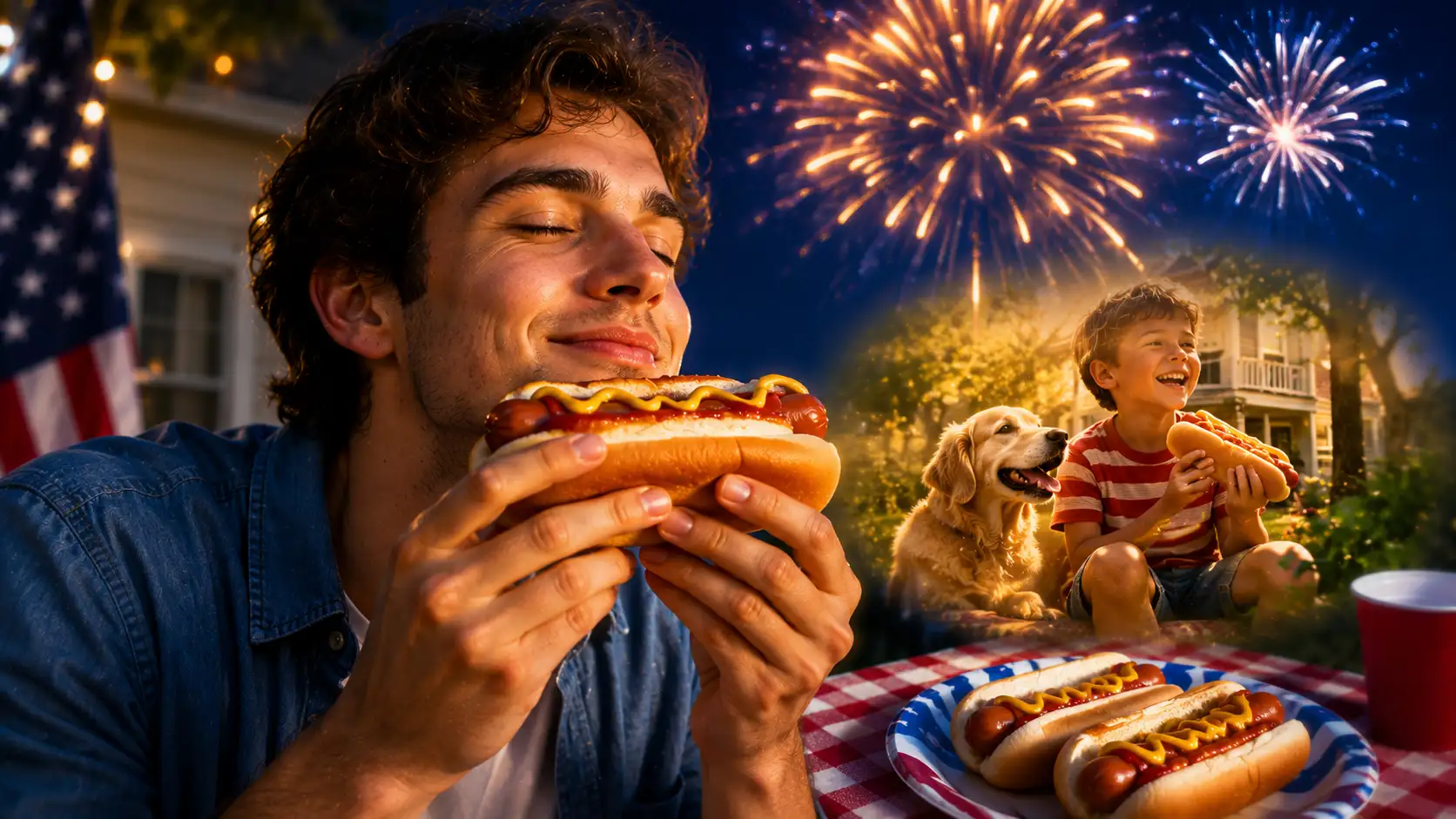
If someone spends years eating hot dogs while celebrating with family, watching fireworks, and playing outdoor games, those experiences gradually become associated. Years later, the smell of a hot dog on the grill may instantly remind them of childhood summers.
For example, someone attending a neighborhood barbecue may suddenly remember grandparents, cousins, or family picnics from decades earlier. The food becomes a cue that activates pleasant memories.
Nostalgia makes traditions emotionally meaningful
Another explanation comes from research on Nostalgia. Psychologists have found that nostalgic memories often increase positive emotions, strengthen social connection, and create a sense of continuity across different stages of life.
Holiday foods are especially powerful nostalgia triggers because they are repeated year after year. A person who ate hot dogs every Fourth of July as a child may continue the tradition as an adult, not because the food is extraordinary, but because it reminds them of carefree summers, family gatherings, and shared laughter. The emotional experience often matters just as much as the meal itself.
Rituals help create stability
Researchers also study the psychology of Rituals. Unlike everyday routines, rituals carry symbolic meaning. Preparing the grill, setting up picnic tables, and serving the same familiar foods each Independence Day can create a sense of predictability and comfort.
Imagine a family that has celebrated the Fourth of July in the same backyard for twenty years. Even if family members now live in different states, returning to those traditions can make the holiday feel complete. The hot dog becomes part of the ritual that connects generations.
Shared meals strengthen social identity
Another useful explanation comes from Social Identity Theory, developed by psychologists Henri Tajfel and John Turner. People often define themselves through the groups they belong to, including families, neighborhoods, and communities. Sharing traditional holiday meals reinforces that sense of belonging.
For example, attending a community cookout where everyone eats similar foods creates a feeling of participation in something larger than oneself. The meal becomes a shared cultural experience rather than simply lunch.
Comfort foods can influence emotions
Research on Comfort Foods suggests that familiar meals associated with supportive relationships may temporarily increase feelings of warmth, belonging, and emotional security. Importantly, psychologists emphasize that comfort foods do not work the same way for everyone.
Someone who associates hot dogs with joyful family celebrations may experience positive emotions when eating them. Someone without those memories may simply see them as another barbecue food. The emotional meaning depends on personal experience.
Episodic memory helps bring the past to life
Another explanation involves Episodic Memory, the system responsible for remembering personal life events. Unlike facts or general knowledge, episodic memories allow people to mentally revisit specific experiences.
The first bite of a grilled hot dog might remind someone of sitting on a picnic blanket as a child while waiting for fireworks to begin. The taste, smell, and setting work together to reactivate memories that may not have surfaced for years.
Eating hot dogs on the Fourth of July isn't just about tradition
A common misconception is that people continue holiday food traditions simply because "that's how it's always been." Psychology suggests the picture is more complex. Many traditions survive because they strengthen emotional bonds, reinforce family identity, and reconnect people with meaningful memories. The food itself becomes part of the celebration's emotional landscape.
Psychology suggests people who always eat hot dogs on the Fourth of July aren't simply following tradition.
Associative learning, nostalgia, ritual psychology, social identity, comfort food research, and episodic memory all suggest that familiar holiday foods can become powerful reminders of family, community, and shared experiences. For many people, the hot dog is more than a meal, it's a small tradition that helps make the holiday feel like home.
FAQs
Why do people eat hot dogs every Fourth of July?
Psychologists say familiar holiday foods often become linked with positive memories, family traditions, and annual celebrations through associative learning.
Why do certain foods bring back childhood memories?
Foods can trigger episodic memories because taste and smell are closely connected to the brain's memory systems.