
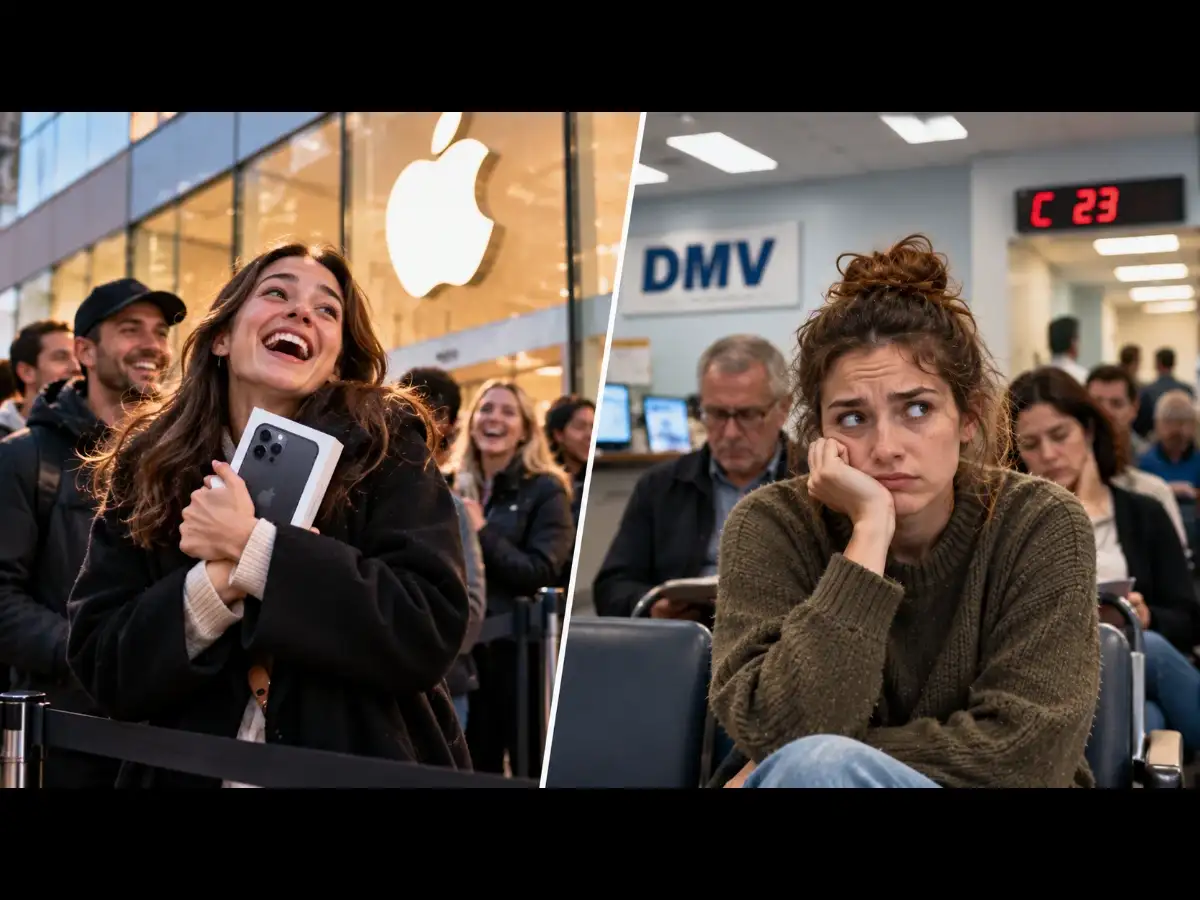
Someone can voluntarily stand outside a store for two hours waiting to buy a newly released iPhone, yet become irritated after 20 minutes in a DMV line or airport security queue. Mathematically, it makes little sense. Psychologically, it makes much more sense. Humans don't experience waiting purely by counting minutes. Research on perceived waiting time, anticipation, uncertainty, curiosity and perceived control suggests that what we are waiting for, and how we interpret the wait, can dramatically change the experience. A two-hour wait attached to an exciting reward can become part of an anticipated event. A much shorter bureaucratic queue can instead feel like time being taken away from us.














