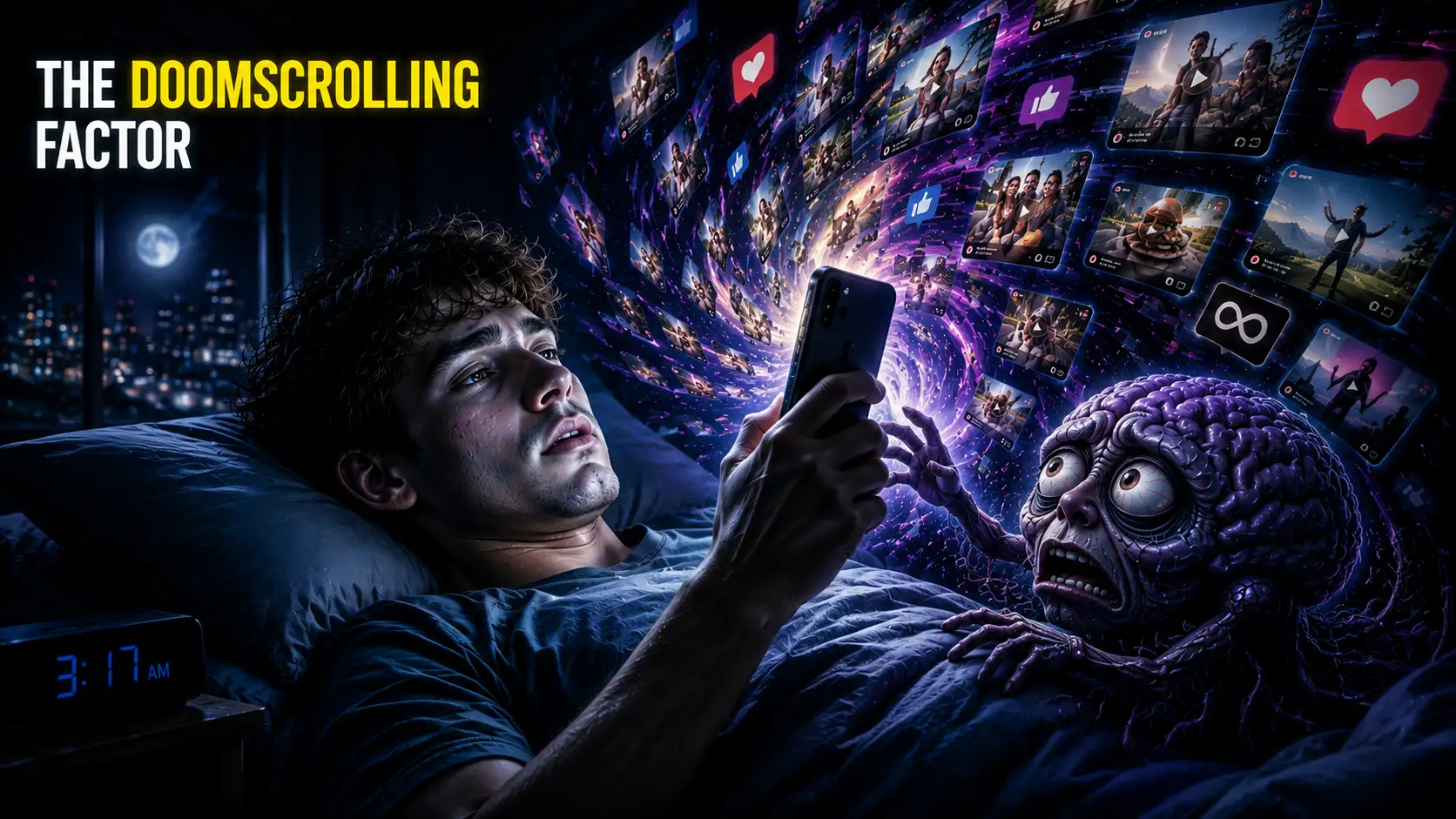
It starts with a simple promise: just one more video. A few minutes before bedtime, someone opens a social media app to relax. One short clip becomes five. Five become twenty. Before they realize it, an hour has passed, their eyes feel heavy, and sleep has been pushed further away. Yet despite obvious fatigue, they continue scrolling.
Most people assume this behavior is a lack of self-control. Psychology suggests something more complicated is happening. Late-night scrolling often has less to do with entertainment and more to do with how the brain responds to stress, fatigue, emotional needs, and modern digital environments designed to keep attention locked in place.

As platforms such as TikTok, Instagram, and YouTube continue refining recommendation algorithms, understanding why the brain struggles to disconnect has become increasingly important.
The Brain Is Chasing Rewards, Not Rest
One of the strongest psychological explanations involves the brain's reward system. Behavioral researchers have long studied what is known as variable reinforcement. This principle suggests that unpredictable rewards are especially powerful in keeping people engaged.
When scrolling through videos, users never know what they will see next. One clip may be boring, another hilarious, another inspiring, and another emotionally moving. The uncertainty itself becomes rewarding.
Psychologists compare this mechanism to a slot machine. Most pulls produce little excitement, but occasional rewards keep people coming back.
A modern example is someone intending to spend five minutes watching videos before bed but staying online because they keep discovering surprisingly interesting content. The possibility that the next video could be even better makes stopping difficult.
Why Exhaustion Makes Scrolling More Attractive
Many people believe self-control should become stronger when they know they need sleep. Research suggests the opposite often happens.
After a long day of work, studying, caregiving, commuting, or decision-making, the brain experiences what psychologists call decision fatigue. Decision fatigue occurs when mental resources become depleted after repeated choices and responsibilities. As fatigue increases, people often gravitate toward activities requiring minimal effort.
Scrolling perfectly fits this need. Unlike reading a book, solving a problem, or completing a task, scrolling demands very little cognitive effort while providing constant stimulation.
For example, a professional who spent the day attending meetings and solving workplace challenges may find passive scrolling far easier than preparing for sleep, even when exhaustion is obvious.
READ ALSO: Psychology says one late reply can trigger relationship anxiety: Why silence from someone you love feels like rejection, fear and emotional danger
The Psychology Of Revenge Bedtime Procrastination
A growing psychological phenomenon called revenge bedtime procrastination has gained attention in recent years. The concept describes situations in which people delay sleep to reclaim personal time they feel they lacked during the day.
Many adults spend their days meeting obligations, responding to emails, handling responsibilities, and managing schedules. Late at night may feel like the only period entirely under their control.
As a result, people continue watching videos even when they know sleep would be healthier.
Consider someone balancing work, family obligations, and household responsibilities. When midnight arrives, scrolling may feel less like entertainment and more like an attempt to regain a sense of freedom and autonomy.
Why Your Brain Uses Scrolling To Avoid Uncomfortable Feelings
Psychologists also connect excessive scrolling to avoidance coping. Avoidance coping occurs when people distract themselves from stress, uncertainty, loneliness, or difficult emotions rather than addressing them directly.
Nighttime often removes the distractions of daily life. Without work tasks or social interactions competing for attention, thoughts and worries become more noticeable. For some people, scrolling serves as a temporary escape.
A student anxious about exams may continue watching videos to avoid thinking about academic pressure. Someone worried about finances may stay online because silence creates space for anxious thoughts.
In these situations, the content itself is not the primary attraction. The distraction is.
Algorithms Know Exactly How To Hold Attention
Today's digital platforms are specifically designed to maximize engagement. Researchers studying attention economics have found that endless feeds eliminate natural stopping points. Traditional television programs end. Books have chapters. Newspapers have final pages.
Social media feeds do not. Algorithms continuously learn what captures users' attention and respond by delivering increasingly personalized content.
Someone interested in psychology may receive more psychology videos. A sports fan sees additional sports content. Each recommendation feels relevant, making it harder to disengage.
This creates a powerful cycle in which the brain remains focused on the possibility of discovering something even more rewarding with the next swipe.
Why Sleep Keeps Losing The Battle
Psychology offers another explanation through Temporal Discounting Theory. This theory suggests people naturally place greater value on immediate rewards than future benefits.
The pleasure of watching another entertaining video is immediate. The benefits of getting enough sleep, better mood, improved focus, higher productivity, and stronger health, exist in the future. Because the brain tends to prioritize immediate gratification, scrolling often wins.
This does not mean people are lazy or undisciplined. It means their brains are responding exactly as psychological theories predict when faced with instant rewards and delayed consequences.
The Real Reason You Keep Watching
Research from organizations such as the American Psychological Association suggests digital habits are often connected to emotional regulation, stress recovery, and reward-seeking behavior.
The most important insight is that late-night scrolling is rarely about entertainment alone. Often, people are searching for relief after a demanding day, trying to regain lost personal time, escaping uncomfortable emotions, or seeking small moments of reward before sleep.
The next time you find yourself saying "just one more video," psychology suggests asking a different question: What need is your brain actually trying to satisfy?
FAQs:
Why do I keep scrolling when I'm already tired?
Psychology suggests reward-seeking, emotional avoidance, and decision fatigue can make scrolling feel more appealing than sleep.
What is revenge bedtime procrastination?
It refers to delaying sleep to reclaim personal time after a day dominated by work, responsibilities, or obligations.