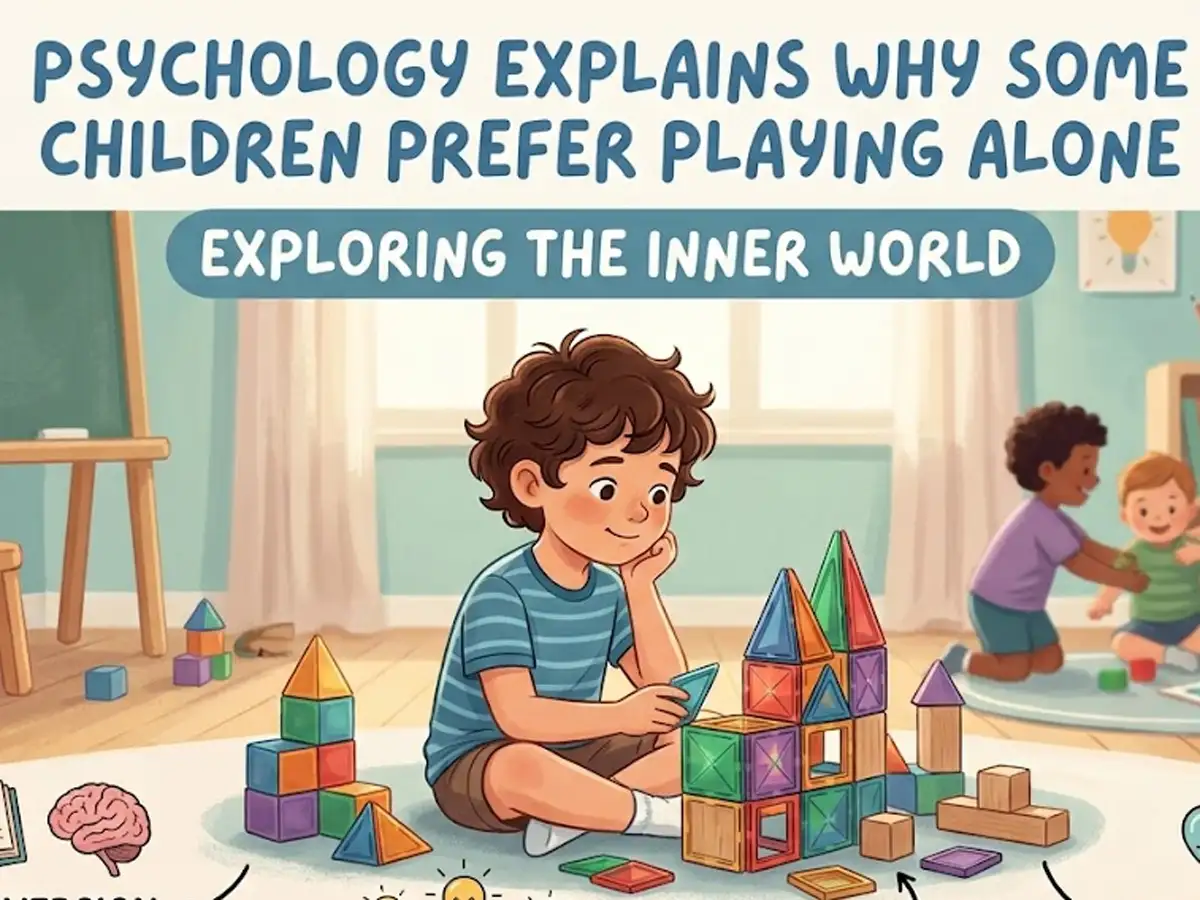
Not every child wants to spend every afternoon surrounded by friends. Some children are perfectly happy building blocks, drawing, reading, creating imaginary worlds or exploring toys by themselves. While parents may sometimes wonder whether this behavior signals loneliness or a social problem, psychology offers a more nuanced explanation. Playing alone can be a normal and meaningful part of childhood. Researchers distinguish between children who genuinely enjoy solitude and those who want friends but avoid social situations because of shyness, anxiety or fear of rejection. Understanding that difference matters. A child who happily chooses independent play may simply have a different temperament or interests. At the same time, sudden or persistent withdrawal accompanied by distress can deserve closer attention.
SOLO PLAY CAN BE A NORMAL PART OF DEVELOPMENT