Get all your news in one place.
100's of premium titles.
One app.
Start reading
The Economic Times
The Economic Times
Trending Desk

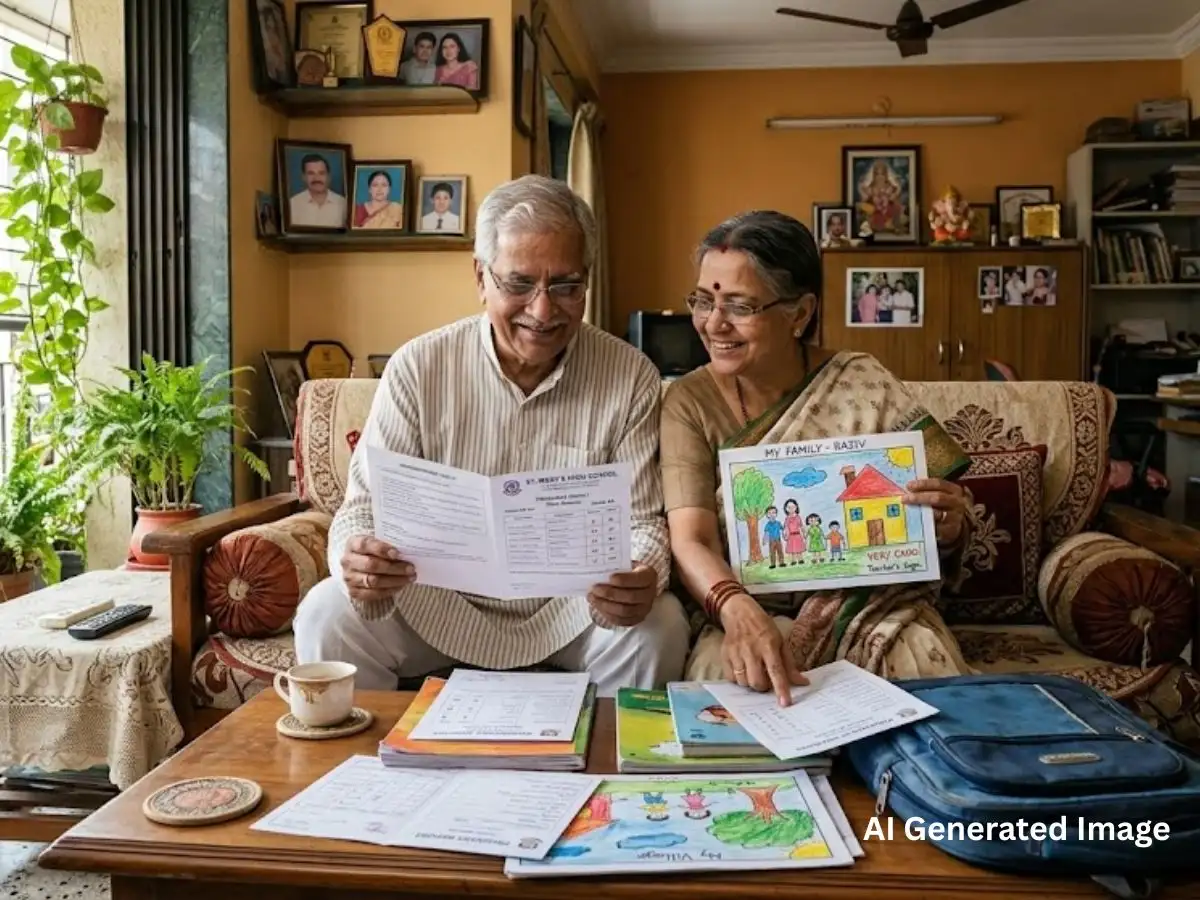
Psychology explains why parents struggle to throw out old report cards, drawings of their children

A faded report card, a drawing covered in uneven crayon marks or a small note written in a child’s handwriting can look like little more than old paper. Yet many parents find it unexpectedly difficult to throw such things away. Years after their children have grown up, schoolwork may still be tucked inside cupboards, displayed on refrigerators or preserved in boxes meant for family keepsakes.

At first glance, the habit may appear to be simple nostalgia. But psychology offers another way of looking at it. Objects associated with childhood can become cues for autobiographical memories, bringing back not just the moment when the item was created but an entire period of family life, as per a TOI report.

A drawing made at age six, for instance, may remind a parent of the house they lived in, the child’s personality at the time, a school event or a conversation that has otherwise faded from memory. The paper itself may have little material value. Its importance comes from the experiences attached to it.

Also Read: Psychology says people who stand in queue for hours to buy an iPhone aren't necessarily Apple fans, they may be doing it for more than just the new phone

How a child’s drawing can unlock an entire memory

Psychologists use the term autobiographical memory for memories connected to a person’s own life and experiences. Research has found that the way families talk about the past can influence how personal memories are developed and recalled. Studies involving Elaine Reese and other researchers have examined how detailed conversations between parents and children can contribute to autobiographical memory.

That helps explain why an apparently insignificant object can become a powerful reminder of the past.

A report card might bring back the excitement of a child returning from school after an achievement. A drawing could recall the table where a child sat while colouring, the questions they asked or the way they proudly explained what they had created.

Even mistakes can become part of the memory. A misspelled word or unusual drawing may immediately remind a parent of how a child spoke, behaved or saw the world at a particular age.

The object essentially becomes a physical cue for something much larger. Looking at it can help reconstruct a period that cannot otherwise be physically revisited.

Why nostalgia can make ordinary objects feel priceless

Nostalgia is another part of the explanation. Psychological research has examined nostalgia as an emotional experience tied to meaningful people, places, objects and events from the past.

The American Psychological Association has noted that nostalgia can help connect a person's sense of identity across time and strengthen feelings of social connection. It can also become particularly relevant during periods of change, when memories of earlier stages of life provide a sense of continuity.

That can make an old piece of schoolwork valuable despite having no practical use.

Once a child becomes an adult, the report card no longer serves its original purpose. The drawing cannot be used for anything. Yet the objects can represent a period when the child was still coming home with a schoolbag, asking for help with homework or proudly showing a parent something they had made.

This is also why the emotional value of such possessions cannot necessarily be measured by their appearance or monetary worth. A crumpled sheet of paper may carry memories that no expensive object can reproduce.

Parents may be remembering more than their child

There is another layer to these keepsakes: they can preserve a parent’s own memories of who they were during that period.

Psychological work on narrative identity suggests that people understand their lives partly through the stories they construct around important experiences and relationships. Parenthood can become a significant part of that personal story.

An old drawing can therefore represent two things at once. It can be a reminder of the child who created it, but it can also bring back the parent they once were.

The drawing may recall the years when they were helping with school projects, attending parent-teacher meetings, preparing meals after school or watching their child discover new interests.

This may also explain why some parents remember exactly where a particular drawing came from even when countless other details from the same period have disappeared.

Childhood keepsakes also make the passage of time visible

Physical objects have another quality that memories do not. They remain largely unchanged while people grow older.

A drawing made by a five-year-old can look remarkably different when that child is now an adult. Seeing the two stages side by side can make the speed of childhood more tangible.

Such reminders may become especially meaningful during major transitions, such as a child leaving home, graduating, getting married or becoming a parent themselves. Nostalgia can help people connect different stages of their lives and maintain a sense of continuity as circumstances change.

The feeling can be bittersweet. The object preserves something that happened, but it also reminds the parent that the moment itself cannot be recreated.

Research on nostalgia similarly notes that memories can retain emotional significance even when specific details become less reliable over time.

Keeping old schoolwork does not have one psychological meaning

It is important not to read too much into the habit.

A parent who keeps a box of childhood drawings is not necessarily unable to let go of the past, nor does the practice automatically reveal a particular personality trait. Some people simply enjoy preserving family history. Others may want to share the objects with their children later, while some keep them because the memories associated with them remain meaningful.

Psychology can help explain why these objects may acquire such emotional importance, but it cannot determine what a particular collection of keepsakes means to an individual parent.

What makes an old report card or drawing special is often not the object itself. It is the chain of memories attached to it: the child who made it, the parent who received it, the home where it was created and the stage of life it represents.

Years later, the paper may be all that remains physically unchanged from that period.

The child has grown up, the home may have changed and the routines of family life may be completely different. But a small drawing tucked inside a cupboard can briefly reconnect a parent with all of it.

Sometimes, then, keeping an old piece of childhood is not really about keeping the paper. It is about keeping a doorway to a moment that time has already carried away.

Sign up to read this article
Read news from 100's of titles, curated specifically for you.
Already a member? Sign in here
Related Stories
Top stories on inkl right now
One subscription that gives you access to news from hundreds of sites
Already a member? Sign in here
Our Picks
Fourteen days free
Download the app
One app. One membership.
100+ trusted global sources.