Get all your news in one place.
100's of premium titles.
One app.
Start reading
The Economic Times
The Economic Times
Team Global

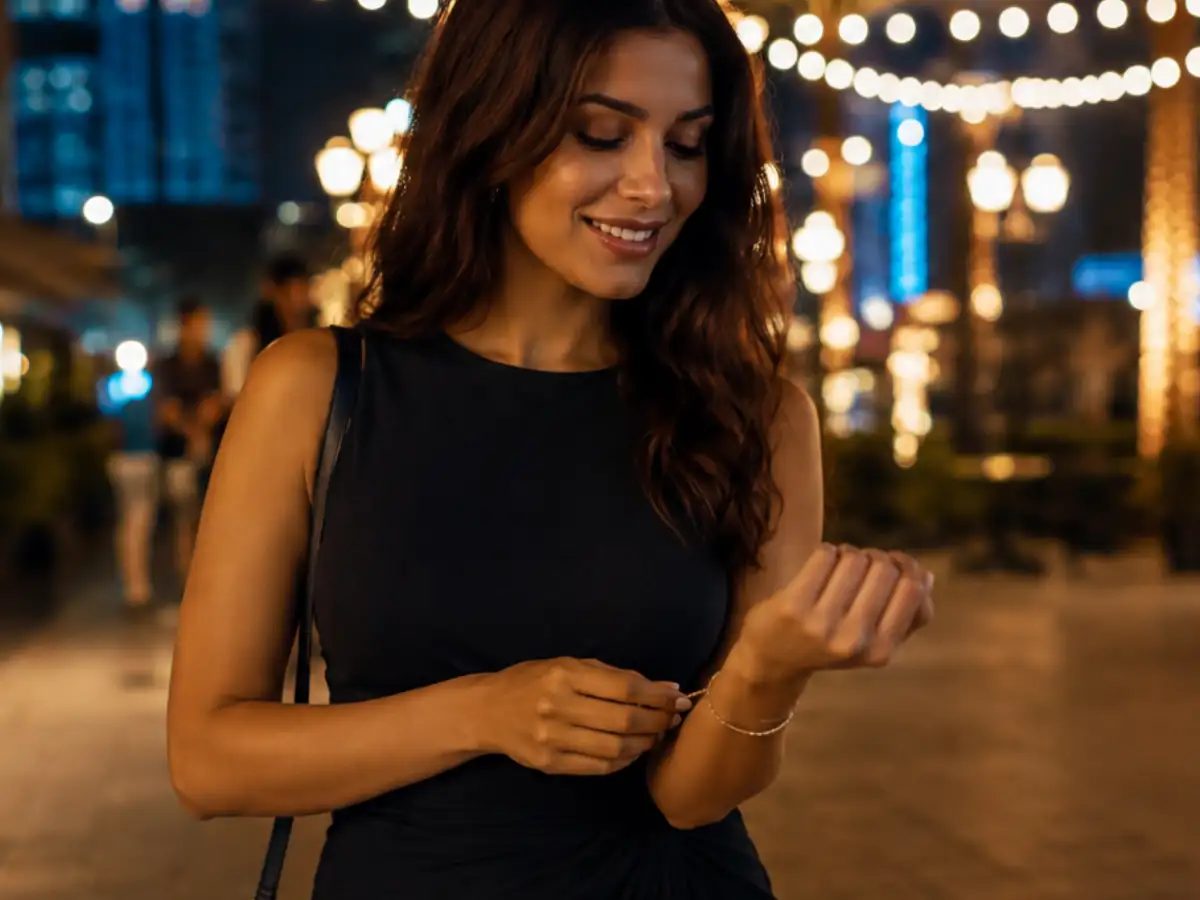
Psychologists say wearing a lucky bracelet is not just superstition but can genuinely improve performance by increasing confidence and persistence, according to researchers from the University of Cologne

Think of that friend who refuses to play a fantasy football final without his old team jersey, or the colleague who always wears the same watch before a big presentation. It's all too easy to write it off as harmless quirkiness. But a study titled ‘Keep Your Fingers Crossed! : How Superstition Improves Performance,’ published in Psychological Science by University of Cologne researchers Lysann Damisch, Barbara Stoberock and Thomas Mussweiler, suggests that hanging on to a lucky charm or superstitious ritual before a task can help people perform better, not because of magic, but because of what it does to the mind.

The paper reports that this wasn’t just a vague feel-good effect. Across four experiments, activating superstition through sayings like “break a leg,” crossed fingers, or a lucky charm improved performance in golfing, motor dexterity, memory, and anagram tasks. The authors say Experiments 3 and 4 traced the boost to higher perceived self-efficacy, and Experiment 4 also found greater task persistence.

The science behind feeling lucky

The Cologne researchers tested this idea in four separate experiments. In the same study, in one experiment, golfers were told they were putting with a lucky golf ball; in another, participants were asked to complete a motor dexterity task with tiny ball bearings after being told the German equivalent of fingers crossed; and in two further experiments, people played a memory game or solved word anagrams, sometimes while holding a personal lucky charm.

The four experiments tested the idea in a different setting. In the first, the golfers were all hitting from the same distance, but some were told they were using a ball that “has been lucky so far,” and that group made many more putts than golfers who weren’t given such a frame. The second experiment moved the action off the golf course and into a fine motor task, in which participants had to maneuver tiny ball bearings into holes in a handheld puzzle.

Those who were sent off with a German phrase equivalent to “fingers crossed” did the task more quickly than those who weren’t. In a third experiment, participants were asked to bring in personal lucky charms, keep them nearby while playing a memory-matching game, and then measure self-efficacy with a brief questionnaire afterwards. Those with their charm present performed better on the game and reported feeling more able to succeed.

In the fourth experiment we again used the same design, but this time with anagram solving. In addition to self-efficacy, we recorded how long participants persisted at the more difficult puzzles before giving up. Not only did the lucky-charm group have greater confidence, they also persisted longer, and their persistence partially mediated their higher solve rates.

Sign up to read this article
Read news from 100's of titles, curated specifically for you.
Already a member? Sign in here
Related Stories
Top stories on inkl right now
One subscription that gives you access to news from hundreds of sites
Already a member? Sign in here
Our Picks
Fourteen days free
Download the app
One app. One membership.
100+ trusted global sources.