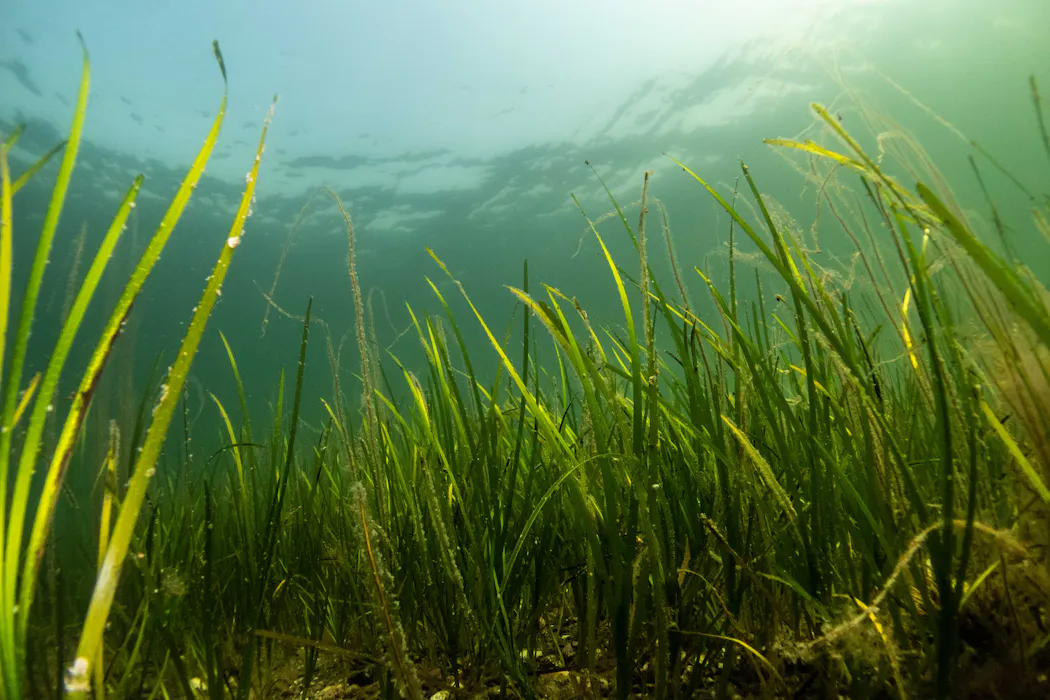
I spent last summer wading through seagrass meadows across Northern Ireland, from the sheltered waters of Strangford Lough to the exposed coast at Waterfoot Bay. I was collecting seagrass leaves and testing them for nitrogen pollution. Every meadow I visited sits inside a marine protected area – a stretch of sea that’s been given legal protection to safeguard the wildlife living there. And every single one was polluted beyond the limit for healthy seagrass.
Seagrass meadows are among the most valuable habitats in our coastal waters. They store carbon, nurture young fish and shellfish, stabilise sediment and buffer shorelines from storms. They are also woven into the heritage of coastal communities who have fished and foraged around them for generations. But they are disappearing worldwide, and nitrogen pollution from farming, sewage and urban runoff is one of the biggest reasons why.