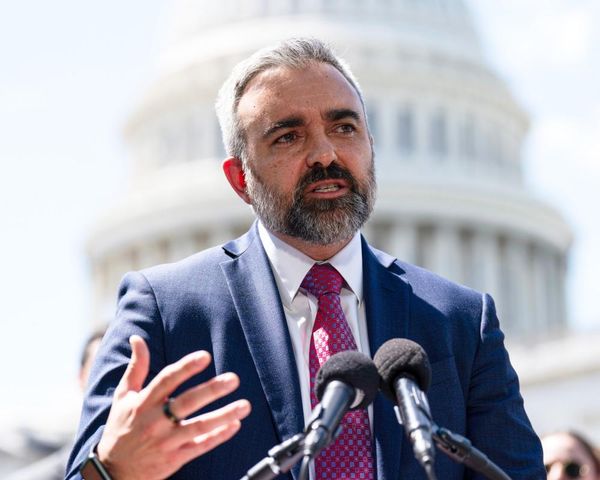
Serbian President Aleksandar Vučić resigned on Sunday in order to run for prime minister in the upcoming parliamentary elections on October 25th in the southeastern European country.
"I am resigning as president. Tomorrow morning I will hand over my duties to the parliament speaker", Vučić told supporters outside the presidential palace in Belgrade.
The last two years of Vučić's tenure have been tainted by large nationwide protests, which began after 16 people died when a concrete canopy collapsed at a newly renovated railway city in the Serbian city of Novi Sad in November 2024.
Many Serbians blamed Vučić and the ruling Serbian Progressive Party (SNS), which Vučić co-founded in 2008, for the tragedy because of perceived governmental corruption and neglect of public infrastructure. The SNS had also closely associated itself with station's renovation, which it framed as a sign of Serbian national progress under its rule.
A wave of civil disobedience, traffic blockades, strikes and occasional riots followed the incident, principally driven by a popular youth opposition movement.
The parliamentary elections were initially scheduled to take place in December 2027, but were brought forward by Vučić when he used his constitutional authority to dissolve the Serbian National Assembly, which triggered the snap October vote.
Vučić has been a dominant figure in Serbian politics since becoming prime minister in 2014. Since 2017, he has served as president.
Vučić first signalled that he would resign in June, but his critics have long suspected that the resignation would be a ruse designed to enable the Serbian leader to circumvent constitutionally-mandated presidential term limits, run for prime minister and therefore maintain his grip on power.
The Serbian opposition accuses Vučić of overseeing a period of democratic degradation in the country, citing his alleged erosion of press freedoms and intimidation of political opponents, claims that Vučić denies.
"This government has taken over the institutions, it is deeply intertwined with organised crime and it will try every possible way to remain in power", Serbian human rights activist Aida Corovic told Al Jazeera following the news of Vučić's resignation.
Between Russia and the EU: a Serbian dilemma
Although Vučić aspires for Serbia to join the European Union, he has a history of refusing to join EU sanctions against Russia over its invasion of Ukraine. Russia and Serbia are close traditional allies.
Moscow does not recognize the independence of Kosovo, a self-declared independent country recognized by most nations but claimed by Serbia, and has used its position as a permanent member of the UN Security Council to prevent Kosovo from becoming a full UN member.
Vučić's refusal to implement EU sanctions on Putin's Russia, as well as his solidification of Chinese-Serbian technological and economic partnerships, have complicated Serbia's goals of EU accession.
European Serbia, a coalition of pro-European Serbian political parties which strongly supports accession to the EU, will contest the upcoming parliamentary elections and, if they win, will likely seek to reorient Serbian alliances, adopting a more pro-EU, anti-Russia stance to speed up the accession process.
However, Vučić will also face candidates from the Students Win movement, which emerged out of the mass demonstrations against Vučić's rule and the perceived corruption of his government. Students Win has fielded a large "non-partisan" list of candidates for the elections.
The movement is primarily concerned with domestic issues, but has a broadly pro-EU support base, meaning that it too would likely seek closer relations with the bloc.
The upcoming election will be watched closely in Kyiv, Moscow and European capitals, with Serbia's continued alignment with Russia or potential future realignment with Ukraine and the EU at stake.