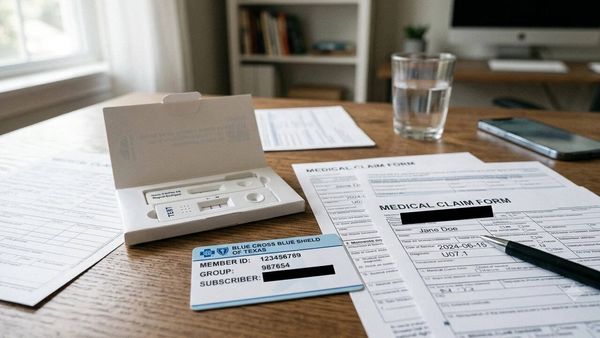
A Washington state woman whose insurer preapproved her breast MRI was billed more than $1,100 for it anyway, and the reason is a distinction most patients have never been taught. Prior authorization and coverage are two different decisions. One says a service is medically appropriate. The other says who pays, and the plan decides that separately afterward.
Stephanie Halver, now 43, was advised to get an annual breast MRI after a risk assessment flagged her as higher than average risk, partly because her mother and aunt had breast cancer and partly because of her age and dense breast tissue. Blue Cross Blue Shield of Texas, her insurer through an employer plan, preapproved the scan, which she had in September of last year. The MRI found nothing. The charge came to $1,205, of which the insurer paid $13.90, leaving her responsible for $1,191.10, KFF Health News reported. Her appeal was denied in July.
This is not a billing error, and that is the uncomfortable part. Every step worked the way the system is designed to work.
The Gap Between Preventive and Preapproved
The Affordable Care Act requires plans to cover certain preventive services at no cost. Which services make that list is determined largely by the U.S. Preventive Services Task Force. Screening mammograms are on it. Screening breast MRIs generally are not.
The task force has concluded that current evidence is insufficient to assess the balance of benefits and harms of breast MRI for women with dense breast tissue after an otherwise negative screening mammogram. The American Cancer Society similarly does not recommend the scans for women at average risk, in part because false positives lead to further tests and procedures.
Federal rules treat imaging differently once a mammogram finds something. Cathy Peters, senior director of state and local campaigns at the American Cancer Society Cancer Action Network, told KFF Health News that guidelines from the Health Resources and Services Administration specify that additional imaging such as ultrasound and MRI counts as preventive when it follows an abnormal screening mammogram.
Halver's mammogram was not abnormal. Her MRI was a supplemental screen based on risk, which places it outside the no-cost preventive category and inside her deductible, which is $3,300.
The State Law That Did Not Help
Washington has a law requiring many health insurers to cover breast MRIs. It did not apply to her, and the reason affects a large share of American workers.
Employer plans that are self-funded, meaning the employer pays claims from its own money and hires an insurer to administer them, are regulated federally rather than by state insurance law. State coverage mandates generally do not reach them. Sixty-seven percent of covered workers are enrolled in self-funded plans, according to KFF's employer benefits survey, including 80 percent at large firms.
Peters told KFF Health News that state-by-state laws do not "fix the federal problem."
That means two coworkers in the same city, with the same diagnosis and the same doctor, can face completely different bills depending on how their employers structure benefits. The insurance card looks identical. The obligation is not.
The gap also widens with deductibles. The average annual deductible for single employer coverage was $1,886 in the most recent survey year, and about a third of covered workers face $2,000 or more. In most years, a supplemental scan that lands inside a deductible is effectively paid in full by the patient.
The Question to Ask Before the Scan, Not After
The transferable lesson here goes beyond breast imaging. Any time a service is preapproved, the useful follow-up question is not whether it was approved. It is how it will be processed.
Patients can ask the insurer directly whether the service is classified as preventive or diagnostic under their specific plan, whether it will apply to the deductible, and what the estimated member responsibility is. Asking human resources how a plan treats a specific service is often faster than calling the insurer, and it is how Halver eventually learned that her plan covers mammograms preventively and breast MRIs not at all. Getting the answer in writing matters, because a verbal quote is not binding.
Price varies by site of service. Freestanding imaging centers frequently charge less than hospital-based radiology departments for the same scan. Scheduling later in a plan year, after a deductible is met, can also lower what a patient owes. Neither of these changes the clinical value of the scan. They change the bill.
For people who cannot absorb the cost, patient navigators at hospitals and cancer centers can identify assistance, and some state-funded programs help cover breast cancer screening for lower-income patients. Ricki Fairley, co-founder of Touch, the Black Breast Cancer Alliance, recommends starting with a navigator. The nonprofit DenseBreast-Info maintains a state-by-state map of screening coverage laws, which is worth checking alongside the plan type.
The Risk Nobody Is Measuring
The concern raised in this reporting is not one bill. It is what a surprise bill does to the next appointment. Peters put it plainly: once someone gets hit with a bill like that, they become very careful the next time they go.
Halver's risk assessment has not changed. Her recommendation for annual MRI has not changed. What has changed is that she now expects the same charge every year, indefinitely, for a screening intended to catch cancer early. Insurers don't track whether patients in that position keep showing up, and the guidelines don't address it.
Nobody should stop a recommended screening based on cost alone without talking to their clinician first, and a physician's office can sometimes document medical necessity in a way that changes how a claim is processed. But the current federal framework leaves a real gap, and patients are the ones standing in it.
Key Questions Answered
What is the difference between prior authorization and coverage? Prior authorization confirms a service is medically appropriate. Coverage determines how much the plan pays. A preapproved service can still apply to a deductible or be denied as a benefit.
Why are mammograms free but breast MRIs often not? Screening mammograms are on the federal preventive services list. Screening breast MRI generally is not, because the U.S. Preventive Services Task Force found the evidence insufficient to assess benefits and harms in that setting.
Who is most affected? Higher-risk women advised to get supplemental MRI screening, especially those in self-funded employer plans, which are exempt from most state coverage mandates.
How can someone find out before the scan? Ask the insurer or human resources whether the plan classifies the service as preventive or diagnostic, whether it applies to the deductible, and what the estimated patient share is. Request the answer in writing.
Does a state law guarantee coverage? Not necessarily. State insurance mandates generally do not apply to self-funded employer plans, which cover 67 percent of workers.
Are there ways to lower the cost? Comparing freestanding imaging centers against hospital radiology departments, scheduling after the deductible is met, and asking a patient navigator about assistance programs can all reduce out-of-pocket costs.
Should anyone skip a recommended screening because of cost? That decision should involve the clinician who ordered it. A physician's office can sometimes document medical necessity differently, and assistance programs may be available.