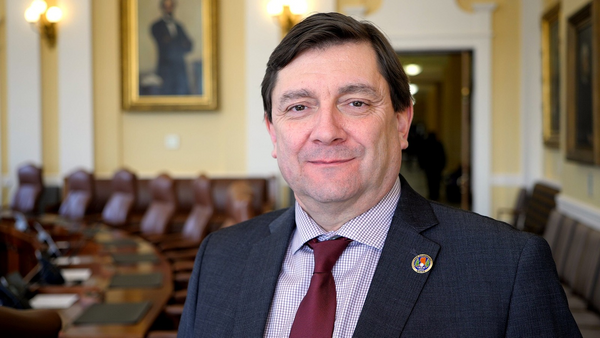
Prince Harry told a Melbourne audience on Thursday that he had spent years feeling 'lost, betrayed or completely powerless' and had once wanted to abandon his royal role as he delivered a starkly personal keynote speech during a four-day tour of Australia.
After days of largely upbeat coverage of Prince Harry and Meghan's visit, which included school events and meetings with charities, the InterEdge Summit in Melbourne formed the more formal part of the trip, a leadership conference on 'psychosocial safety and human connection in the workplace.' Instead, attendees who paid up to £1,250 for platinum access heard the king's younger son strip back the public façade that has followed him since childhood and speak in detail about the toll of grief.
Speaking from the stage with Meghan watching from the audience, Prince Harry described the years after the death of Diana, Princess of Wales, when he was 12, as a period in which he tried to shut out the institution he had been born into. In a conversation after his address with Australian business leader and former politician Brendan Nelson, he recalled how his mother's fatal crash hardened his resistance to his royal destiny.
'After my mum died just before my 13th birthday I was like I don't want this job. I don't want this role. Wherever this is headed, I don't like it,' he said. 'It killed my mum and I was very much against it and I stuck my head in the sand for years and years.'
The candour of that admission landed heavily in a country that has long watched the prince grow up in public. For many in the room, the striking detail was not that he resented his role as a teenager but that he was prepared to say it out loud in a corporate setting, with his every word destined to be reported back to London.

Prince Harry Uses Leadership Stage to Pick Apart His Own Image
Prince Harry made clear he did not intend to arrive in Melbourne as a polished self-help guru. 'When invited to speak at the summit, uncertainty remained over whether the expectation was to speak as someone who, despite everything, has it together or as someone who, despite appearances, does not have it together,' he told delegates.
That choice of language was deliberate and jarring amid the usual conference jargon. A swift pivot followed to the point being made. The circumstances may be rare, he conceded, but the emotional fallout was not. 'Struck by something quite simple that while experiences may be unusual, the feelings that come with them are not.'

Across several minutes, he unpacked what that meant in practice. Grief, he said, was 'disorienting at any age.' Ignoring it did not make it disappear.
For a child in his position, dealing with loss 'in a goldfish bowl under constant surveillance' brought additional challenges. 'Experiencing that as a kid while in a goldfish bowl under constant surveillance, yes, that will have its challenges. Without purpose, it can break you.'
There was no attempt to suggest he had handled it well at the time. 'There have been many times when I've felt overwhelmed,' he admitted. 'Times when I've felt lost, betrayed or completely powerless. Times when the pressure, externally and internally, felt constant.'
What he described next will be familiar to anyone working in a culture where showing strain is frowned upon. Despite everything, he said he felt compelled to 'show up pretending everything was OK so as not to let anyone down.' For years, he said, he was 'numb to it' and lacked the tools to cope.
The Duchess of Sussex said she was 'bullied and attacked' for 10 years on social media during a visit to a mental health charity in Australia.
— Sky News (@SkyNews) April 16, 2026
The Duke and Duchess of Sussex were speaking to young people about the effects of social media pic.twitter.com/rRl8LZsHQu
Melbourne Summit Hears Prince Harry's Case for Asking for Help
The hinge of Prince Harry's Melbourne speech was not anger at the past but what was presented as a lesson learned. At some point, he said, a shift took place. 'For me, one of the biggest shifts came when I realised that asking for help is not a weakness. It is very much a form of strength.'
That line, in a room of executives and managers, landed as advice as much as confession. The summit was billed as a forum on leadership and mental health at work, and Harry positioned his own story as a case study in how pressure without support can hollow a person out.
Organisers said Prince Harry was not understood to have received a fee for his appearance. A profile on the InterEdge website described him as a figure who has 'dedicated his life to service and uplifting communities, while emphasising the importance of collective mental health in philanthropic and advocacy work globally.'
It was a version of himself that critics sometimes mock and supporters fiercely defend, but in Melbourne he added enough rawness to stop it sounding purely like branding.
Meghan, Duchess of Sussex, sat in the audience as he spoke, a quiet visual reminder of the life the couple have built since stepping back from frontline royal duties. Their presence in Australia this week inevitably revived old arguments about their break with the monarchy, though none of that was addressed directly from the stage.
Also on the summit's programme were former Australian tennis professional Jelena Dokic and American social psychologist Amy Cuddy, both known for speaking publicly about resilience and psychological strain. Set alongside them, Prince Harry's contribution was a reminder that the most recognisable man in the room often carries the least freedom to grieve in private.

Nothing in his remarks about his state of mind or private conversations can be independently verified, and his account of those years rests on his own testimony. As ever with the Sussexes, supporters will see a man using his platform to press for better mental health support, while detractors will suspect overexposure. What is harder to dismiss is the picture he painted of a 12-year-old boy who decided he did not want the role the world assumed he would one day grow into and who is still, all these years later, explaining why.