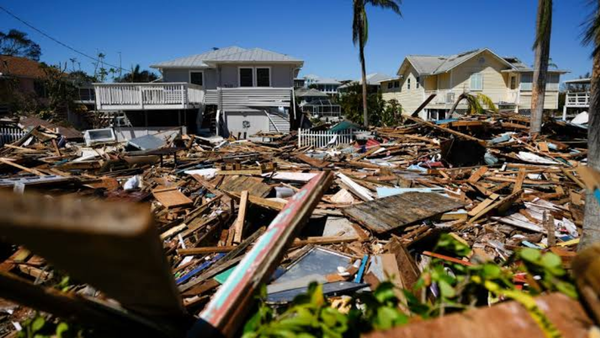
While Tamil Nadu was recovering from the devastation caused by the tropical cyclone Michaung, another catastrophic event occurred on December 18, this time over the southernmost parts of the State. The southern districts of Tamil Nadu — Thoothukudi, Tirunelveli, Tenkasi and Kanyakumari — experienced unprecedented and extremely heavy rainfall on December 17 and December 18. At least nine rain gauge stations in these districts reported heavy rainfall of more than 50 cm. The Kayalpattinam station in Thoothukudi recorded 95 cm of rainfall in just 24 hours. In terms of probability, this event could be termed as a once in a hundred-year event. These heavy rains led to massive and widespread flooding, caused extensive damage, and claimed a few lives. Due to the heavy rainfall, many villages were under water and thousands of villagers were without food, drinking water and electricity for a couple of days. The heavy downpour was reminiscent of the heavy rains (94.4 cm) in Mumbai on July 26, 2005 in terms of the quantum of rainfall.
The cause
The 2023 northeast monsoon was in an active phase during this episode, characterised by the presence of an east-west trough (or ITCZ). The unprecedented heavy rainfall on December 18 was associated with an easterly wave with an embedded cyclonic circulation that moved from the southwestern Bay of Bengal across southern Tamil Nadu and Kerala into the southeastern Arabian Sea between December 16 and December 19. There was a large-scale, intense convergence of winds with the influx of abundant moisture into the region. Most of the recent rains fell in the early morning hours of December 18, supported by the climatological diurnal pattern over the region. The north-south running hills along the Tamil Nadu-Kerala border are also likely to have contributed to the dynamics of the heavy rains.