Get all your news in one place.
100's of premium titles.
One app.
Start reading
Bangkok Post
Bangkok Post
National

PP on course to dominate BMC poll

The People's Party (PP) is favoured to dominate the upcoming Bangkok Metropolitan Council (BMC) election, as strategic voting is likely to shape the contest, which coincides with the city's gubernatorial election on Sunday.

It is widely speculated in political circles that strategic voting could propel the PP to the largest share of council seats. Projections suggest the party could secure at least 20 of the council's 50 seats, emerging as the biggest winners. Meanwhile, independent candidates running under the "Khon Tam Ngan" (Working People) banner and the Democrat Party are each forecast to win around 14–15 seats, according to political analysts.
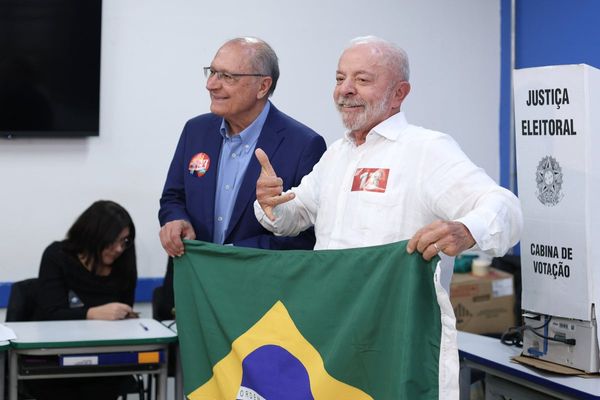
Although the BMC election has attracted far less public attention than the simultaneous, high-profile gubernatorial race, major political parties view it as a crucial battleground. Control of the council, which consists of 50 members representing Bangkok's districts, provides an invaluable grassroots network ahead of future parliamentary elections.

Functioning as Bangkok's legislative body, the BMC is responsible for passing local ordinances, scrutinising the governor's administration, and approving the capital's annual budget, which approaches 100 billion baht. As a result, all political groups regard these seats as strategically significant.

Strategy is Everything

Stithorn Thananithichot, a political science lecturer at Chulalongkorn University, told the Bangkok Post that the PP -- which secured a clean sweep in the capital during the Feb 28 general election -- is well-positioned to win the largest number of council seats.

This would see them outperform the independent candidates aligned with the Working People group, who have sought to associate themselves with former Bangkok governor Chadchart Sittipunt as he seeks a second term in office.

Mr Stithorn argued that many Bangkok voters are likely to engage in "strategic voting". With opinion polls indicating that Mr Chadchart is on course for a comfortable re-election victory, voters may deliberately choose council candidates capable of acting as an effective check on the governor, rather than supporting candidates from his same political camp.

He noted that the PP benefits from a strong public perception that it can perform a robust oversight role, echoing its performance as the parliamentary opposition. The party's clean sweep of all 33 Bangkok constituencies in the Feb 28 polls has reinforced confidence among urban voters in its watchdog credentials.

According to Mr Stithorn, the Democrats are likely to retain their existing strongholds and could expand beyond their current representation if they successfully mobilise their base. However, he observed that the party has adopted a relatively modest campaign approach despite intensive, hands-on efforts on the ground.

The Pheu Thai 'factor'

Another key factor in the race is the redistribution of support once commanded by former councillors affiliated with the Pheu Thai Party. Unlike in previous elections, Pheu Thai has not fielded candidates under its own party banner, prompting many former councillors to join independent groups, including Working People and Pheu Thai Life.

Yuttaporn Issarachai, a political scientist at Sukhothai Thammathirat Open University, believes these former Pheu Thai networks will ultimately split their votes among Working People candidates, the PP, and the Democrats.

While the PP has publicly set an ambitious target of winning 40 seats -- or even sweeping all 50 districts -- Mr Yuttaporn considers such expectations unrealistic. He argues that voters approach local council elections differently from national parliamentary contests, estimating that the party will ultimately secure around 20 seats, up from its previous tally of 14.

In his projection, the Democrats could finish second with 14–15 seats, benefiting from their organisational strength and the renewed popularity associated with party leader Abhisit Vejjajiva. Working People candidates, meanwhile, are expected to win a similar number of seats, largely due to their association with Mr Chadchart.

However, the incumbent governor faces heavy pressure from critics for his inability to deliver on key campaign promises while in office, as well as alleged irregularities in the Bangkok Metropolitan Administration's policy implementation.

Turnout 'key'

Voter turnout could prove decisive. Mr Stithorn warned that if participation falls below 60%, established local political networks and incumbent councillors may enjoy a significant advantage, making a PP landslide far less likely.

Meanwhile, Sakoltee Phattiyakul, a Democrat Party list MP and election director for the party's Bangkok campaigns, expressed firm confidence that Democrat candidates would win well over 10 seats.

He cited strong support for Mr Abhisit and favourable prospects in traditional Democrat strongholds, including Samphanthawong, Pomprap Sattruphai, Klong Toey, Huai Khwang, Bang Kholaem, Sathon, Yannawa, Ratchathewi, Klong San, Bangkok Noi, Bangkok Yai, Rat Burana, Thawi Watthana, Laksi, Wang Thonglang, Lat Phrao, Prawet, and Phra Khanong districts.

Sign up to read this article
Read news from 100's of titles, curated specifically for you.
Already a member? Sign in here
Related Stories
Top stories on inkl right now
Our Picks
Fourteen days free
Download the app
One app. One membership.
100+ trusted global sources.