
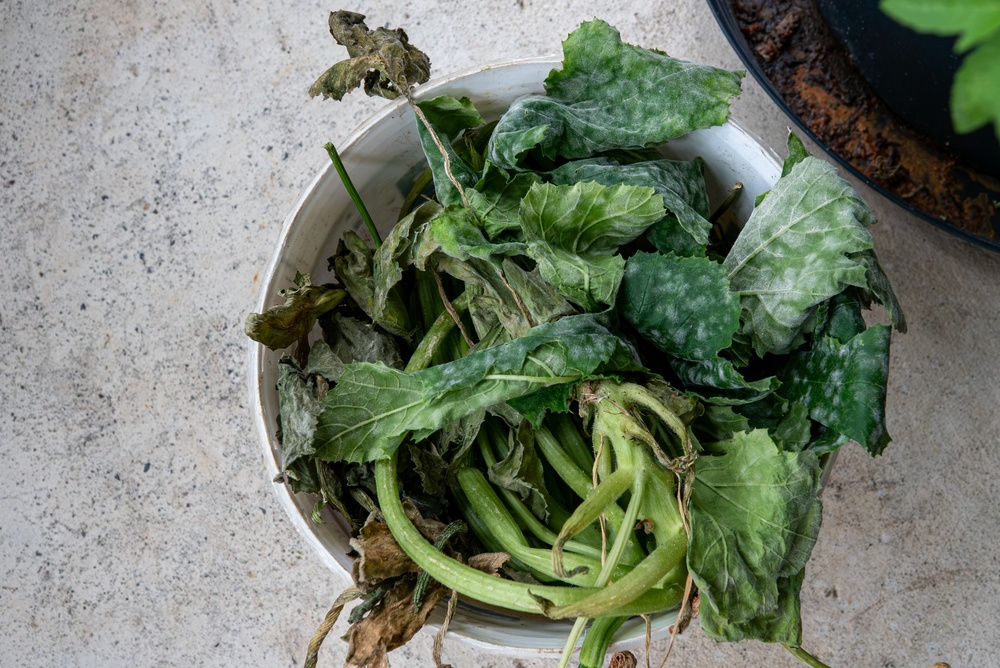
By late summer and early fall, a perfectly healthy-looking squash, cucumber, bee balm, or zinnia can suddenly look like someone dusted its leaves with flour. Powdery mildew is extremely common, and once cold weather approaches, gardeners face a practical question: what should happen to all those infected leaves and vines? Tossing them seems wasteful when you’re trying to build free compost, but adding disease back into the garden doesn’t sound particularly appealing either. Unfortunately, whether you should compost powdery mildew leaves isn’t quite as straightforward as many gardening tips make it sound. University extension experts offer different recommendations, and understanding why can help you decide what makes sense for your compost pile.