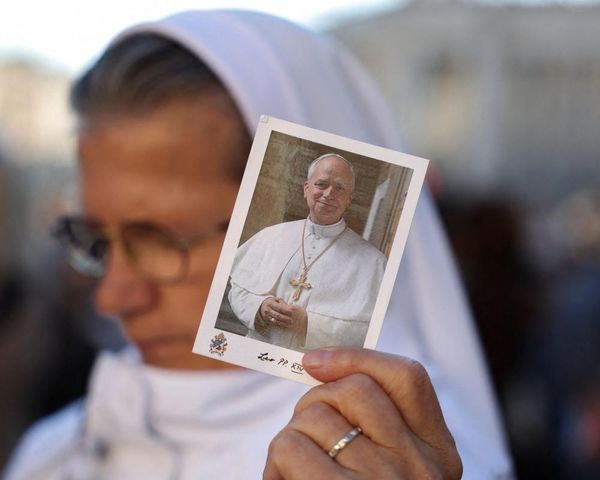
POPE Leo has said control over AI should not remain the hands "of a few" in the first major theological document of his tenure.
In setting out his proposals in a manifesto called "Magnifica Humanitas", he warned that technology is fuelling world conflicts and stressed the use of AI in warfare should be subject to “the most rigorous ethical constraints.”
He spoke of protecting the distinctive “grandeur of humanity” amid rapidly changing technology.
On AI, he wrote in his first encyclical: "Artificial intelligence already touches many areas of our lives and affects decisions that shape human co-existence.
“I feel entrusted to look upon another huge transformation with eyes of faith, with lucidity of reason, with openness to mystery and with cries of the poor and the earth resounding in my heart."
In the text, the pope called for a series of principles to be applied to the development of AI, including a fairer distribution of resources, the dignity of the human person, social justice and care for the environment.
He warns that with AI, humanity risks building a “Tower of Babel,” which was an attempt for people to “make a name” for themselves with a single power and one language.
He says AI must protect people's jobs and needs to be subject to “robust legal frameworks, independent oversight, informed users and a political system that does not abdicate its responsibility are required.”
While presenting his manifesto to an audience at the Vatican on Monday, Pope Leo said humanity must confront new challenges by listening to "diverse" perspectives.
An encyclical is traditionally a letter sent by the pope to the bishops and the wider Roman Catholic Church, but recently it has broadened with Pope Francis using the first encyclical of his papacy to address the whole world on protecting the environment.
Pope Leo is the first pontiff to personally present an encyclical letter to the world at the Vatican.
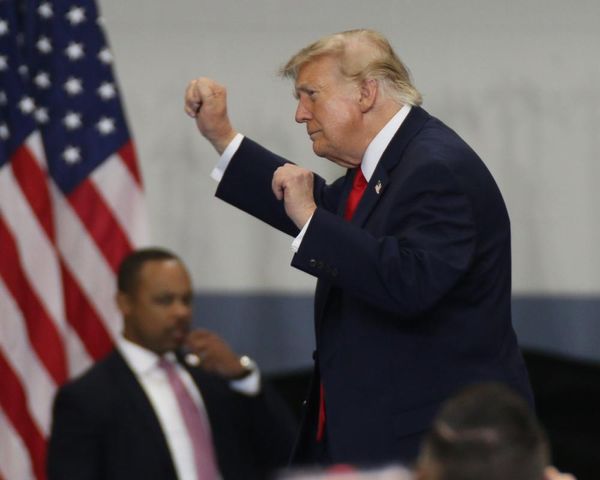
Among those in attendance was Christopher Olah, a co-founder of Anthropic, a US-based AI firm that is embroiled in a lawsuit with Donald Trump’s administration over the ethics of AI.
Olah said on Monday that the development of AI cannot be left solely to technology companies, urging greater oversight from religious leaders, governments and civil society.
Encyclicals are one of the highest forms of teaching from a pope to the Catholic church’s 1.4 billion members, and typically outline his priorities while highlighting the major issues in society.
“It is not enough to invoke ethics in the abstract; robust legal frameworks, independent oversight, informed users and a political system that does not abdicate its responsibility are required,” Pope Leo wrote.
“A more moral AI is not enough if that morality is determined by a few.”
The pope appealed to AI developers and political leaders responsible for regulating them to reflect on what they are doing and urged them to use ethical and spiritual guidelines to make the choice to work not for their own profit or power, but the betterment of humanity.
“For this reason, the development and use of AI in warfare must be subject to the most rigorous ethical constraints, to guarantee respect for human dignity and the sanctity of life and to avoid a race to develop such arms,” he wrote.
The pope urged the “disarming” of AI, while stating that some autonomous weapons systems are “practically beyond any human reach” to control.
“Disarming AI means freeing it from the mentality of ‘armed’ competition,” he wrote.
“To disarm does not mean rejecting technology, but preventing it from dominating humanity,” adding that the technology should be “human-friendly”, accessible to all and opened to discussion and debate.
The pope warned that power over digital systems, infrastructure and data “does not rest with states but with major economic and technological actors”, and that when such power was concentrated “in the hands of the few” it tended to “become opaque and evade public oversight, increasing the risk of distorted forms of development that give rise to new dependencies, exclusions, manipulations and inequalities”.
Pope Leo added that the “just war” theory – a four-pronged Christian doctrine stating what conditions justify war – is “now outdated,” saying that military force can only be used for “self-defence in the strictest sense.”
Elsewhere, he said that the “litmus test” for social justice is the treatment of migrants and refugees and offered an apology for the church’s role in legitimising slavery and delay in condemning it, describing it as “a wound in Christian memory”.