Get all your news in one place.
100’s of premium titles.
One app.
Start reading
Radio France Internationale
National
RFI

PM Lecornu seeks way out of France’s latest budget impasse

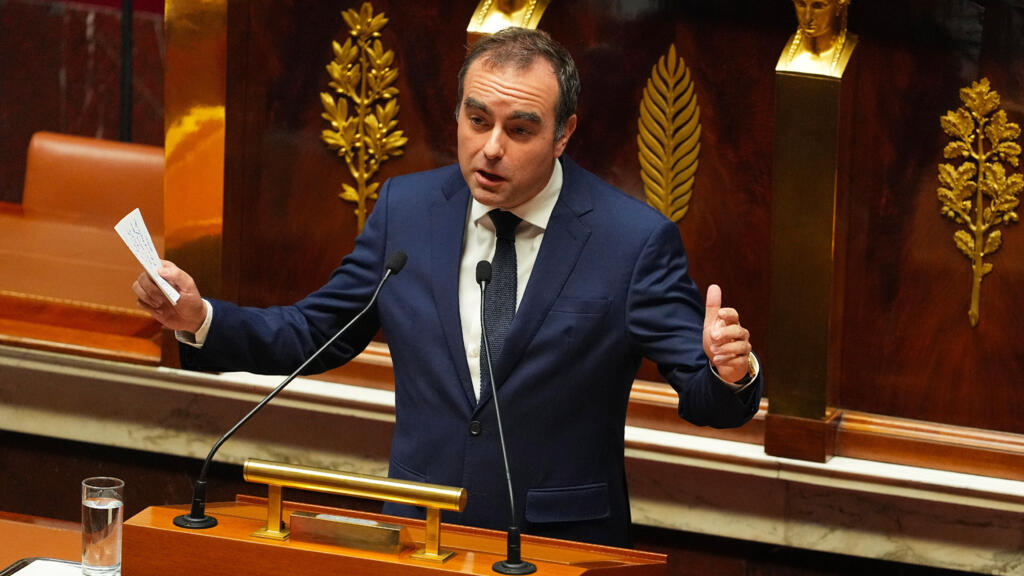
PM Sébastien Lecornu is to meet political leaders on Monday to discuss the next steps. © AP - Thibault Camus

French Prime Minister Sebastien Lecornu will bring together the country's main political leaders on Monday to try and find "the way forward" after senators and MPs once again failed to reach agreement on the state budget for next year.

Lecornu was named as PM in September to break France’s political deadlock and get a budget passed for 2026.

France's deeply divided lower house, where no one party has a majority, is making that task difficult.

The Prime Minister secured a win last Tuesday when lawmakers narrowly adopted the social security budget, part of the broader spending plan, postponing an unpopular pensions reform until 2028 – a key Socialist demand.

But MPs have been unable to pass the state budget, which has been complicated by a tug of war between the right-leaning Senate that wants to cut costs, and a hung lower house in which the left has demanded more income from taxes.

Last Friday a joint committee of senators and MPs failed to reach a compromise, parliamentary sources said, meaning France will not have a 2026 budget by the end of this year.

Lecornu had pledged to pass a budget by year end, but without using a constitutional power to bypass parliament, as his predecessor François Bayrou did for the 2025 budget in February this year.

‘Band aid’

Lecornu’s team told France’s AFP that the government would be seeking to pass a so-called "special law" to temporarily roll over this year's budget into January as debates continue in both chambers.

The special law - like the one passed a year ago, in December 2024 - would allow the state to continue collecting taxes after 1 January, effectively enabling it to keep paying pensioners and civil servants.

But it would not rein in France's balloning deficit and public debt.

France's debt: how did we get here, and how dangerous is it?

Central bank governor Francois Villeroy de Galhau has warned this was only a short-term solution and would lead the country to a "deficit far higher than desired", he told France Inter radio on Friday.

In the third quarter, French public debt stood at a new high at 117 percent of GDP, national statistics institute INSEE said on Friday. That’s a record level outside times of war or pandemic – the third-highest debt-to-GDP ratio in the European Union after Greece and Italy, and nearly twice the bloc's 60 percent ceiling.

The government has warned the deficit will be 5.3 percent of GDP next year – well above Lecornu's target of 4.7 percent.

France has been battling a deep political crisis since President Emmanuel Macron called snap elections in June 2024. They were intended to consolidate his power but instead resulted in a hung parliament and gains for the far right.

(with newswires)

Sign up to read this article
Read news from 100’s of titles, curated specifically for you.
Already a member? Sign in here
Related Stories
Top stories on inkl right now
One subscription that gives you access to news from hundreds of sites
Already a member? Sign in here
Our Picks
Fourteen days free
Download the app
One app. One membership.
100+ trusted global sources.