Get all your news in one place.
100's of premium titles.
One app.
Start reading
The Conversation
The Conversation
Kimberley Simpson, Research Fellow, School of Biosciences, University of Sheffield

Plants and animals with bigger genomes grow less efficiently – new research helps explain why they never died out

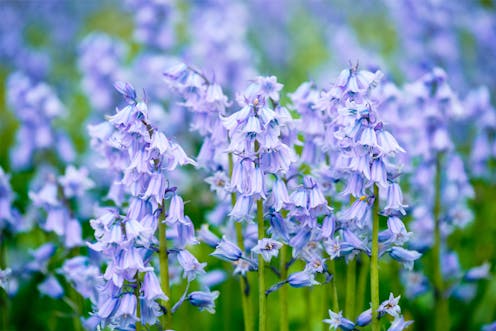
Bluebells are one of a number of species with weirdly large DNA. Dmintry Rukhlenko

All living things have a blueprint provided by the DNA that is stored in every one of their cells. Yet the amount of DNA in each cell – what we refer to as genome size – spans an incredible range across the tree of life.

In animals, it ranges from the tiny genome of the worm-like marine parasite Intoshia variabili, which is 200 times smaller than a human’s, to that of the marbled lungfish (Protopterus aethiopicus), which is estimated to be over 40 times larger than our own. Plants show similar variation, with one – the fork fern (Tmesipteris oblanceolata) – holding the record for the largest genome, having over 50 times as much DNA in each cell as humans.

Sign up to read this article
Read news from 100's of titles, curated specifically for you.
Already a member? Sign in here
Related Stories
Top stories on inkl right now
One subscription that gives you access to news from hundreds of sites
Already a member? Sign in here
Our Picks
Fourteen days free
Download the app
One app. One membership.
100+ trusted global sources.