
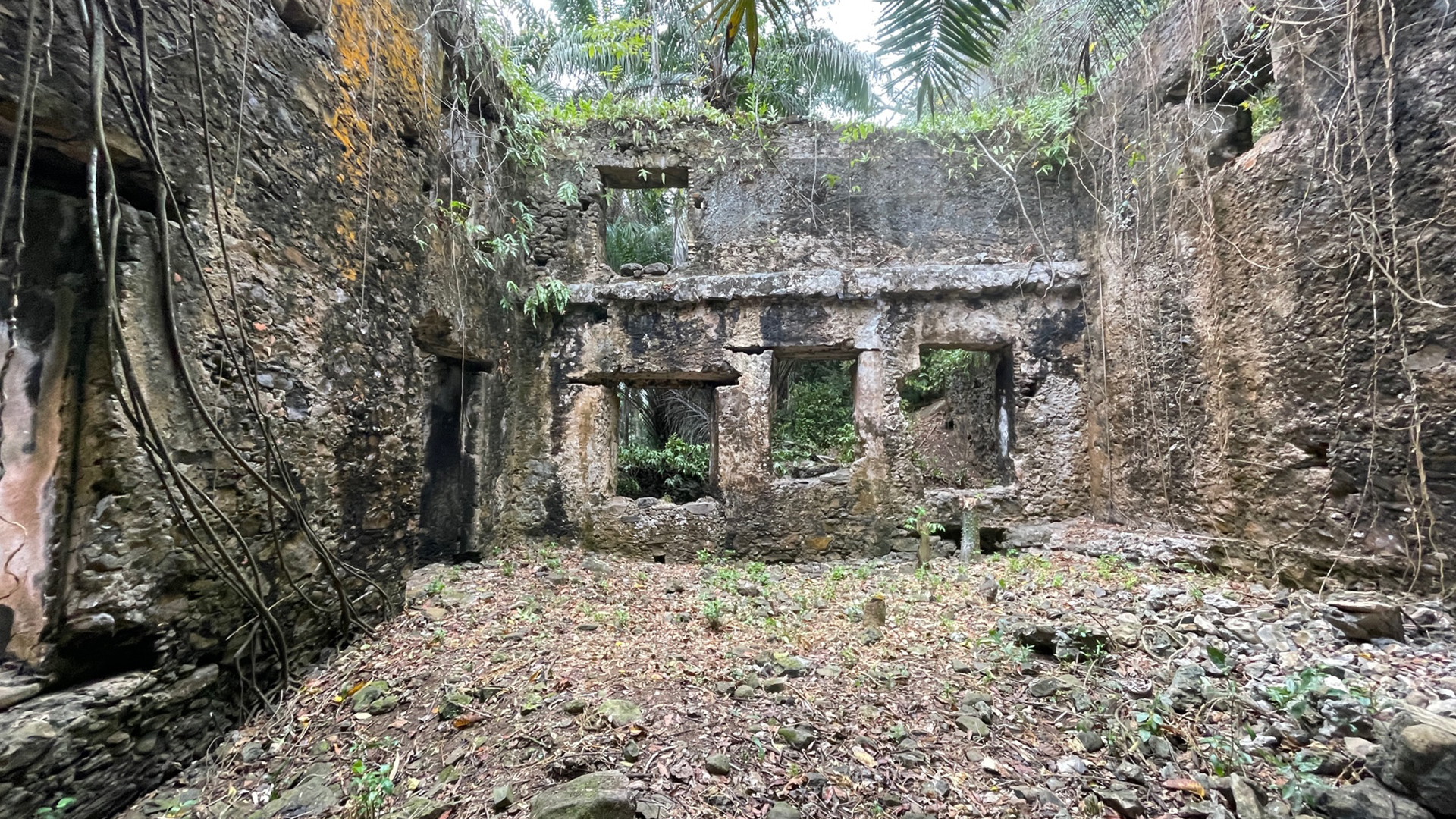
Plantation slavery may have originated on a tiny west African island at the equator, according to archaeologists who investigated a 16th-century sugar mill and estate.
São Tomé (Portuguese for "Saint Thomas"), an island 150 miles (240 kilometers) west of Gabon in the Gulf of Guinea, was first settled by the Portuguese in the late 15th century. Finding an uninhabited island with abundant wood, fresh water and the potential for growing sugarcane, the Portuguese monarchy tried to entice people to move there. Due to high rates of malaria, though, São Tomé was thought of as a death trap. By 1495, to supply labor for the sugar trade, the Portuguese rulers forced convicts, Jewish children and enslaved Africans to move to the island.














