
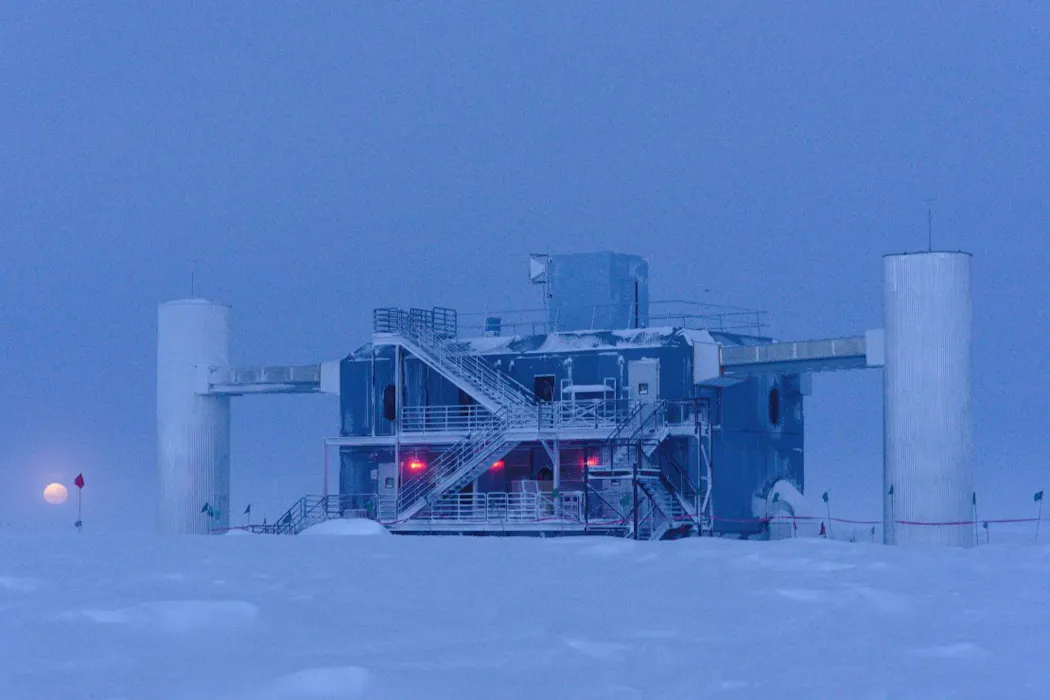
When Belgian American particle physicist Francis Halzen was awarded the 2026 Nobel Prize in physics “for decisive contributions to the IceCube Neutrino Observatory and the discovery of high-energy neutrinos of astrophysical origin,” it was a reminder that for more than a century, scientists have treated Antarctica’s environments as windows onto worlds beyond Earth.
Antarctica has offered scientists a means of reaching and researching beyond Earth without leaving it. Various harsh and challenging Antarctic environments have served as testing sites for equipment destined for the Moon, Mars and beyond. Its ice has collected meteorites that arrive from extraterrestrial sources. And it is one of the best places on Earth from which to observe the universe.














