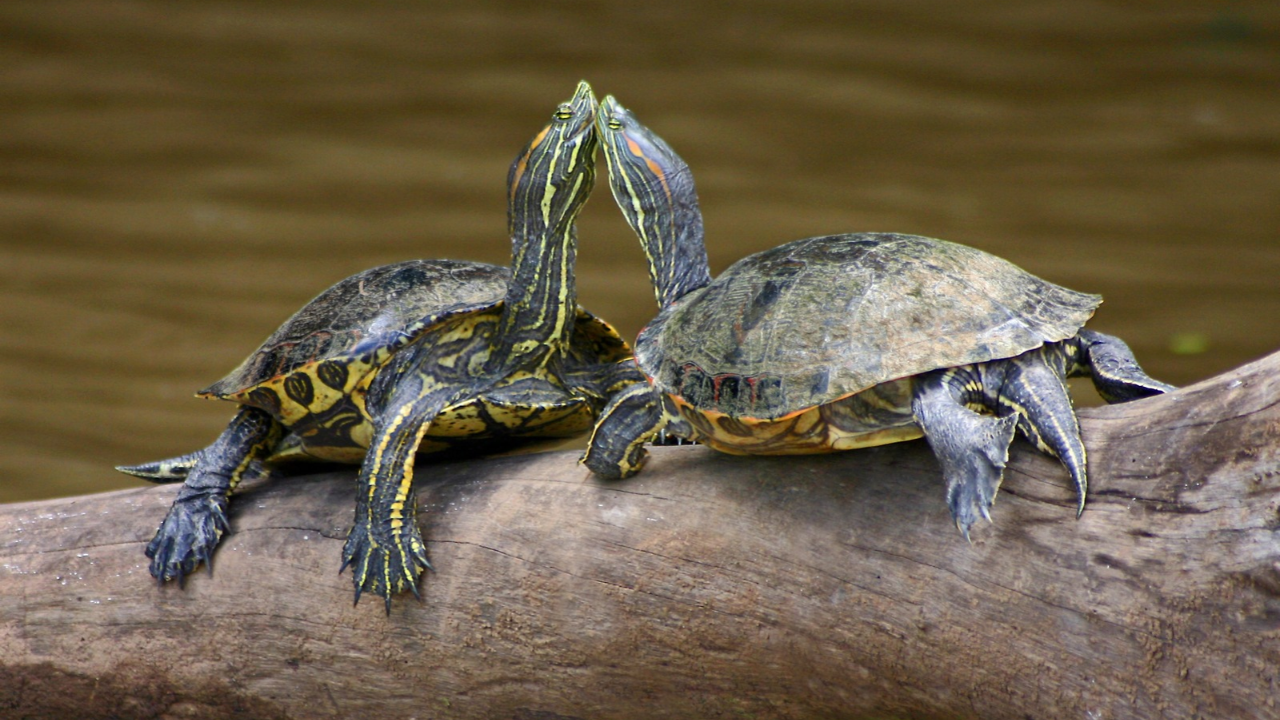
In 2015, a count of turtles basking at Minto-Brown Island Park in Salem, Oregon, showed how a common pet could become a problem for native wildlife. Of 50 turtles observed at basking sites, 30 were non-native red-eared sliders, according to reporting by the Statesman Journal . The sliders were believed to have been released after being kept as pets. Once in the ponds and sloughs of the 1,200-acre park, they joined two native freshwater turtle species: the western painted turtle and the northwestern pond turtle. Both native species are considered species of conservation concern in Oregon. Basking sites are an important resource for turtles, since they use sunny logs, rocks, and other surfaces to warm their bodies. When non-native turtles occupy those sites in large numbers, native species may have fewer opportunities to use them.
Get breaking news anytime, anywhere. Download the TOI app now!

How pet turtles became a wildlife problem
Red-eared sliders are among the most commonly kept pet turtles in the United States, but Oregon wildlife officials warn that releasing unwanted turtles outdoors is not a harmless alternative to keeping them in captivity. The Oregon Department of Fish and Wildlife says the state has two native freshwater turtle species, the western painted turtle and the northwestern pond turtle. Both have low or declining populations. The agency identifies non-native red-eared sliders as a concern because they compete with native turtles for resources and can introduce diseases. Pet turtles should not be released into the wild. The problem is not limited to Oregon, since red-eared sliders have introduced populations in wetlands around the world. Their ability to survive in a range of freshwater habitats has made releases from the pet trade a persistent conservation issue.
At Minto-Brown Island Park, the concern was visible on the basking structures themselves. A visitor could see several turtles sharing a log, but the species were not necessarily equal members of the local ecosystem. The red-eared slider is not native to Oregon, while the western painted turtle and northwestern pond turtle are.
Oregon's State Wildlife Action Plan describes both native species as vulnerable to several pressures, including habitat loss, road mortality, predation and competition from invasive turtles. For the western painted turtle, the state specifically lists the release of pet turtles, including red-eared sliders, as a threat because introduced animals may outcompete native species for habitat.
Competition is more complicated than a head count
The presence of more sliders than native turtles at a basking site does not, by itself, prove that every native turtle has been pushed aside, and that distinction matters. Scientists have had to test whether red-eared sliders actually affect native turtles under field conditions. A field experiment published in PeerJ examined an introduced red-eared slider population alongside western pond turtles, a native species of conservation concern. Researchers removed most of the sliders and monitored changes afterward. They found that the native turtles' body condition improved after the removal, although the researchers said the results were consistent with either direct or indirect competition. The study described this as the first evidence that introduced red-eared sliders can compete with a native turtle in the wild.
Red-eared sliders can compete for food, nesting areas, basking sites and cover. Oregon officials also warn that non-native turtles may transmit parasites and diseases to native populations. The northwestern pond turtle and western painted turtle require suitable freshwater habitat, but they also need places outside the water for nesting and surfaces exposed to the sun for basking. Those requirements make urban parks with ponds and wetlands useful habitat, but only if the habitat remains available to native wildlife.
The problem did not end with the 2015 count
The turtle issue at Minto-Brown Island Park continued to draw attention after the earlier survey, and researchers and conservation groups have worked on monitoring native and non-native turtles and improving basking habitat within the park. More recent observations have also examined another pressure: recreation. A preliminary study conducted in the park during the summer of 2022 recorded more than 500 hours of observations, and researchers counted over 2,100 park visitors and 305 turtles. Native turtles were more likely than red-eared sliders to react to nearby recreation by stopping their basking behavior and entering the water.
That later research adds another factor to the management of an urban park where native turtles already face competition from an introduced species. The 2015 observation remains a simple illustration of the larger issue: thirty of the 50 basking turtles counted were invaders. For Oregon wildlife managers, the response is equally straightforward: unwanted pet turtles should not be released into ponds, rivers or parks. The state's native turtles already face declining populations and habitat pressures, and an animal released from someone's home can become one more competitor in the wild.