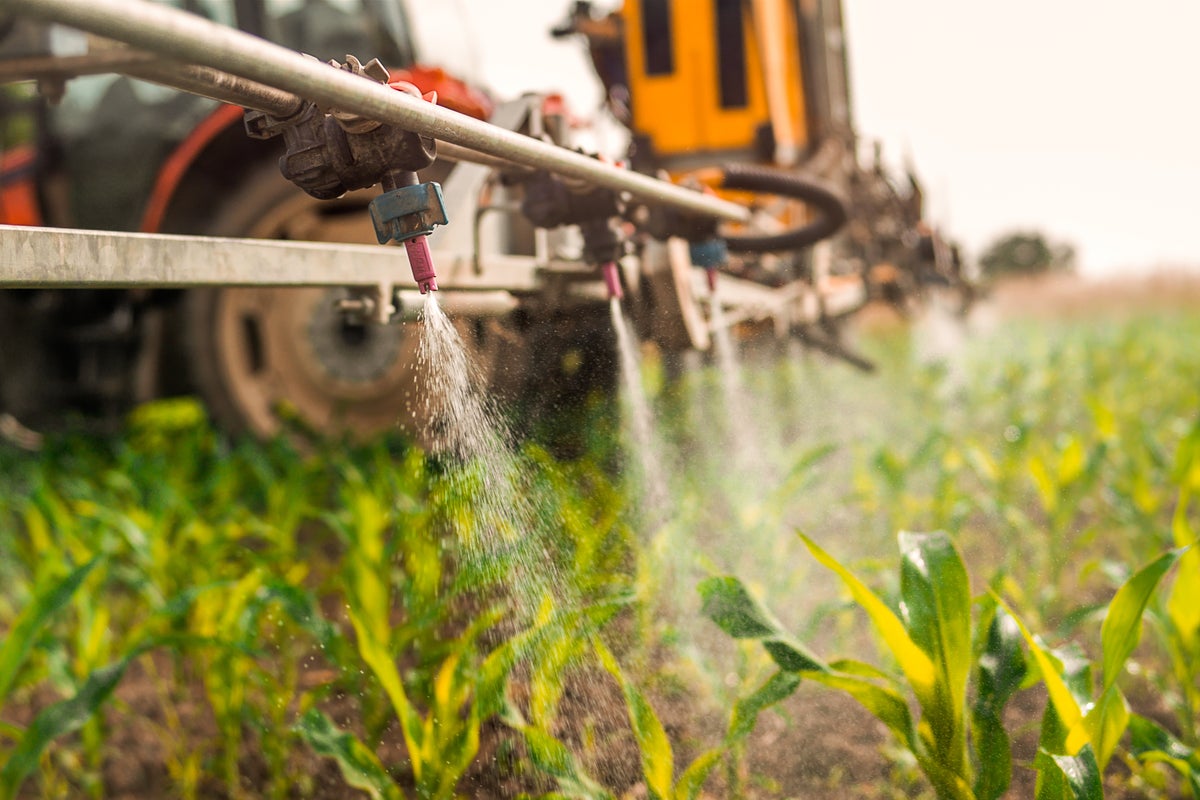
A “highly hazardous” pesticide linked to cancer has been found in children’s play parks across the south of England.
Residues of a weedkiller called glyphosate and its toxic breakdown product, AMPA, was discovered by the charity Pesticide Action Network UK (PAN UK).

The charity took swabs of soil, plants and play equipment such as slides and swings in 13 play areas across three English counties and two London boroughs - the tests were positive in eight locations.
None of the parks were particularly close to agricultural fields, suggesting that the contamination detected is likely to originate from the widespread use of glyphosate by UK councils to remove unwanted plants in public spaces, according to PAN UK.
But glyphosate has been linked to a range of health conditions and chronic diseases, including cancer. A separate 2023 study from UC Berkeley School of Public Health found that childhood exposure to glyphosate and AMPA threatens to increase the risk of developing serious disease in later life, such as liver cancer, diabetes, and cardiovascular disease.

Professor Michael Antoniou, a specialist in molecular genetics and toxicology at Kings College London and UK contributor to the recently published Global Glyphosate Study, stressed that a “safe” dose of glyphosate is currently unknown.
He said: “Exposure to glyphosate herbicides is a significant risk factor for the development of a range of serious health conditions, including fatty liver and kidney disease and, most worryingly, a wide range of cancers including leukaemias.”
Although almost half (45 per cent) of councils in the UK are making changes to reduce their pesticide use, many continue to use glyphosate in public spaces such as parks and pavements.
Nick Mole from PAN UK said, “It is deeply concerning to find a Highly Hazardous Pesticide like glyphosate present in the very places where our children play. UK glyphosate use has skyrocketed in recent years, as has the evidence linking this chemical to serious health conditions.
“We all know that young children tend to put their fingers and other items in their mouths so finding glyphosate residues in playgrounds, including on play equipment such as swings and slides, is particularly worrying.”
Of the five areas tested the London Borough of Hackney - which went pesticide-free in all its parks and green spaces and on housing estates in 2021- was the only location where neither glyphosate nor AMPA were found.
Hackney Councillor Alastair Binnie-Lubbock said: “We are very proud to be protecting the health of our residents, council workers and the natural environment by hugely reducing the amount of glyphosate we use and declaring areas such as green spaces to be entirely pesticide-free.”
PAN UK is urging all UK councils to go pesticide-free. Campaigners are also calling for the UK, Northern Irish, Scottish and Welsh governments to follow the examples of France, Denmark and the Netherlands by introducing nationwide bans on pesticide use in public spaces.
There is currently a Bill going through parliament – tabled by Sian Berry MP – which would end pesticide use by local councils in England.
The UK government is set to launch a major public consultation on whether to reapprove glyphosate in early 2026, with a final decision due by mid-December. Children’s health advocates will be calling for a complete ban on the use of glyphosate in public spaces, including playgrounds.
The Department of Health and Social Care (DHSC) has been contacted for a comment.
Emma Willis opens up on ‘terrifying’ heart diagnosis ahead of new Radio 2 gig
Patients face ‘torture’ amid ‘broken system’ of hospital corridor care
The ‘incredible’ nurse who cared for mother and son with cancer 30 years apart
Plan to include pregnant women in drug trials ‘a generational change’
Watchdog slams hospital trust after woman dies waiting for cancer treatment
The surprising lasting benefit to the brain from playing board games