
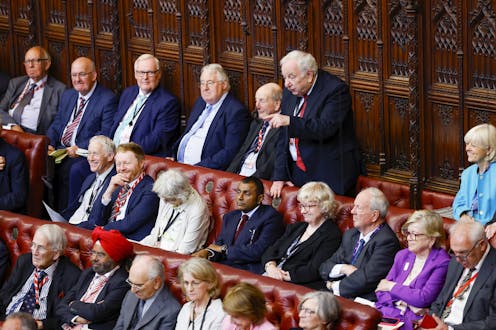
House of Lords reform is being debated once again with the passage of the bill to end hereditary peerages. But far more wide-reaching reform is needed. Our research reveals potential flaws in the appointments system. Far from being a representative chamber filled with those from all walks of life, we found evidence to suggest that the House of Lords contains a large constituency of former MPs – who are often there as a reward for their partisan loyalty.
Since the introduction of life peers in 1958 and especially since the removal of all except 92 hereditary peers in 1999, former MPs have become an increasingly important constituency in the House of Lords. They make up about a third of the approximate 1,600 life peers who have been created since 1958. The others have largely been appointed because of their specialist skills or life experiences or, apparently, because of how much money they donated to political parties.














