Get all your news in one place.
100’s of premium titles.
One app.
Start reading
Radio France Internationale
Lifestyle
Isabelle Martinetti

Paris textiles exhibition reveals the interwoven history of India and France

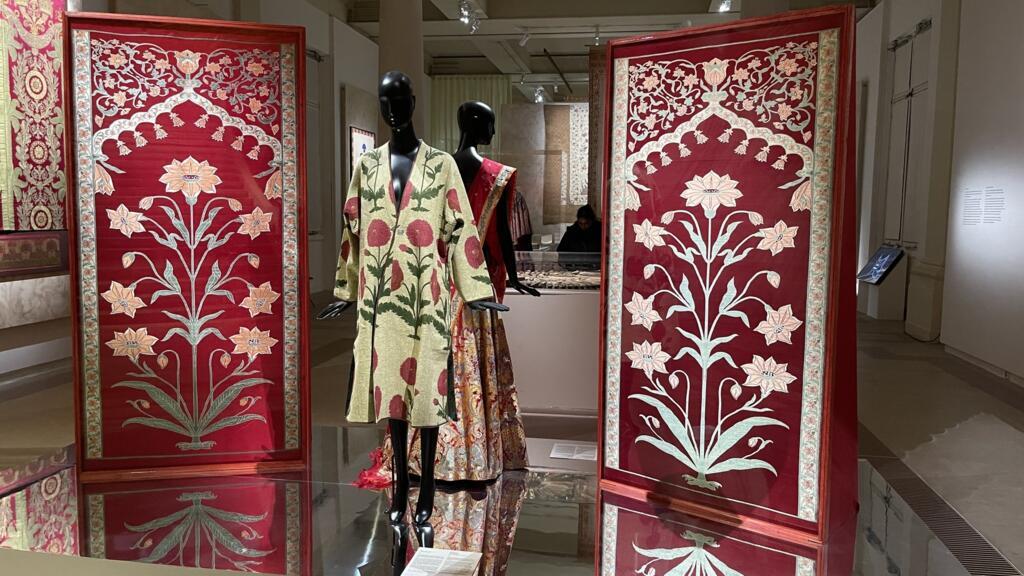
Indian ensemble by Swati & Sunaina, and Sathya by Lakshmi Madhavan on display at the ‘Textile Matters’ exhibition in Paris. © RFI/I. Martinetti

Paris – The exhibition "Textile Matters" at the Mobilier National arts and crafts institution in Paris tells the story of how the textile histories of India and France are interwoven. This 400-year cultural exchange has influenced fashion, interiors and weaving traditions in both countries. RFI spoke to Mayank Mansingh Kaul, a textile designer based in Delhi and co-curator of the exhibition alongside designer Christian Louboutin.

RFI: Why choose the Mobilier National in Paris, France's national furniture and decorative arts institution, for this exhibition?

Mayank Mansingh Kaul: I think it's a perfect venue for this kind of exhibition because what we were really hoping to highlight was how rich and diverse the contemporary practice of textile is today in both countries.

The historic Gobelins tapestry workshop [a key part of the Mobilier National]... is an example of how that kind of craftsmanship in France is revered, is appreciated, is kept alive at the highest levels of patronage and of aesthetics, as well as interest, and how it is a very important symbol of culture to the country.

It's extraordinary that when you walk through the galleries of the Gobelins looking at the exhibition, you are quite aware that just behind the galleries are active workshops that are producing furniture and tapestries.

The exhibition 'Textile Matters' runs until 4 January, 2026 at Paris's Mobilier National institution. © RFI/I. Martinetti

One teacher’s French love story: 'It changed my life, it gave me my career'

RFI: What ties link France and India through textiles?

MMK: We've known for about 400 years that France and India have both inspired and influenced each other in textiles.

We have, historically, for instance, very fine handspun and handwoven cotton fabric, which was exported to France, which then became a very important aspect of 18th century and early 19th century French women's fashion.

We also know how block-printed and hand-painted, naturally dyed textiles in cotton from India – which were exported and were [all the rage] in France – actually shaped its interiors, and shaped its fashion for a very long period of time. It also led to the establishment of certain kinds of traditions of French print itself.

It is the same in the case of the famous hand-woven cashmere shawl – the famous cashmere shawl, with its beautiful motif of the paisley – which were exported on the luxury market to France and became important aspects of French fashion and French interiors.

Antechamber by Christian Louboutin. © Sophia Taillet

And in the same way, we know of, for instance, examples of French lace, which has now become a very important part of the Indian repertoire of textiles, which came historically 200-300 years back from France, and became embedded in India's textile landscape.

We also know that there has been some exchange and influence between Lyon, the pre-eminent brocade weaving centre in France, and Varanasi in north India, which is one of the most important brocade centres in India.

One significant way in which brocades from Lyon influenced the Indian brocades from Varanasi was observed in the late 19th century and the early to mid-20th century, when aesthetic movements such as that of the French Art Nouveau and the French Art Deco were very visibly reflected in the designs of Indian brocades.

The Moroccan women artists harnessing the creative power of crafts

Among the exhibits are handwoven cotton fabrics which revolutionised women's fashion in 18th century France. © RFI/I. Martinetti

RFI: Today, how do these ties continue to shape cultural exchange?

MMK: One, of course, is the embroideries and surface embellishments... designed and produced in India for French couture houses, for French brands.

More recently, we've observed artists between the two countries who are working with textiles as a medium taking and giving from each other quite actively.

[There is also] the Villa Swagatam residency programme [run by the French Institute and the French Embassy in India] which invites artists and designers and creative practitioners from India to residencies in France, and likewise French practitioners to India.

Recipes for remembrance: artist brings Colombia's disappeared back to the table

Leila Alaoui - Made in India. © Sophia Taillet

So it's at the level of design, of visual arts, of contemporary arts, of craftsmanship [and the] deep appreciation that the two countries have for craftsmanship. The two countries innately recognise [each other's] reverence and appreciation for things handmade and artisanal.

And I think that overarching sentiment also becomes a great means of understanding and support to practitioners between the two countries.

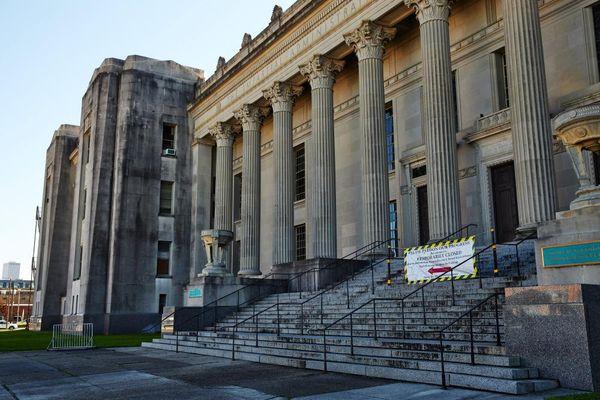
The Mobilier National, home to the Textile Matters exhibition, is France's national institute for decorative arts. © RFI/I. Martinetti

Ce qui se trame. Histoires tissées entre l'Inde et la France runs until 4 January, 2026 at the Mobilier National in Paris.

Sign up to read this article
Read news from 100’s of titles, curated specifically for you.
Already a member? Sign in here
Related Stories
Top stories on inkl right now
One subscription that gives you access to news from hundreds of sites
Already a member? Sign in here
Our Picks
Fourteen days free
Download the app
One app. One membership.
100+ trusted global sources.