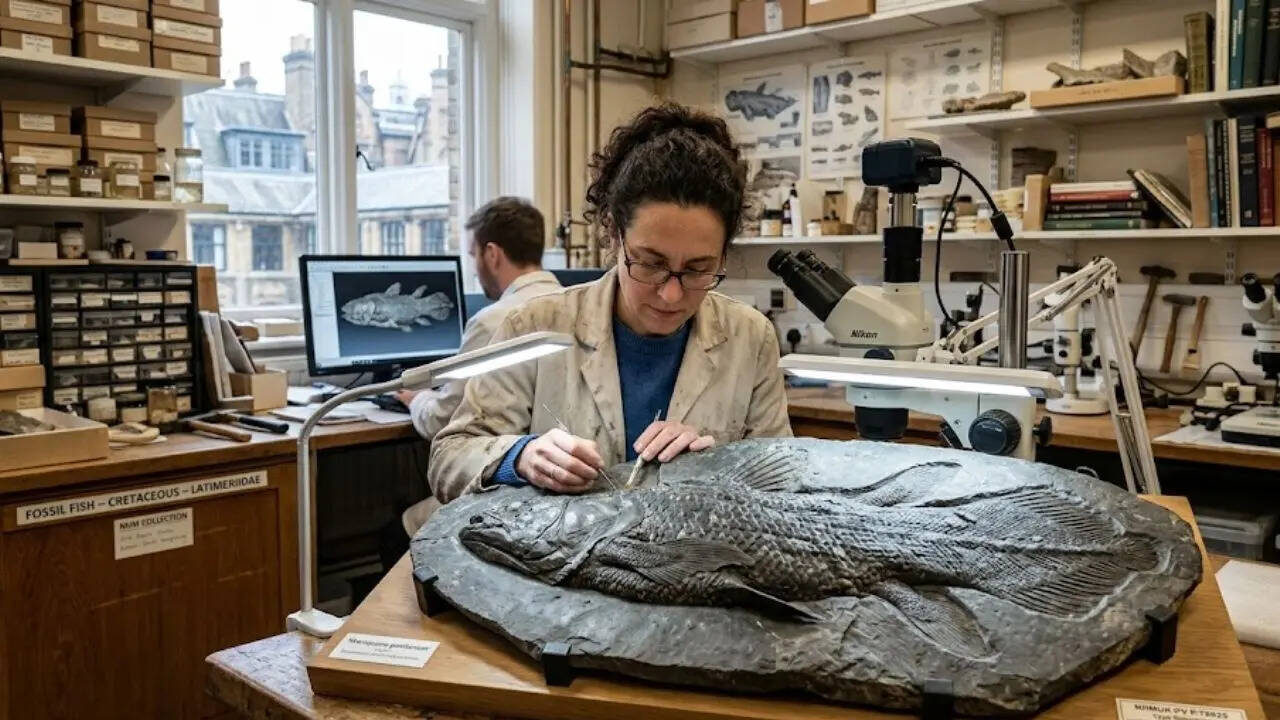
The Natural History Museum in London has discovered a previously unknown species of coelacanth from fossil remains that date back about 150 years (Macropoma gombessae). The new coelacanth is important because it helps to fill in a huge evolutionary gap of about 50 million years for coelacanths, one of the world's most recognised ‘living fossils.’ According to the study published by the University of Portsmouth, the fossil was reevaluated by Former University of Portsmouth palaeontology student Jack L. Norton while examining historical collections that he had already been studying for several years.
To explore the internal anatomy of this ancient coelacanth fossil without destroying it, researchers from the University of Portsmouth and the Natural History Museum used advanced X-ray computed tomography (XCT) technology to examine the coelacanth fossil’s internal structures in a way that had never been done before. This finding emphasises the vast amount of scientific potential that exists in museum collections worldwide, and provides further evidence of how modern technological innovations can change how we view ancient groups, and show us the complexities of evolutionary processes that have gone unnoticed under our noses for well over the past century. Such discovery highlights how modern analytical techniques revitalize historical collections, bridging significant evolutionary gaps and uncovering hidden biological deep-time secrets.