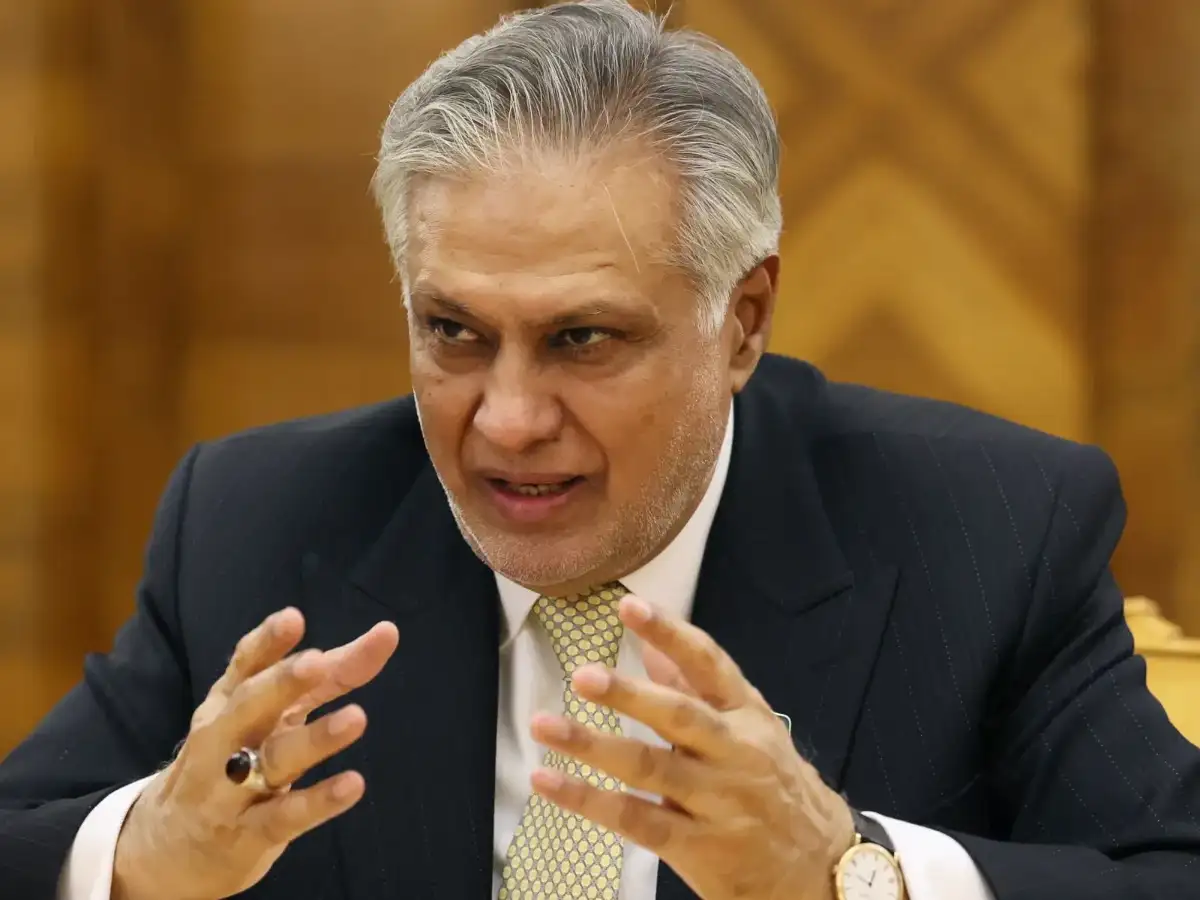
Lahore: Pakistan Deputy Prime Minister Ishaq Dar said on Sunday that the defence pact signed between Pakistan, Saudi Arabia and Turkiye is "purely defensive" in nature and it is not "targeted against any country".
Dar also said that the accord remains "open to any country in the region willing to uphold its fundamental principles".

The Makkah Joint Defence Agreement was signed on Friday by Pakistan Prime Minister Shehbaz Sharif, Saudi Crown Prince and Prime Minister Mohammed bin Salman and Turkish President Recep Tayyip Erdogan at the Al-Safa Palace in Islam's holiest city of Mecca.
Read More: Shanghai cancels 1,300 flights as Typhoon Dolphin hits China's eastern coast
Under the agreement, an armed attack against any one of the three countries will be regarded as an attack against all three.
In a post on his X account on Sunday, Dar, who is also the foreign minister, provided additional context about the defence agreement.
He said the pact reflects the "depth of the brotherly relations between the leadership and peoples of the three countries".
Dar called it the culmination of years of discussions and coordination, with "a common desire to strengthen strategic cooperation in addressing multifarious peace and security challenges and advancing regional peace, stability and prosperity."
The foreign minister added that the pact does not abrogate or replace any existing bilateral or multilateral agreements between the three countries, or with other countries or organisations.
Read More: UK PM Andy Burnham plans cost-of-living tour to reassure voters
"The Makkah Accord is purely defensive in nature. It is not targeted against any country and its sole purpose is to further strengthen our ongoing efforts towards peace, stability and prosperity in the wider region," Dar said, adding any external armed attack on any one of the three countries will be considered as an attack on all, consistent with the inherent right of individual and collective self-defence under Article 51 of the UN Charter.
He further said: "Makkah Accord remains open to any country in the region willing to uphold its fundamental principles and resolve differences through mutual respect, cooperation and peaceful means."
Asserting that the agreement is consistent with the fundamental pillars of Pakistan's foreign policy, he said the country "looks forward to continuing to work closely with all brotherly countries in the region towards lasting peace and stability".
"We remain committed to advancing the cause of peaceful resolution of all conflicts and building a more secure, stable and prosperous future for our peoples," Dar said.
The pact comes as the conflict in West Asia has widened across multiple fronts, including the Red Sea and the Bab al-Mandeb Strait, prompting Gulf states to strengthen regional security coordination.
Pakistan, which has sought to play a mediatory role between the US and Iran, said last week that it was "doing its utmost" to bring the two sides back to the negotiating table under a Memorandum of Understanding signed in June.