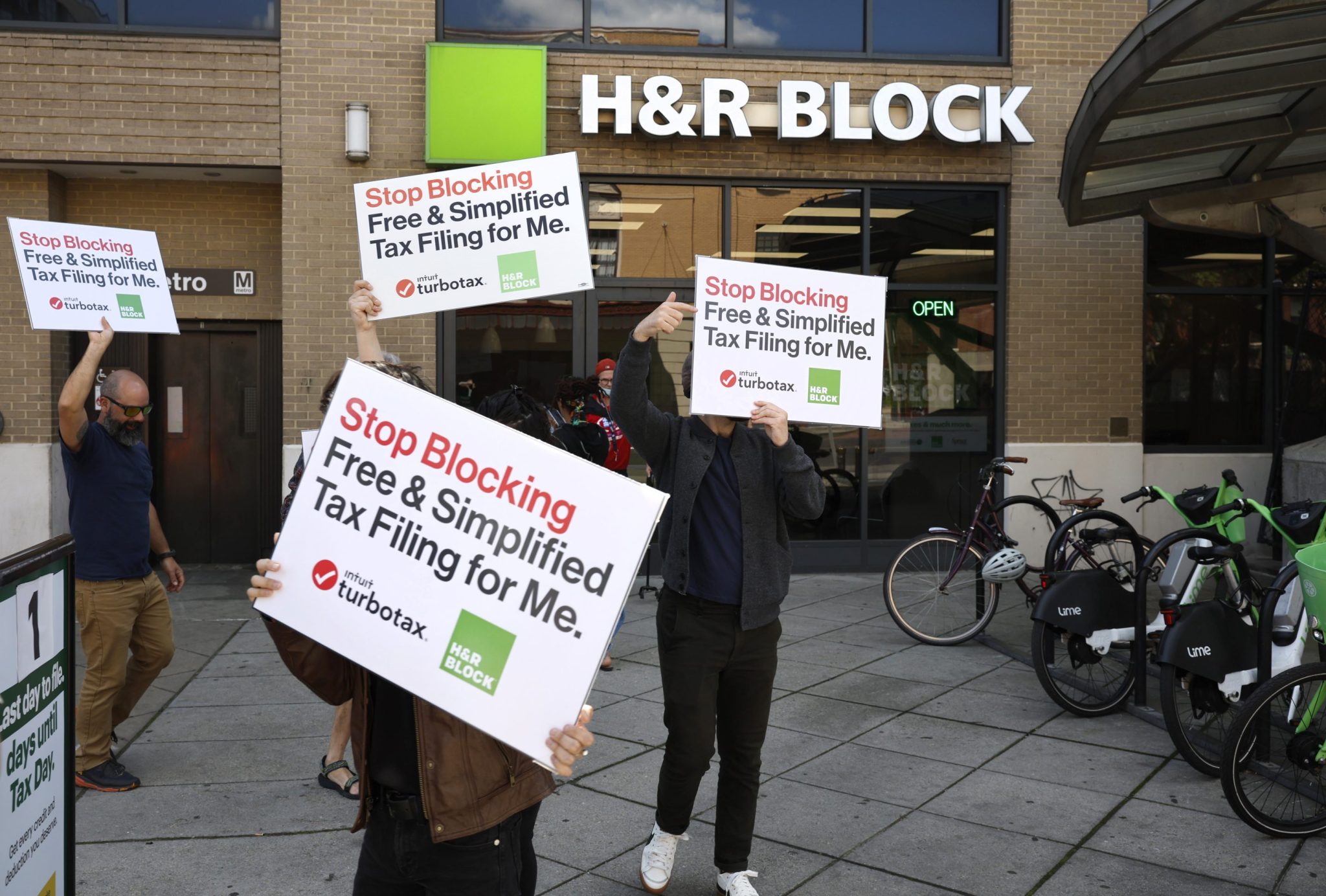
This 2026 tax season is the first in which Americans can’t use Direct File, a short-lived IRS initiative intended to save 30 million Americans time and money they would have otherwise spent getting their taxes done through a private tax preparer. The Direct File program prepared your taxes: listing exactly how much you made and owed, and all for free. But thanks to lobbying efforts from such tax giants like H&R Block and Intuit, that initiative is all but dead, and taxpayers once again are relegated to spending hours and untold amounts on filing their taxes.
The death knell of the Direct File program is in part thanks to more than $103 million in federal lobbying efforts from H&R Block and Intuit alone since 2003 ($20.8 million of which was spent in the past three years alone since Direct File came and went). And now marks the first year following the two-year program that saw an over 90% satisfaction rate from the average American taxpayer. Supporters of the program point to the lobbying efforts by those two tax giants alone as removing a public good to drive the bottom line, while the companies themselves point to the large number of people who use their services compared with the less than 1% of eligible Americans who used the IRS’s service. Whichever side you fall on, here’s a timeline of the past two decades that have culminated in today’s tax filing practices.