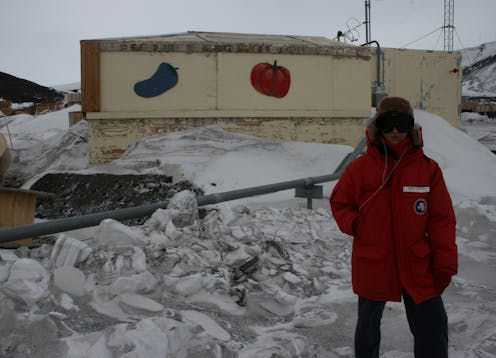
Figuring out how to feed people in space is a major part of a larger effort to demonstrate the viability of long-term human habitation of extraterrestrial environments. On May 12, 2022, a team of scientists announced that they had successfully grown plants using lunar soil gathered during the Apollo moon missions. But this is not the first time that scientists have attempted to grow plants in soils that typically do not support life.
I am a historian of Antarctic science. How to grow plants and food in the far southern reaches of Earth has been an active area of research for more than 120 years. These efforts have helped further understanding of the many challenges of agriculture in extreme environments and eventually led to limited, but successful, plant cultivation in Antarctica. And especially after the 1960s, scientists began to explicitly look at this research as a steppingstone to human habitation in space.