
Get all your news in one place.
100’s of premium titles.
One app.
Start reading
MarketBeat
MarketBeat
Jeffrey Neal Johnson

Oracle’s TikTok Win Isn’t Social Media—It’s a Cloud Power Move

Wall Street has viewed Oracle Corporation (NYSE: ORCL) with a volatile mix of optimism and anxiety in recent weeks. The company’s aggressive spending on AI data centers has spooked some debt investors, leading to a sharp sell-off in late January following news of a bondholder lawsuit. 

However, the regulatory approval of the TikTok U.S. divestiture serves as a massive stabilizing catalyst. A consortium led by Oracle, Silver Lake, and MGX is set to acquire a controlling interest in TikTok’s U.S. operations, fundamentally changing the narrative around the stock.
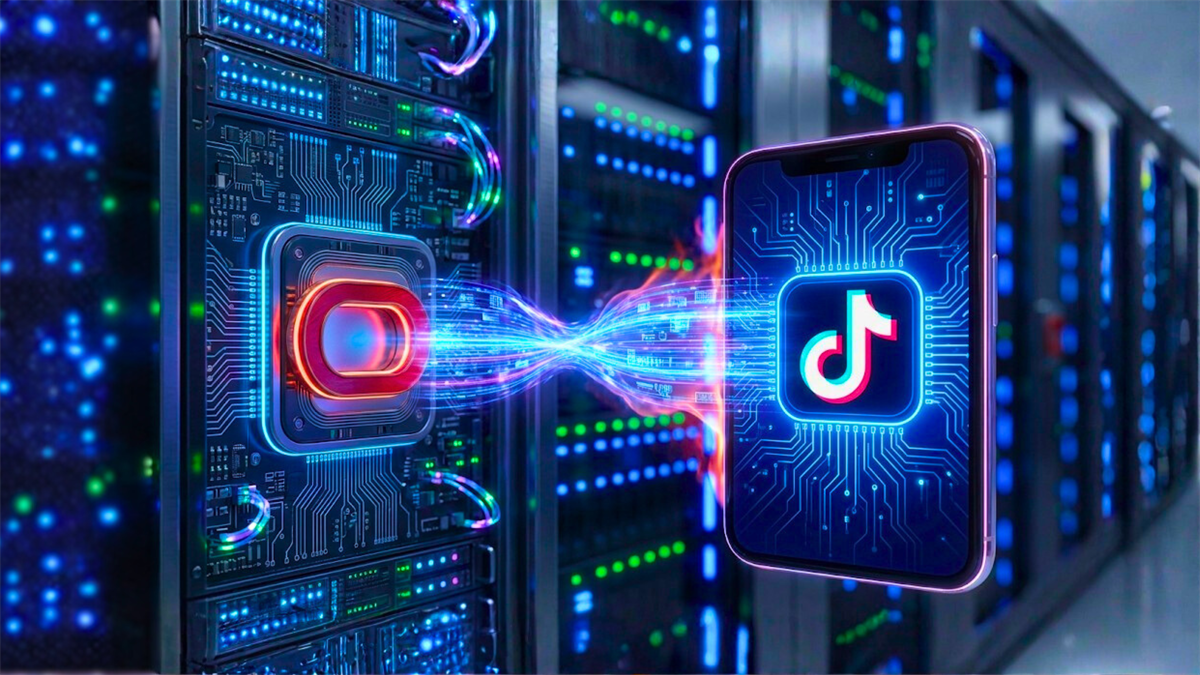
For investors, it is vital to look past the headlines about viral dance videos. This deal does not signal that Oracle is pivoting to become a consumer social media company. Instead, this is a calculated infrastructure play. By taking an equity stake in the new TikTok USA, Oracle is effectively buying its most valuable tenant. This move secures billions in future revenue for its cloud business and validates the company's massive capital expenditures.

The Deal Structure: Buying the Landlord Rights

The agreement between the U.S. and China establishes a unique corporate structure to address national security concerns while preserving the app's value. The deal values the new TikTok USA joint venture at approximately $14 billion. The ownership breakdown is designed to ensure American technological control:

  • Oracle Corporation: Acquires a ~15% equity stake.
  • Silver Lake & MGX: Each acquires ~15% stakes.
  • ByteDance: Retains a passive minority interest (<20%) with no voting rights on operational matters.

Oracle’s specific role goes far beyond writing a check. The company has been designated as the Trusted Technology Partner. In the world of commercial real estate, this is comparable to a construction company buying a stake in a massive skyscraper to ensure it is the only one allowed to handle maintenance and renovations forever. This setup effectively locks out cloud competitors such as Amazon's (NASDAQ: AMZN) Amazon Web Services (AWS) and Alphabet's (NASDAQ: GOOGL) Google Cloud. By holding the keys to the code and the servers, Oracle ensures that TikTok’s massive computing needs are serviced solely by Oracle Cloud Infrastructure (OCI) for the lifespan of the platform.

Infrastructure as Equity: Why Volume Matters

This acquisition is the final evolution of Project Texas, a plan originally proposed in 2020 to host TikTok’s data on U.S. soil. By transitioning from a vendor to an owner, Oracle has built a formidable revenue moat. In the cloud computing industry, churn, customers leaving for a cheaper provider, is a constant risk. By owning a stake in the company, Oracle ensures that the billions of dollars TikTok spends on data storage and processing will flow permanently into Oracle’s top line.

The sheer volume of data TikTok generates is critical for Oracle’s operational efficiency. Oracle is currently spending billions to build massive supercluster data centers, such as the facility in Abilene, Texas, which houses nearly 100,000 NVIDIA (NASDAQ: NVDA) GPUs. To make these expensive facilities profitable, a cloud provider needs base load volume, a guaranteed level of high-intensity usage that keeps the servers running near capacity.

TikTok provides exactly that. The app's hundreds of millions of users create a constant, non-cyclical demand for bandwidth and storage. This guaranteed volume validates the billions Oracle is spending on new infrastructure, ensuring that the new data centers will have a paying tenant from Day One.

The Stargate Connection: AI Sovereignty

The inclusion of MGX in the deal is a detail that many casual observers might miss, but it is crucial for the long-term thesis. MGX is an investment vehicle from the UAE focused specifically on artificial intelligence (AI). Their participation suggests a shared ambition to leverage TikTok’s data for more than just content algorithms.

This partnership aligns perfectly with Oracle’s broader Stargate project, a $500 billion initiative involving OpenAI and SoftBank to build the infrastructure for the next generation of AI. Data is the fuel for AI models, and TikTok possesses one of the world's most valuable datasets on consumer behavior and video recognition. While privacy laws will apply, the ability to train sovereign AI models on localized, U.S.-based data could give Oracle a significant edge in the AI arms race. This moves Oracle from being just a box mover of servers to a central player in national data sovereignty.

Liquidity Check: Why Cash Burn Is a Myth

Oracle’s stock recently faced pressure following a lawsuit from bondholders, specifically the Ohio Carpenters’ Pension Plan. The plaintiffs alleged that Oracle did not fully disclose the extent of the debt required to fund its AI expansion, creating a fear that the company was over-leveraged. However, the financials of the TikTok deal help refute the idea that the company is in a liquidity crisis.

Based on the $14 billion valuation, Oracle’s 15% stake will cost approximately $2.1 billion. A review of the company’s Q2 fiscal year 2026 (FY2026) financial report shows that Oracle holds approximately $19.8 billion in cash and marketable securities. This liquidity position allows Oracle to fund the strategic acquisition entirely with cash on hand, without issuing new debt.

Investors should view this as a highly efficient use of capital. For context, Oracle spent roughly $12 billion in Q2 FY2026 alone on Capital Expenditures (CapEx) to build data centers. A $2.1 billion investment to secure the primary tenant for those data centers is a relatively small price to pay. It transforms cash sitting in a bank account into an active asset that drives immediate, high-margin revenue. This helps offset concerns about negative free cash flow by securing a reliable source of incoming cash that is independent of the economic cycle.

Infrastructure Wins: Valuation Meets Validation

The approval of the TikTok divestiture serves as a major validation of Oracle’s transition from a legacy database firm to a modern hyperscale cloud leader. While Oracle’s stock price has reacted negatively to backward-looking legal challenges, the forward-looking operational reality is strengthening. Oracle has successfully secured the pipes of the modern internet. It does not need to worry about selling ads or moderating content; it simply needs to provide the secure infrastructure that makes the platform work.

For investors, the key takeaway is that the market’s recent fears regarding debt are being countered by a massive win in revenue security. Oracle is deploying its available cash to lock in guaranteed volume for its growing data centers, effectively de-risking its capital expansion plans. As the company integrates TikTok into its U.S. cloud regions, the narrative is likely to shift from cash burn to revenue lock-in, providing a solid foundation for the stock to re-test its highs.

Where Should You Invest $1,000 Right Now?

Before you make your next trade, you'll want to hear this.

MarketBeat keeps track of Wall Street's top-rated and best performing research analysts and the stocks they recommend to their clients on a daily basis.

Our team has identified the five stocks that top analysts are quietly whispering to their clients to buy now before the broader market catches on... and none of the big name stocks were on the list.

They believe these five stocks are the five best companies for investors to buy now...

See The Five Stocks Here

The article "Oracle’s TikTok Win Isn’t Social Media—It’s a Cloud Power Move" first appeared on MarketBeat.

Sign up to read this article
Read news from 100’s of titles, curated specifically for you.
Already a member? Sign in here
Related Stories
Top stories on inkl right now
One subscription that gives you access to news from hundreds of sites
Already a member? Sign in here
Our Picks
Fourteen days free
Download the app
One app. One membership.
100+ trusted global sources.