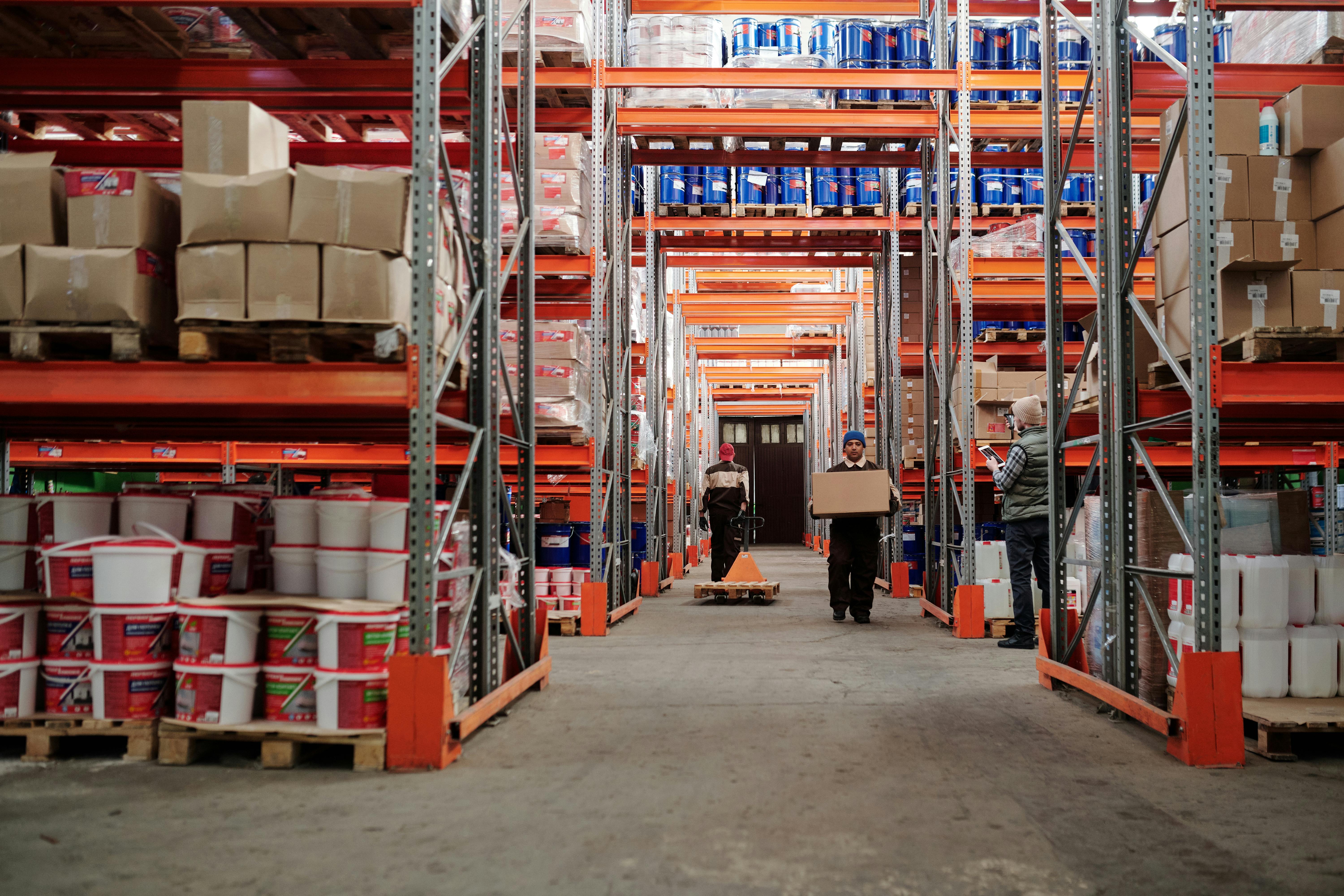
Photo by Tiger Lily from Pexels
Settlement day comes and goes. Then what? For a lot of industrial property owners, the answer is not much. Rent gets collected, the occasional repair gets organised, and the building more or less runs itself. That works until it does not. And when it stops working, the costs that surface are rarely small.
The owners getting the best long-term returns from industrial assets are not passive. They are paying attention.
The Hidden Cost of Letting Things Run
Problems in industrial buildings rarely announce themselves. Energy bills creep up. A good tenant goes quiet when lease renewal conversations come around. A maintenance issue keeps recurring because no one has traced it back to the source. None of it feels critical in isolation. Together, it tells a story about an asset slowly working against you.
By the time it shows up in a valuation or a vacancy, a lot of damage has already been done.
The Management Foundation Matters More Than People Think
If you own a multi-tenanted industrial complex, the quality of how shared spaces are managed shapes everything else. Shared loading docks, fire systems, stormwater drainage, and car parks. These assets touch every tenant on site every single day. When they are managed well, nobody notices. When they are not, it becomes everybody's problem quickly.
This is where professional strata management for industrial buildings earns its place. Under the relevant strata legislation in each Australian state and territory, owners' corporations have legal obligations around maintenance of common property, financial management, and insurance. A good strata manager handles levy collection, coordinated maintenance, site-wide compliance, and dispute resolution before things turn adversarial. Owners spend less time firefighting. Tenants stay longer. The building functions the way it is supposed to.
On Maintenance: Pay Now or Pay a Lot More Later
Most owners practise a version of maintenance that involves waiting for something to fail and then fixing it. It feels cheaper in the short term. It is not.
Emergency contractor rates in Australia typically run significantly higher than scheduled service costs. Add unplanned downtime, tenant complaints, and rushed procurement decisions, and the real cost of reactive maintenance becomes clear. The shift to a proactive schedule is not complicated:
- An asset register recording the age, condition, and service history of key building components
- Scheduled inspections across mechanical, electrical, plumbing, and structural systems
- Properly maintained records that satisfy insurers and support warranty claims
- A clear internal process for handling urgent faults consistently
Predictable maintenance produces predictable budgets. That has a genuine flow-on effect across the whole operation.
Energy Bills Are Telling You Something
Walk through an older Australian industrial building, and you will often find lighting from twenty years ago, uninsulated roof panels, HVAC running on rough timer schedules, and nobody certain which part of the facility is consuming the most power. According to the Australian Energy Regulator, commercial and industrial properties account for a significant share of national electricity consumption, and a substantial portion of that is avoidable waste.
An independent energy audit maps where consumption is concentrated and ranks interventions by payback speed. LED lighting retrofits come up consistently, particularly in warehouses still running T8 or T12 fluorescent fittings. Smart sub-metering is worth prioritising too, because meaningful reduction requires knowing what is actually being used and when.
For facilities with large roof areas, solar is worth modelling seriously. The Clean Energy Council reported that commercial and industrial rooftop solar installations have grown substantially across Australia in recent years, driven by falling system costs and stronger grid export conditions in most states. Payback periods vary by state, tariff structure, and daytime consumption profile, but for many industrial owners the numbers now stack up.
Compliance Is the Risk Most Owners Underestimate
The regulatory obligations attached to industrial property in Australia are real, and they differ across states and territories. Fire safety requirements under the Building Code of Australia, asbestos management obligations under Safe Work Australia guidelines, hazardous chemical storage under the relevant work health and safety regulations, and access compliance under the Disability Discrimination Act 1992 all apply depending on facility type and use.
Non-compliance goes well beyond a fine. Insurance coverage can be voided. Lease renewals can stall. In serious cases, prohibition notices from WorkSafe or state building authorities can stop operations entirely.
Routine is the best defence. An annual audit conducted by someone who knows the applicable state and federal standards catches problems while they are still manageable. Keep documentation current and organised. When an inspector arrives or a claim is lodged, the paperwork is what protects you.
Technology: Only What Actually Gets Used
A building management system can provide live visibility over energy consumption, equipment performance, access control, and environmental conditions across a facility. For larger assets, that data pays for itself through reduced waste and faster fault detection.
Smaller operations do not need to spend big to see genuine benefit. Automated lighting controls, smart metres, and cloud-based maintenance platforms can all be implemented without a large capital commitment. Before purchasing anything, ask one practical question: will the people responsible for this building actually use it day to day? If the answer is uncertain, start smaller and build from there.
The Owners Who Win Play the Long Game
There is no single upgrade that transforms an industrial asset. What works is sustained attention across maintenance, energy, compliance, and management over time. The properties generating the strongest returns are not always the ones with the best fundamentals at purchase. They are the ones that were looked after properly.
Start with whatever is most broken right now. Fix that, then move to the next thing. Consistent improvements compound. Over a decade, the gap between a well-run industrial building and a neglected one is not marginal. It shows up in running costs, tenant quality, and what the asset is genuinely worth when it is time to sell.