Get all your news in one place.
100's of premium titles.
One app.
Start reading
Tom’s Guide
Tom’s Guide
Technology
Amanda Caswell

OpenAI's newest model just solved a crossword with zero clues — and it's a huge deal for the future of AI

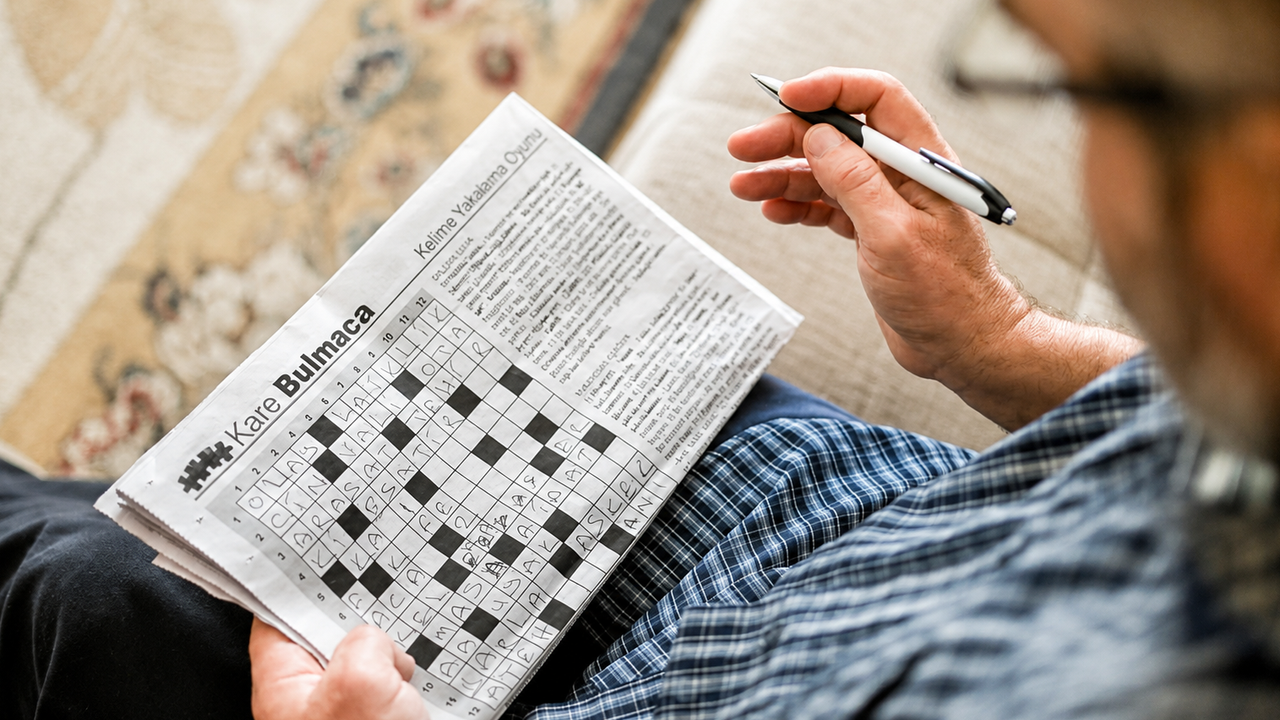
Crosswod.

AI had gotten so much better at reasoning and simply handling our questions. But, what's much harder is solving a problem where every answer depends on dozens of other answers — and a single mistake can throw off the entire solution.

That's why a new demonstration of OpenAI's GPT-5.6 Sol Pro caught my attention this week. AI researcher Riley Goodside shared what looks like one of the most unusual reasoning tests I've seen: an empty crossword puzzle created by Claude Fable 5 Max, containing the first 150 Pokemon. But the catch is that ChatGPT wasn't given a single numbered clue.

Instead, it had to fill in the entire crossword by reasoning from the intersecting letters and the overall structure of the puzzle alone.

Why this is more impressive than it sounds

At first glance, it looks like a fun Pokemon challenge. But when we look closer, it's much closer to highlighting the kids of problems AI actually faces in the real world.

While traditional crosswords are solved one clue at a time this puzzle works differently. Without individual clues, GPT-5.6 Sol Pro had to determine where every Pokemon belonged while ensuring every crossing remained consistent. One incorrect placement could force dozens of downstream corrections. This was a massive constraint-satisfaction problem.

Those are exactly the kinds of challenges AI agents encounter when they're debugging software, planning workflows, coordinating multiple tools or editing large codebases.

Why Pokémon actually makes this harder

The Pokemon names are perfect for this experiment. Many have unusual spellings, similar letter patterns and varying lengths. The model has to retrieve them accurately from memory while simultaneously checking that every intersecting word still works.

It's a bit like solving a Sudoku where every number is replaced with a different word. The difficulty lies in making all of them fit together without breaking the puzzle.

What this says about AI reasoning

One of the biggest differences between today's frontier AI models and the chatbots of just a few years ago is their ability to reason across many interconnected constraints.

Instead of producing a quick response, newer reasoning models can spend more time exploring possibilities, backtracking when necessary and verifying that the final answer is internally consistent.

OpenAI has positioned GPT-5.6 Sol Pro as its most capable model for difficult, long-running reasoning tasks, and demonstrations like this highlight exactly where those improvements begin to matter.

It's worth remembering that this is still a developer demonstration and not a formal benchmark. Without the full prompt, the puzzle itself and repeated independent testing, it's impossible to know how reliably the model can reproduce this result. Still, I think the demo is interesting for a different reason.

Most AI benchmarks are difficult to visualize because scores on coding tests or math exams don't always mean much to everyday users, but a crossword puzzle helps emphasize the AI's abilities.

Final thoughts

Anyone can immediately understand why filling an entire grid without individual clues is difficult. Keeping hundreds of intersecting constraints consistent requires a very different kind of reasoning than simply answering a question.

Whether you're a Pokemon fan or not, this is one of those AI demos that makes the latest generation of reasoning models feel noticeably different from what came before.

More from Tom's Guide

Sign up to read this article
Read news from 100's of titles, curated specifically for you.
Already a member? Sign in here
Related Stories
Top stories on inkl right now
One subscription that gives you access to news from hundreds of sites
Already a member? Sign in here
Our Picks
Fourteen days free
Download the app
One app. One membership.
100+ trusted global sources.