One of the biggest barriers to eating well is, quite simply, time. Most of us don't need another lecture on getting our five-a-day; we need healthy food that fits into actual life.
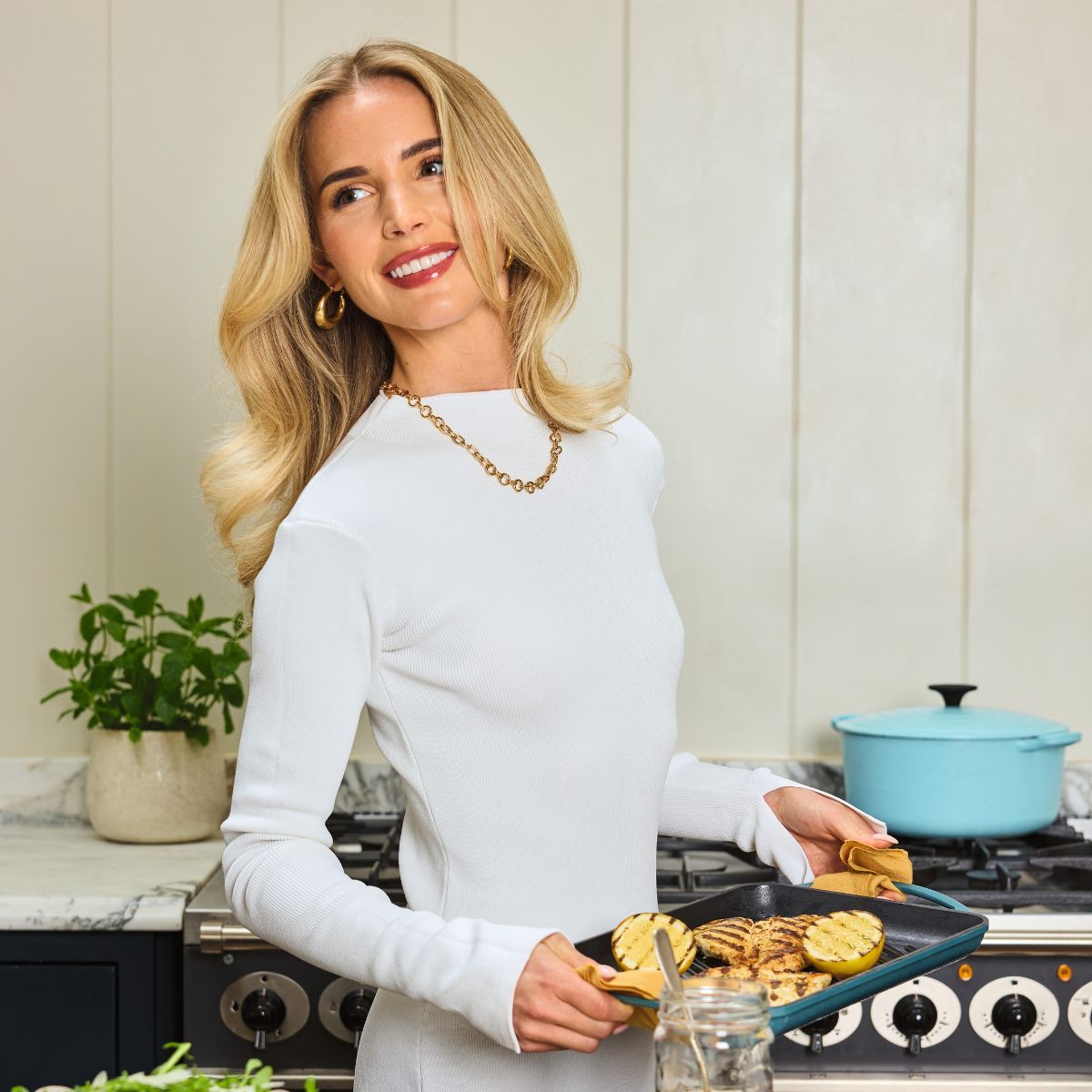
So Good Express is about those moments when you get home hungry, the thought of deciding what to cook feels like a lot, and you just need inspiration to get something on the table quickly. In practice, that means normal, easy, relatable food that people will actually make and eat every day. Simple ingredients, prep and cook times on every recipe, quick methods, lots of one-pot meals, and time-saving hacks that make eating well feel far more achievable.

I wanted it to feel like the realistic, helpful sidekick to my other books, same signature Em style, healthy food I genuinely want to eat, but with a much bigger focus on speed and ease.
The biggest misconception people have about eating well when they’re busy is that it has to be fussy, complicated or wildly different from the way they already eat.
Nutrition can sometimes feel like it asks you to completely overhaul your life, and that's where most people switch off. But what about if you simply upgrade what you're already doing instead, focusing on what you can add, rather than what you "should" be taking away?
That could mean making your normal lunchtime wrap more balanced, throwing together a speedy blender pasta, or making a lasagne that doesn't require a béchamel. It's not about perfection - it's about making healthy food easier, faster and more realistic.
Below, I've shared my top tips for making healthy eating simple, second-nature, and most importantly, speedy. Because feeling your best should never be a chore.
What are the non-negotiables of good nutrition?
For me, the non-negotiables are protein, fibre and having a basic structure to your meals. Protein helps with satiety, energy and recovery, especially if you are training. Fibre is so important for gut health, and I always say: eat for two, you and your microbes. I also think you have to map out your week and identify the pinch points. Where are you most likely to skip a meal, grab something random or feel too tired to cook?
Once you know those moments, you can plan around them. For me, that sometimes means waking up 30 minutes earlier to steal back a bit of time if I know I have a full day of work. It's not about being perfect; it is about knowing your own patterns and making the easiest healthy option more accessible.
If you only had 10 minutes a day to focus on your diet, how would you spend it?
I'd make something that gives me more than one meal. My approach is always: cook once, eat twice. If I only had ten minutes, I would use that time to make something that feeds me now but also helps future me. The best use of time in the kitchen is doing something that pays you back later.
What’s one habit that delivers the biggest nutritional payoff for the least effort?
Adding healthy fats to meals. It's such a small tweak, but it makes food more satisfying and can help us absorb certain nutrients, including fat-soluble vitamins and some antioxidants. That could be a drizzle of olive oil, avocado, nuts, seeds, tahini or oily fish - it's a tiny habit that makes a meal taste better and work harder nutritionally. A little drizzle of olive oil can be like a nutritional supercharge.
Which supermarket staples do you always recommend keeping on hand?
Pre-cooked proteins are a saviour when you're busy. Things like cooked chicken, eggs, tinned tuna, smoked fish, cottage cheese and the M&S Just Add range can make building a quick meal so much easier.
I also always keep Bold Bean Co beans in the cupboard. They are such a good no-cook source of fibre and carbohydrates, and you can add them to salads, bowls, soups, wraps or quick dinners.
Greek yoghurt is another staple because it can become a dressing, a sauce, a breakfast or a snack.
Then I love healthy convenience foods like pre-cooked rice, microwave grains, frozen veg and good-quality tinned fish. Convenience can absolutely be part of healthy eating when you use it well.
Any “shortcut” ingredients you swear by that people overlook?
For me, it's actually more about shortcut equipment. A good blender, food processor, mandoline, julienne peeler and sharp knife can completely change how quickly you cook. A blender can turn simple ingredients into a sauce in seconds, a mandoline makes vegetables feel exciting with barely any effort, and a good knife makes prep so much faster.
Sometimes the barrier isn't the recipe itself; it's the prep. Having the right tools removes so much friction.
How did you design these recipes differently from traditional “healthy cookbooks”?
This is my first cookbook with such a clear theme. The whole idea was to create recipes that are actually speedy, not “quick” recipes that secretly take an hour, but recipes you can genuinely make after work, when you're tired, or when you're feeding a family and need something reliable.
Every recipe has prep and cook times, so you know exactly what you're getting yourself into. The ingredients are simple and easy to find in local shops, rather than anything too niche. There are lots of one-pot meals, quick methods and time-saving hacks.
I also wanted the book to be more than just recipes. It includes frameworks, shopping lists, and protein and fibre guides to help you build balanced plates without always needing to follow a recipe. Most importantly, the food still feels comforting, relatable and delicious. We still want food we actually look forward to eating, even when we're in a rush.
How do you approach nutrition during particularly chaotic weeks?
I plan where I can and lean heavily on “cook once, eat twice.” Chaotic weeks are not the time to aim for perfection. They are the time to make the easiest healthy option as accessible as possible.
If I'm travelling, I'll often pack a meal in my Black+Blum containers, so I have something balanced with me. I have a lot of salads in the book that don't go soggy, so they're still enjoyable, even if I've prepped them the night before.
For me, it's all about reducing decision fatigue. When life feels chaotic, having a few reliable meals to hand and a well-stocked pantry and fridge is a game-changer.
There's also nothing wrong with assembling meals; one of my favourite breakfasts is my hot honey cottage cheese toast, which is literally toast with avocado, cottage cheese, honey and chilli. It’s such a delicious combination, so filling, and has all the healthy fats and fibre, as well as protein.
If readers take away just one principle from your book, what should it be?
That health doesn't mean long, complicated or unenjoyable. You can eat well with simple ingredients, limited time and food you genuinely want to eat. Nutrition should support your life, not make it harder.
Shop Em's go-to nutrition essentials now:
Em's latest cookbook hits shelves today and is already set to be a huge success, packed full of simple, tasty and nutritious recipes for when time is of the essence. Our personal go-to's span the crispy chilli egg smash, banana bread protein pancakes and express salmon poke bowl.
Em and Senior Health Ed Ally both rate the BLACK + BLUM lunch containers as some of the best on the market - they're simple to clean, seal easily, and have great sustainability credentials, too.
Em raves about this tea day in, day out, and we can see why - a smooth, subtly buttery flavoured tea, it promises all of the flavour, without the crumbs. Do yourself a favour - stick the kettle on, make yourself a cuppa, and have a flick through her new cookbook. Instant relaxation.