Get all your news in one place.
100's of premium titles.
One app.
Start reading
The Conversation
The Conversation
Gwendolyn Sasse, Einstein Professor for the Comparative Study of Democracy and Authoritarianism, Humboldt University Berlin, and Director, Centre for East European and International Studies (ZOiS); University of Oxford

One in three Ukrainian civilians estimated to meet the criteria for PTSD or complex PTSD – new study

Resilience is a word frequently used to describe the way Ukrainian society has responded to the war with Russia. It’s a term that can inspire sympathy and mobilise support. But it also risks overshadowing effects of war that require both domestic and international attention to enable Ukraine to withstand Russia’s invasion and manage long-term recovery.

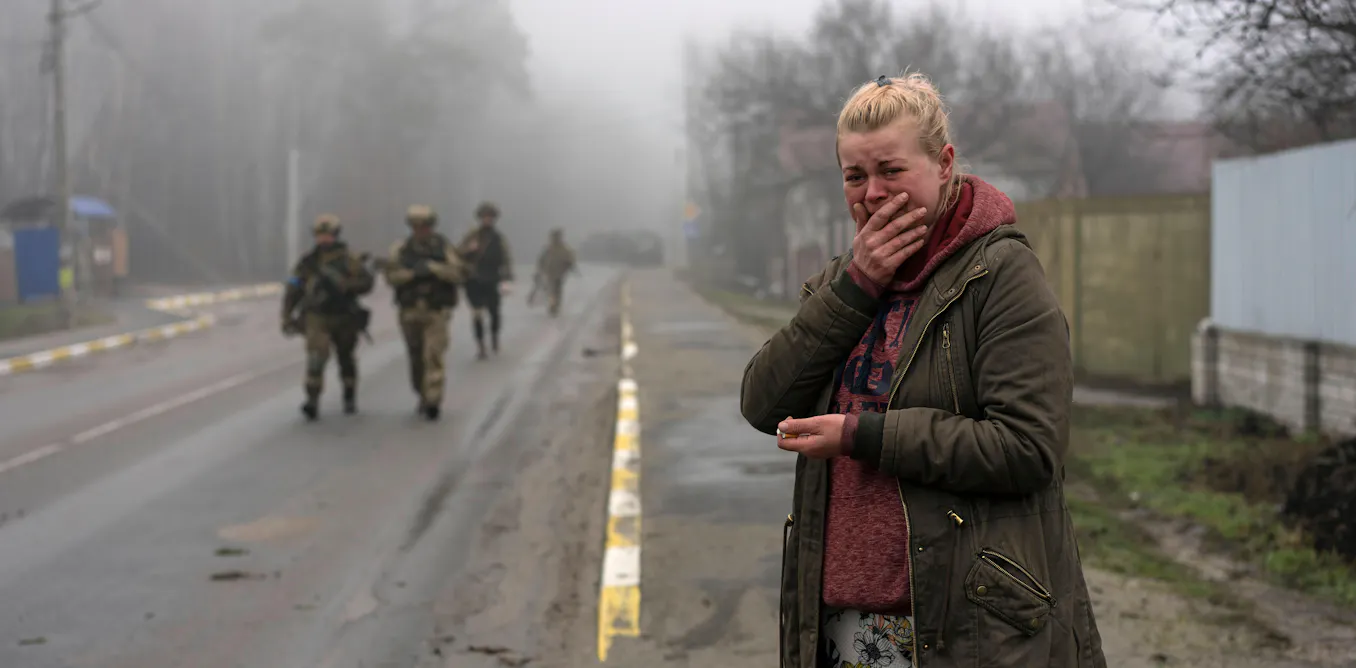
The protracted conflict that started with Russia’s annexation of Crimea in 2014, continued with the war in Donbas and escalated into Russia’s full-scale invasion in 2022 has recently reached a new level of intensity through concerted Russian attacks on civilian targets. As a result, the effects of war at the level of individuals, communities and society at large are becoming ever more apparent.

Trauma is an unavoidable effect of war. Measuring the psychological effects of trauma in countries following war and conflict can be difficult. Obtaining a reliable picture of the situation in Ukraine – where, after four and a half years, there is no end to the conflict in sight – has proved even more challenging.

The KonKoop Trauma Study, which has involved researchers from King’s College London, the Kyiv School of Economics, George Washington University, University of Manchester and the UK veteran mental health charity Combat Stress is, as far as we are aware, the first representative survey of the civilian population. This survey, implemented by the Kyiv International Institute of Sociology, now provides a baseline measure of post-traumatic stress disorder (PTSD) and complex PTSD in Ukraine.

Standard PTSD often stems from a single event (such as a car crash or – as in Ukraine – a single violent episode connected to the ongoing conflict). It’s characterised by symptoms such as intrusive memories, nightmares, avoidance of reminders of the trauma and feeling constantly on alert.

CPTSD, meanwhile, typically results from repeated or very severe (also referred to as complex) trauma, or both. It displays the same symptoms as PTSD, but also involves persistent difficulties with self-worth, emotional regulation and relationships.

In May 2024, we conducted a nationally representative survey of 2,504 adults living in government-controlled regions of Ukraine. Participants were randomly selected and interviewed by mobile phone allowing us to reach people from across the country, including displaced individuals. Mobile phone coverage in Ukraine stood at 96% in 2020.

This type of computer-assisted interviewing is the only means of direct survey access at this point and preferable to an online survey, but may have resulted in some selection bias (due to lack of access to those without phones or those in frontline combat roles) and possible underreporting of trauma exposure or post-traumatic symptoms, due to experiences of shame or stigma. The aim was not to systematically include military personnel.

We examined exposure to traumatic events across people’s lives, experiences directly related to the war, and symptoms of post-traumatic stress disorder (PTSD) and complex post-traumatic stress disorder (CPTSD) as defined in the World Health Organization’s ICD-11 diagnostic system.

Our findings reveal the extraordinary scale of trauma Ukrainian civilians have been exposed to. This study systematically includes pre-war trauma in the analysis, as trauma can build over time. More than three-quarters of respondents reported experiencing at least one traumatic event during adulthood, while almost half reported traumatic experiences during childhood.

Many participants described experiences that have become commonplace during wartime. These included shelling and destruction in their neighbourhoods, losing loved ones and having family members forced to leave their homes. Importantly, trauma exposure was already high before Russia’s full-scale invasion in 2022.

This reflects both the cumulative effects of a decade of war, as well as historical and intergenerational traumas that have shaped Ukrainian society. Our further research will try to explore how trauma inflicted during the war combines with and contrasts from pre-war trauma, something not yet clear from our work so far.

We estimated that 31.2% of adults met the criteria for either PTSD or CPTSD. Approximately one in four met the criteria for PTSD, while a smaller proportion, around 6%, met the criteria for CPTSD. Taken together, along with the fact that many Ukrainians will be suffering significant trauma-related symptoms that do not meet the threshold for these disorders, these figures suggest that trauma-related mental health difficulties represent a major public health challenge.

What the study discovered

Several factors were associated with a greater likelihood of developing PTSD or CPTSD. Women were more likely than men to meet diagnostic criteria. So were people who had been displaced by the war, those with lower educational attainment and those with a history of military service.

We also found a clear cumulative effect of trauma. The greater the number of traumatic experiences an individual had encountered in their lives, and the greater the number of harmful, unpleasant or frightening war-related incidents they had experienced, the higher their likelihood of meeting criteria for PTSD or CPTSD.

Violence from other people and life-threatening experiences showed the strongest links with PTSD and CPTSD. This is consistent with a large body of international trauma research.

One of the most striking findings of the study was the relatively low prevalence of CPTSD compared with PTSD, given the duration of the conflict in Ukraine and the frequently complex nature of traumas experienced. Previous studies conducted in other conflict settings have suggested that CPTSD may be as common as, or even more common than, PTSD.

In our research, however, suspected cases of PTSD were substantially more prevalent. While the reasons for this remain uncertain, several explanations are possible. CPTSD is generally associated with prolonged, repeated and inescapable traumatic experiences, particularly those involving being abused, coerced or held captive.

Many Ukrainians have undoubtedly been exposed to such experiences over the past decade. But the pattern of exposure in the wider Ukrainian population may differ from that seen in groups such as internally or externally displaced populations, such as in Gaza, where research has found that CPTSD accounts for anywhere from one-third to a full half of all trauma diagnoses.

It is also possible that social support networks, community solidarity and strong national identity have helped protect against some of the more enduring disturbances in self-worth and relationships that characterise CPTSD.

What this means for Ukraine

Our findings raise questions about how trauma should be understood in the context of an active war. Most models of PTSD assume that the traumatic event occurred in the past. In Ukraine, however, the threat remains current. The common symptoms of hypervigilance, anxiety and heightened alertness may not simply represent pathological reactions to past events. They may also reflect realistic responses to present dangers.

This perspective aligns with emerging theories of “continuous traumatic stress”, which first emerged from apartheid-era South Africa and have been explored in recent research in Ukraine. This would suggest that traditional post-traumatic frameworks may not fully capture psychological responses in settings where exposure to threat is ongoing and there is no clear endpoint to the trauma.

The findings highlight the urgent need for mental health support in Ukraine, including from international health providers. While access to evidence-based trauma therapies remains important, the sheer scale of need means that specialist services alone are unlikely to be sufficient.

Community-based interventions, peer support networks and programmes that strengthen social connectedness may play an equally important role. As the war continues, understanding how people adapt, cope and respond psychologically to ongoing threat will be crucial in shaping both mental health policy and Ukraine’s longer-term recovery.

The psychological impacts of war reach beyond the individual to Ukrainian society as a whole. They are bound to shape the continuing war effort. But they will also affect long-term social cohesion, behaviour, trust – and, possibly, political attitudes among the Ukrainian people.

This article was originally published on The Conversation. Read the original article.

Sign up to read this article
Read news from 100's of titles, curated specifically for you.
Already a member? Sign in here
Related Stories
Top stories on inkl right now
One subscription that gives you access to news from hundreds of sites
Already a member? Sign in here
Our Picks
Fourteen days free
Download the app
One app. One membership.
100+ trusted global sources.