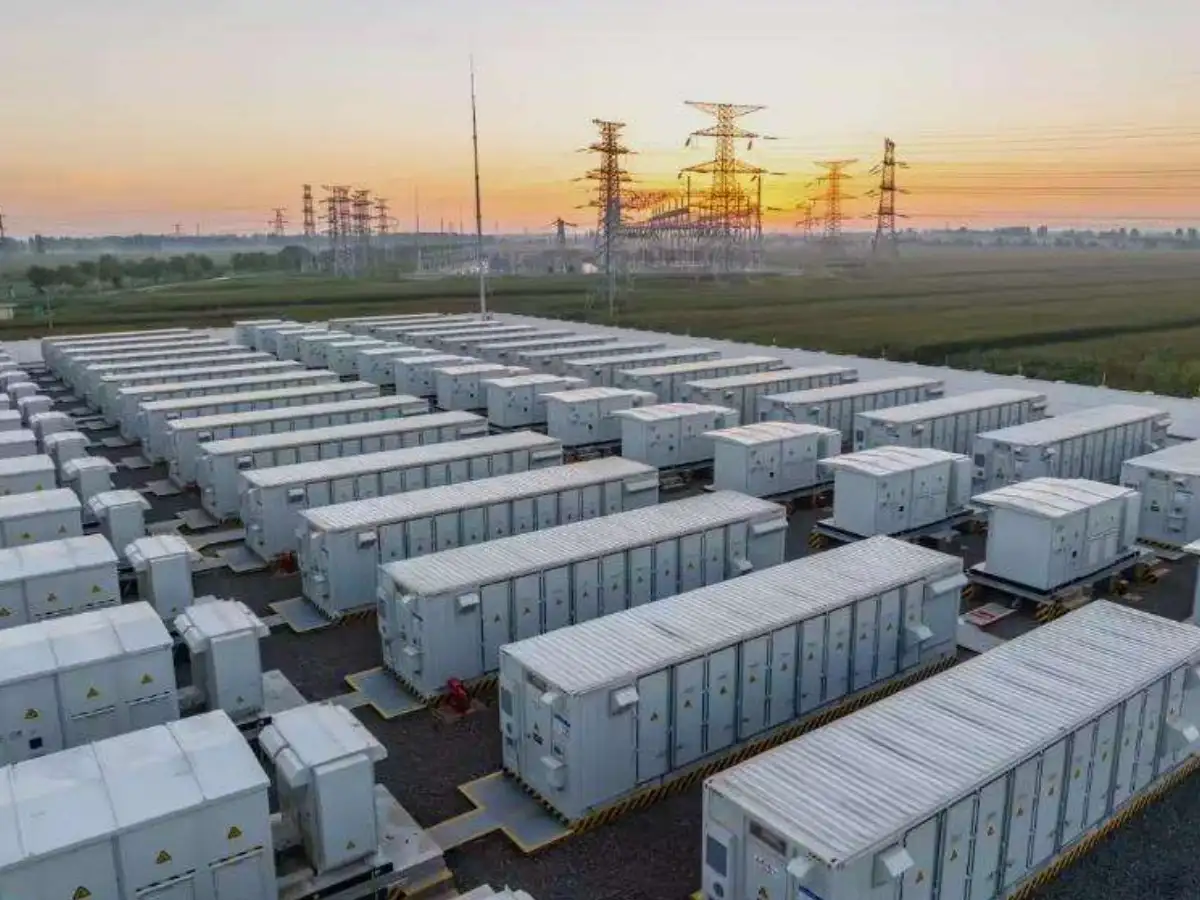
As Eriech Tapia drove home from a recent trip, he passed a sea of dark industrial buildings lining an already jam-packed northern Virginia road: data centers.
“It was interesting to see how many were going up,” said Tapia, a 30-year-old Republican from Arlington, Virginia, who works in higher education advocacy and policy. He noted that data centers lend valuable computing power that can keep the U.S. competitive globally, but he simultaneously worries about their heavy electricity consumption.

Like Tapia, Americans are growing increasingly concerned about the environmental impacts of artificial intelligence, according to a recent poll from The Associated Press-NORC Center for Public Affairs Research and the Energy Policy Institute at the University of Chicago.
Also read: AI risk sparks UN alarm as Trump brushes off concerns
The survey reveals that 53% of Americans, about half are “extremely” or “very” concerned about AI's environmental effects, up from 41% last year. While Democrats are driving much of this increase, the poll demonstrates widespread worries regarding the local footprint of the data centers powering AI and cloud computing.
“We're undertaking a massive experiment in real time, and I don't think there'll be any putting the milk back in the bottle. Change is scary, and I think some of that is being reflected here,” said Michael Greenstone, director of the University of Chicago institute that collaborated on the survey.
Rising concern among democrats
Thousands of data centers operate across the U.S., with construction planned for many more. These include smaller, conventional facilities built over recent decades alongside massive hyperscale centers designed to handle AI's intense processing demands. Virginia and Texas host the highest number of operational facilities, with California, Ohio, and New York also ranking among the top locations.
While 87% of existing data centers reside in urban areas, a Pew Research Center analysis from earlier this year found that most new facilities are planned for rural communities.
Also read: NASA discovers Colosseum-sized Moon crater from once-in-132-year impact
“I think that decisions are being made for the company, not for the community that they're being built in,” said Nancy Antunes, a 60-year-old retired Democrat from Waltham, Massachusetts.
A recent United Nations University report warned that the environmental footprint of data centers, which already rivals that of major nations, will expand rapidly as AI adoption accelerates.
Partisan gaps are widening on the issue. Roughly two-thirds of Democrats report being “extremely” or “very” concerned about AI's environmental consequences, compared to about half in 2025. In contrast, roughly half of independents and 4 in 10 Republicans express high concern. Overall, the public worries more about AI's environmental impact than about other high-emission sectors; only about 3 in 10 U.S. adults express high concern over meat production or air travel.
Defending the expansion, Dan Diorio, an executive vice president at the Data Center Coalition, emphasized that facilities operate responsibly, create jobs, and bolster the U.S. economy.
“The data center industry provides significant, tangible benefits that are currently being felt in localities across the country,” Diorio said in a statement.
Widespread support for limits
Despite partisan differences in overall environmental concern, a broader wariness persists regarding the rapid data center expansion. About 6 in 10 Americans—including majorities of both Democrats and Republicans—support limiting the construction of new data centers.
“There’s a lot of water usage by AI data centers that’s taking away from other things like agriculture and farmers and places that really need it, and people who really need it,” said Gedeon Kebede, a 21-year-old computer science student and Democrat from Cincinnati, Ohio.
Most Americans report being “extremely” or “very” concerned about how these facilities impact local electricity prices and municipal water supplies.
Cornell University energy systems engineer Fengqi You noted in an email that while national data center water usage is "modest," it can be "potentially locally decisive," as a single large campus can strain a small community's resources.
The intense electricity demand of these facilities presents another challenge. A Lawrence Berkeley National Laboratory Report estimates data centers could consume 11.8% of all U.S. electricity by 2030.
“We’re talking about building electric infrastructure on a scale of entire cities, or in some cases, entire states just to serve one data center,” said Erik Nordman, director of Michigan State University's Institute of Public Utilities.
Consequently, about two-thirds of U.S. adults favor requiring data centers to rely on clean energy sources like solar or wind. This requirement is backed by 8 in 10 Democrats and 56% of Republicans.
However, the issue is not top-of-mind for everyone. Mary Fisher, a 68-year-old retired Republican from Jacksonville, Florida, noted she hasn't seen data centers in her neighborhood.
“You know, it hasn’t come across my desk as something I should be concerned about,” Fisher said.
Economic benefits and long-term doubts
When evaluating the benefits, roughly one-quarter of U.S. adults view data centers as “extremely” or “very” beneficial for technological advancement, while 2 in 10 say the same regarding job creation. Many view them as "somewhat" beneficial, while about a quarter see little to no technological benefit, and a third see no benefit for employment.
“I see a huge increase in the number of temporary construction workers that are coming to areas, which is vitally important to the U.S. economy,” Tapia noted.
Republicans are generally more likely than Democrats to recognize these advantages, though about 3 in 10 Republicans still feel data centers offer little to no benefit for local infrastructure or job growth.
For students like Kebede, the rapid push toward AI creates a complicated dynamic. Despite his reservations, he feels obligated to adopt AI to remain competitive in the job market.
“I think a lot of people just feel that it's very much a bubble,” Kebede said. “Ultimately, when it pops, it's going to be very detrimental to everyone, whether you bought into the AI hype or not.”