Get all your news in one place.
100's of premium titles.
One app.
Start reading
The Economic Times
The Economic Times

On September 2, 1945, two Japanese officials signed the surrender document in a 23-minute ceremony. They were later convicted of war crimes

On September 2, 1945, two Japanese officials signed the surrender document aboard the USS Missouri in Tokyo Bay, bringing Japan’s war to a formal end. The ceremony lasted just 23 minutes, but it marked the culmination of years of fighting and weeks of dramatic events that had pushed Japan toward surrender.

The day is remembered as V-J Day, short for Victory over Japan Day. But there is some confusion over exactly when it is observed. Japan announced its surrender on August 15, and countries including Britain, Australia, the Netherlands and the Koreas mark the surrender on that date. The United States observes V-J Day on September 2, the date the surrender was formally signed, while the Philippines, China and Russia observe it on September 3.
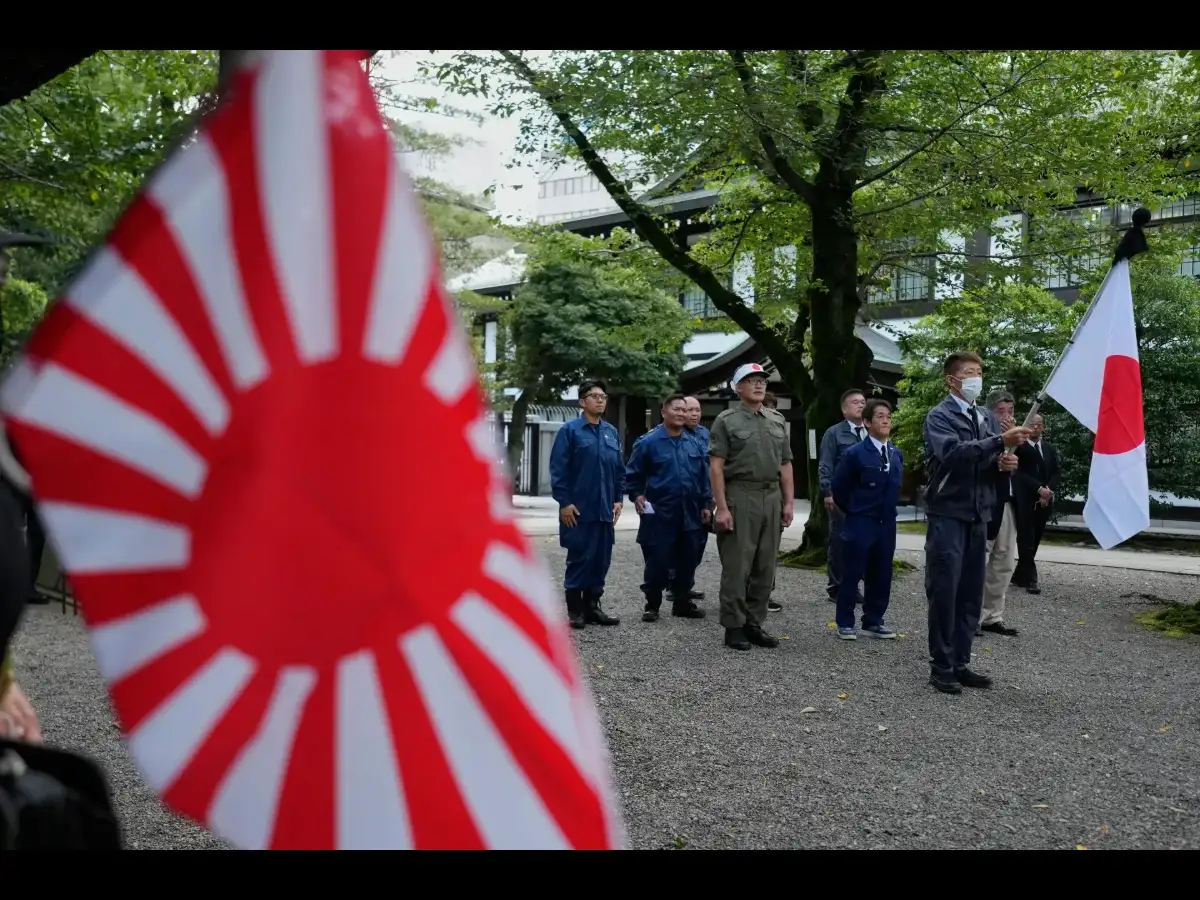
Japan marks August 15 differently, holding a solemn ceremony to mourn its war dead, attended by the emperor, political leaders and families of veterans.

WHAT HAPPENED ON SEPT. 2, 1945?

The formal signing of Japan’s surrender took place aboard the battleship USS Missouri in Tokyo Bay. The location carried its own historical significance: 91 years earlier, in 1854, U.S. Navy Commodore Matthew Perry had signed a treaty with Japan in the same bay that helped open the previously isolated country to American trade.

On the Missouri, Japanese Foreign Minister Mamoru Shigemitsu and Gen. Yoshijiro Umezu signed the Instrument of Surrender on behalf of Japan. Both men were later convicted of war crimes.

Gen. Douglas MacArthur, the Supreme Commander for the Allied Powers, signed the document on behalf of the Allied Powers. Fleet Adm. Chester Nimitz signed for the United States, while representatives from Britain, France, Australia, Canada, the Netherlands, New Zealand, China and the Soviet Union witnessed the ceremony.

The signing itself took only 23 minutes.

WHAT HAPPENED AFTERWARD?

The surrender terms required Japan to cease all military operations, release prisoners of war and other captives, and comply with the Allied occupation.

The signing also ushered in a seven-year U.S.-led occupation of Japan, which lasted until the San Francisco Peace Treaty took effect in April 1952 and restored Japan's sovereignty and place in the international community. Japan later became a major U.S. ally in defense and other areas.

Japan also began rebuilding its relationships with countries across Asia. Since 1954, it has provided tens of billions of dollars in development aid to countries in the region, initially in part as war reparations.

But reconciliation took time. Japan restored diplomatic relations with South Korea in 1965 and China in 1972, although disputes over its wartime history continue to affect relations with some neighbors. Japan still has no peace treaty with Russia because of territorial disputes and has not established diplomatic relations with North Korea.

Sign up to read this article
Read news from 100's of titles, curated specifically for you.
Already a member? Sign in here
Related Stories
Top stories on inkl right now
One subscription that gives you access to news from hundreds of sites
Already a member? Sign in here
Our Picks
Fourteen days free
Download the app
One app. One membership.
100+ trusted global sources.