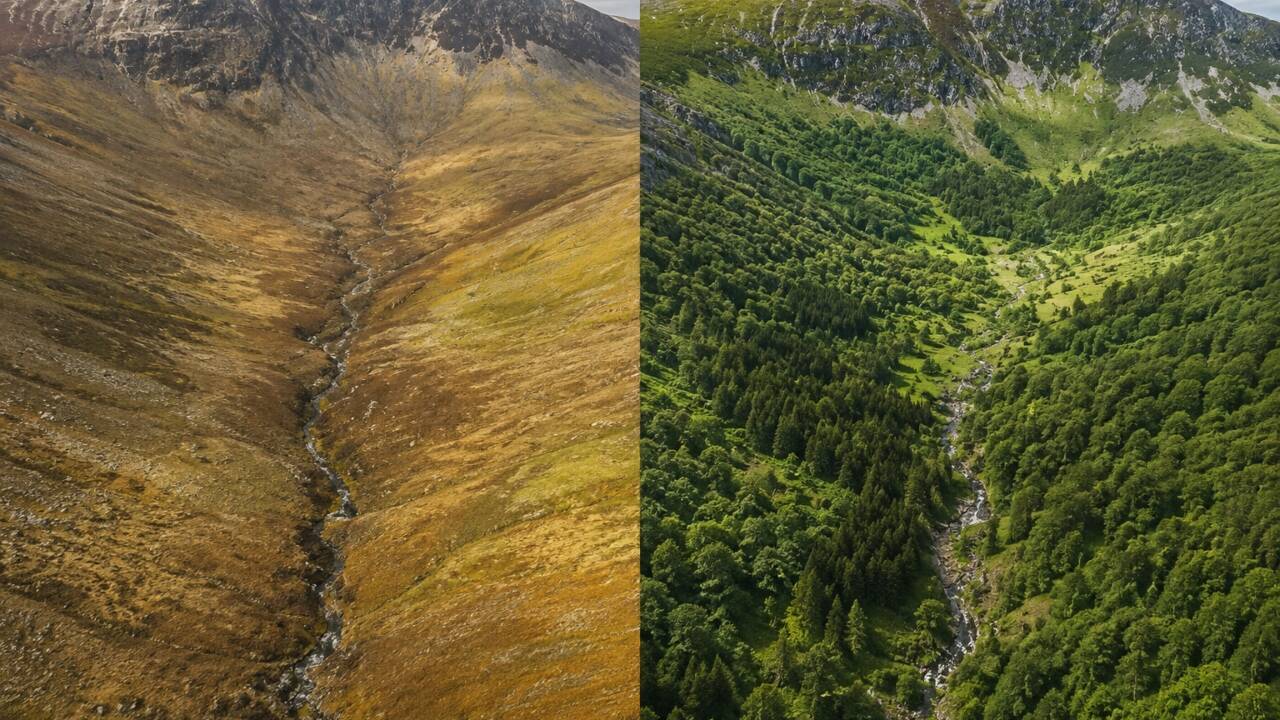
On the first day of the new millennium, a small group of volunteers gathered in a bleak windswept valley in southern Scotland and planted 100 native saplings. Carrifran Glen in the Moffat Hills, at the time, was a near-treeless landscape, with its ancient woodland stripped due to centuries of sheep grazing and land use. Not many had expected this modest planting to become one of Britain’s most influential rewilding projects. More than a quarter of a century later, the valley is home to more than 750,000 native plants and shrubs, supporting a growing diversity of wildlife and inspiring community-led restoration efforts across the UK. According to an article by The Guardian, Carrifran Wildwood has become a “mecca for rewilders,” demonstrating how science, volunteerism and long-term ecological planning can revive landscapes that otherwise seemed beyond recovery.
Get breaking news anytime, anywhere. Download the TOI app now!
A community-led initiative to restore a long-lost forest
The idea for Carrifran Wildwood emerged during the 1990s when zoologist Philip and Myrtle Ashmole, alongside other conservationists, sought to recreate an entire native ecosystem instead of simply planting trees. Historical evidence suggests that around 6,000 years ago, most of southern Scotland was covered by broadleaf woodland interspersed with shrub, bogs, and heath. However, by the late 20th-century, centuries of grazing had left Carrifran almost barren. The Guardian reported that supporters raised enough private funds to purchase the 650-hectare valley, and on 1 January 2000, volunteers planted the first 100 saplings in what became known as the Millennium Grove. The project relied almost entirely on community fundraising and volunteer labour instead of large government grants, and the initiative was organised through the Borders Forest Trust.
Rather than establishing a commercial plantation, the restoration followed ecological principles designed to recreate the valley’s original mosaic of habitats. As per the restoration plans developed by the Wildwood Group, locally sourced native species, including birch, rowan, oak, aspen, hazel, juniper, willow and Scots pine, were planted based on the altitude, soil type and natural vegetation patterns that were identified through detailed botanical and geological surveys. Furthermore, sheep were excluded to allow natural regeneration, while blanket bogs, upland heath and montane plant communities were also protected, thus ensuring that woodland restoration complemented rather than replaced other important habitats.
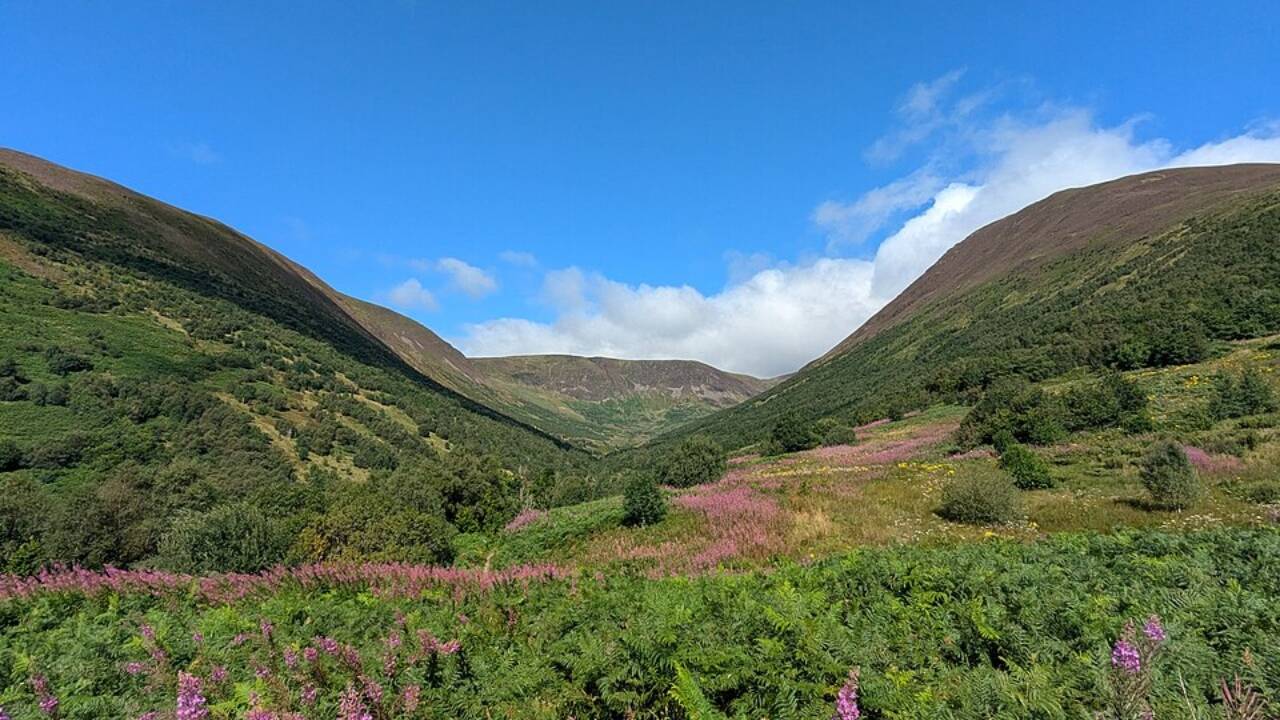
The journey from nearly barren hillsides to a thriving wildwood
The article published by The Guardian noted that more than 750,000 native trees and shrubs currently cloak the valley’s slopes, transforming what had once been Scotland’s most denuded upland landscapes. Wildflowers like primroses, wood anemones and honeysuckle have returned beneath the canopy, while insects, fungi and woodland plants continue to recolonise. Furthermore, ecological monitoring has documented increasing biodiversity as habitats mature, thus highlighting how restoring native vegetation can trigger wider ecosystem recovery over time. Researchers describe Carrifran as an uncommon example of restoring an entire catchment, from valley floor to mountain summit, rather than isolated woodland fragments.
As per the Borders Forest Trust, wildlife has also responded to the recovering landscape, with breeding bird populations expanding steadily, while species including ravens, peregrine falcons, ring ouzels and black grouse have benefited from improving habitats. Additionally, golden eagles now occasionally hunt over the valley and native mammals, amphibians and numerous invertebrates have also become common as woodland, scrub and wetlands connect.
The success of this project has inspired the Borders Forest Trust to acquire neighbouring areas, including Corehead and Talla & Gameshope, thus creating what is known as The Wild Heart of Southern Scotland. The lessons learned at Carrifran have informed numerous rewilding programmes across the country, underscoring that landscape-scale restoration can be achieved through grassroots action supported by sound ecological practices. Notably, the project helped popularise concepts such as catchment restoration, natural regeneration and community-led conservation long before ‘rewilding’ became a widely recognised term.
.png?w=600)