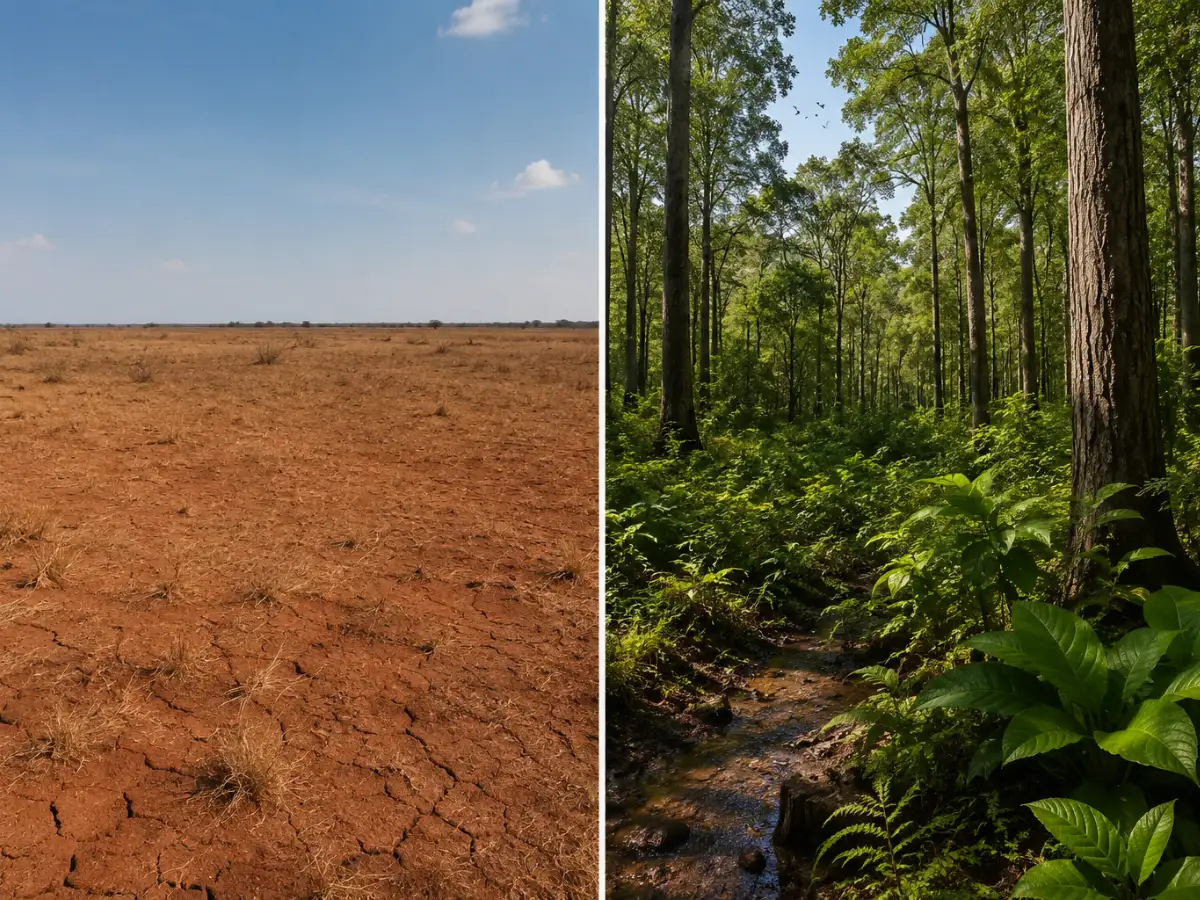
Think of the flattest, most forgotten piece of land you can imagine. No trees, no birds, soil so acidic the farmers had given up on it for good. That was Los Llanos, the eastern savanna of Colombia in the late 60s. According to the on-the-ground report from The Ecologist, a young Colombian dreamer named Paolo Lugari looked at this "wet desert" and decided it was the perfect place to prove sustainable living could work anywhere. In 1971, he founded a small community there called Gaviotas. Today, decades later, that same dead land is a thriving rainforest.
The desert of the mind

Gaviotas tried crop after crop, and almost all failed. According to a report from Good News Network, the soil measured pH at around 4, about as acidic as black coffee. Lugari was told by agronomists that nothing useful would grow there. He famously answered that the only real deserts are those which exist in our minds.
So the community turned to something unexpected: Caribbean pine, native to Central America and the Caribbean, not the South American savannah. It wasn't an obvious fit, and that's why it's such a good story.
A fungus made the difference
The only survivors were the pine saplings. The change began when the Gaviotans inoculated the roots with a mycorrhizal fungus called Pisolithus tinctorius, which helps pine roots extract nutrients from soil too poor to support them on their own. That boost helped the trees take root, and the community eventually planted about 8,000 hectares, or roughly 30 square miles, of pine forest, according to the same Ecologist report.